
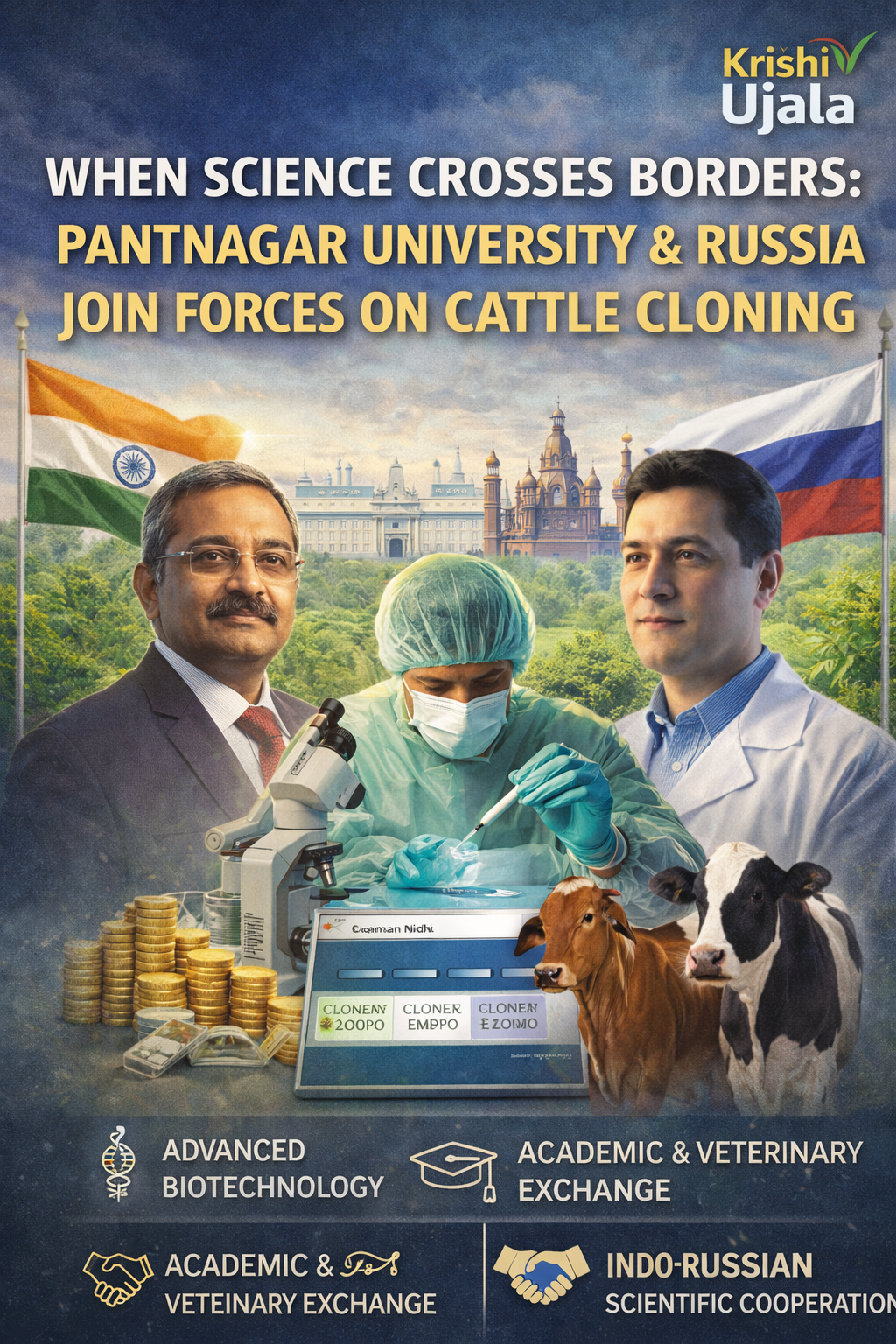
In an era where global challenges demand global solutions, an ambitious scientific collaboration between India and Russia is rewriting the script for agricultural biotechnology. In September 2024, Govind Ballabh Pant University of Agriculture and Technology (GBPUAT) in Pantnagar, Uttarakhand, signed a landmark agreement with Saint Petersburg State University of Veterinary Medicine, marking a new chapter in international research on cattle cloning and veterinary sciences.
A Bridge Between Nations Through Science
The pact was formalized during the visit of a four-member Indian delegation to Russia, led by GB Pant University’s Vice-Chancellor, Dr. Manmohan Singh Chauhan. The agreement focuses on collaborative research and academic exchange, aiming to leverage scientific strengths from both sides to address pressing agricultural and livestock challenges.
This partnership is built upon years of pioneering work at Pantnagar. The university has already attracted attention for its breakthroughs in reproductive biotechnology—most notably for India’s first successful cattle cloning efforts, where a Gir cow was cloned using indigenous techniques.
Why Cloning Matters
At its core, the collaboration seeks to enhance scientific understanding and practical applications of cloning technologies. These techniques, particularly somatic cell nuclear transfer (SCNT), allow scientists to create genetic replicas of valuable livestock. These cloned animals can potentially help improve herd quality, boost meat and milk production, and strengthen food security—an objective of growing importance in both India and Russia.
According to Dr. Chauhan, the specific technology developed at Pantnagar is hand-guided, simple, and effective, enabling it to be adapted in diverse environments. Russia, where beef production has faced challenges due to a lack of high-quality breeding stock, stands to benefit from this know-how.
Beyond the Farm Gate
The implications of this Indo-Russian partnership extend well beyond improving livestock numbers:
- Academic exchange: Students and researchers from both universities will have expanded opportunities to learn from each other’s expertise, fostering cross-cultural scientific growth.
- Veterinary advancement: Knowledge sharing in veterinary science will deepen understanding of animal health and reproductive technologies.
- Conservation prospects: There are discussions—both formal and informal—about applying cloning technologies to wildlife conservation, including projects related to endangered species such as the white tiger, showcasing the broader ecological potential of these tools.
A Strategic Scientific Alliance
This pact reflects a larger trend toward international collaboration in agricultural science—recognizing that food security, animal genetics, and sustainable farming are global priorities.
Pantnagar University, historically a leader in agrarian transformation since the Green Revolution, now stands at the frontier of biotechnology and international research cooperation. As Dr. Chauhan and his team continue to push boundaries, this partnership with Russia could sow the seeds for breakthroughs that resonate far beyond their campuses—touching farmers, ecosystems, and scientific communities around the world.
Author

Pawni Uprari hails from Lucknow, Uttar Pradesh, and is currently pursuing a B.Sc. (Hons.) in Agriculture at G.B. Pant University of Agriculture and Technology. With a strong academic foundation in agricultural sciences, she has a keen interest in exploring emerging innovations, sustainable practices, and policy-driven advancements in the agricultural sector. She is enthusiastic about contributing insightful articles and research-based content that highlight contemporary developments and support the growth of the farming community.


This site can be a stroll-by way of for all of the info you needed about this and didn’t know who to ask. Glimpse right here, and also you’ll positively discover it.