
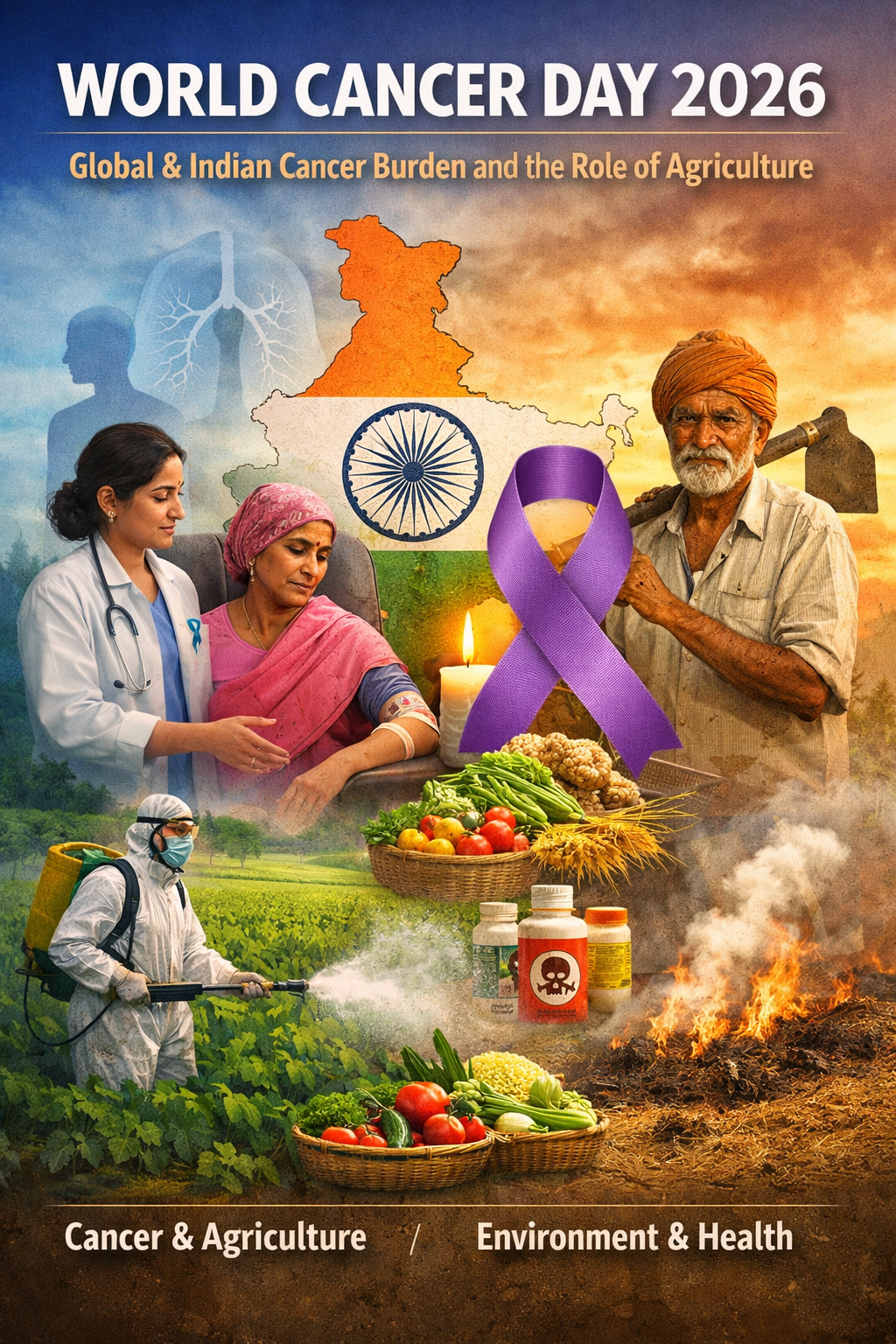
Every year on 4 February, the world pauses to observe World Cancer Day—not merely as a date on the calendar, but as a reminder of millions of lives touched by cancer. It is a day to raise awareness, encourage prevention, mobilise action, and most importantly, humanise a disease that is often reduced to statistics. Behind every number is a family, a farmer, a worker, a child, a dream interrupted.
Cancer is no longer a disease of a few regions or lifestyles; it is a global public health challenge, cutting across borders, economies, and occupations—including agriculture, one of the oldest and most essential human livelihoods.
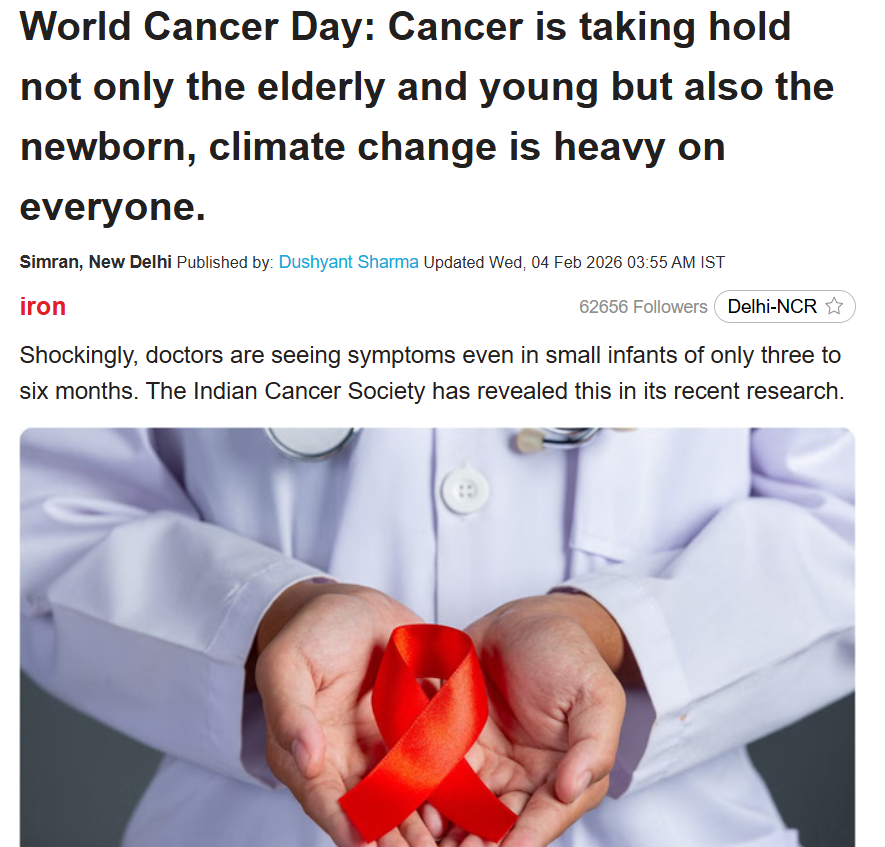
The Global Burden of Cancer: A Growing Concern
Globally, cancer remains one of the leading causes of death. According to international health agencies, nearly 20 million new cancer cases are diagnosed each year, and almost 10 million deaths are attributed to cancer worldwide. What makes this burden more alarming is that a significant proportion of cancers are preventable.
Low- and middle-income countries now account for more than 70% of global cancer deaths, primarily due to late diagnosis, lack of access to healthcare, limited awareness, and environmental exposure. Rapid urbanisation, lifestyle changes, pollution, and occupational hazards have intensified the risk.
Yet, cancer is not just a medical issue—it is deeply social, economic, and environmental in nature.
Cancer in India: A Silent Epidemic
India is witnessing a steady rise in cancer cases. Recent estimates suggest that over 1.4 million new cancer cases are reported annually, with the number expected to increase significantly in the coming decades. Cancers of the breast, cervix, lung, oral cavity, and stomach are among the most common.
What makes India’s cancer burden unique is its dual challenge:
- Lifestyle-related cancers due to tobacco, alcohol, unhealthy diets, and physical inactivity.
- Environment- and occupation-related cancers, particularly in rural and agrarian communities.
In rural India, cancer often goes undetected until advanced stages due to lack of screening facilities, social stigma, and economic constraints. For many farming families, a cancer diagnosis is not just a health crisis—it is a financial catastrophe.
Agriculture and Cancer: An Overlooked Connection
Agriculture sustains life, but paradoxically, certain agricultural practices may be contributing to long-term health risks, including cancer. This connection is complex, sensitive, and often ignored.
1. Pesticide and Agrochemical Exposure
Farmers and agricultural labourers are routinely exposed to pesticides, herbicides, fungicides, and insecticides. Prolonged and unprotected exposure to certain chemicals has been linked to cancers such as:
- Non-Hodgkin’s lymphoma
- Leukemia
- Prostate cancer
- Skin and lung cancers
In many regions, pesticides are applied without adequate protective gear, training, or awareness of safe dosage. Chronic exposure, even at low levels, accumulates in the body over time.
2. Residues in Food and Water
Excessive use of agrochemicals leads to pesticide residues in food grains, fruits, vegetables, and groundwater. Consumers, unknowingly, are exposed through daily diets. This long-term, low-dose exposure is increasingly being studied as a possible risk factor for hormone-related and gastrointestinal cancers.
3. Soil and Environmental Degradation
Degraded soils contaminated with heavy metals, industrial effluents, or chemical residues enter the food chain. Poor waste management and indiscriminate chemical use have blurred the line between agricultural land and polluted ecosystems.
4. Burning of Crop Residues
The practice of stubble burning releases carcinogenic pollutants into the air, contributing to respiratory diseases and increasing cancer risk, particularly lung cancer, in nearby populations.
Beyond Blame: The Need for Responsible Agriculture
It is important to clarify that agriculture itself is not the enemy. The issue lies in unsustainable, chemical-intensive practices driven by productivity pressure, lack of alternatives, and inadequate policy support.
The solution is not to burden farmers with blame but to empower them with:
- Awareness and education on safe chemical handling
- Protective equipment and training
- Promotion of Integrated Pest Management (IPM)
- Encouragement of organic, natural, and regenerative farming practices
- Stronger regulation and monitoring of hazardous agrochemicals
Sustainable agriculture is not just about environmental health—it is about human health.
Prevention, Early Detection, and Collective Responsibility
World Cancer Day emphasises that up to one-third of cancers are preventable through lifestyle changes, environmental protection, and occupational safety. Another one-third can be cured if detected early.
For India, this means:
- Expanding cancer screening programs in rural areas
- Integrating health awareness into agricultural extension services
- Strengthening links between public health and agricultural policies
- Encouraging research on agrochemical exposure and health outcomes
Cancer control is not the responsibility of the health sector alone—it requires a whole-of-society approach.
Cultivating Health Along with Crops
World Cancer Day reminds us that the fight against cancer begins far beyond hospitals—it begins in our fields, food systems, workplaces, and daily choices. As we strive to feed a growing population, we must ensure that the methods we use do not silently compromise human health.
Agriculture has the power to heal as much as it has the potential to harm. By embracing sustainable practices, protecting farmers, ensuring food safety, and aligning agriculture with public health goals, we can move towards a future where progress does not come at the cost of life.
On this World Cancer Day, let us remember:
A healthy society begins with healthy soil, safe food, informed choices, and compassionate action.
Author

Rajat Joshi is a postgraduate scholar in Agricultural Extension and Communication, with a strong academic background in rural development, farmer communication, and agricultural innovation systems. He has a keen interest in agriculture journalism, focusing on translating research, policies, and field-level innovations into clear, impactful stories for farmers, students, and stakeholders. Rajat is passionate about strengthening the bridge between science and society through credible agri-media, awareness-driven reporting, and knowledge dissemination for sustainable agriculture.
You are a very intelligent person!