
Introduction
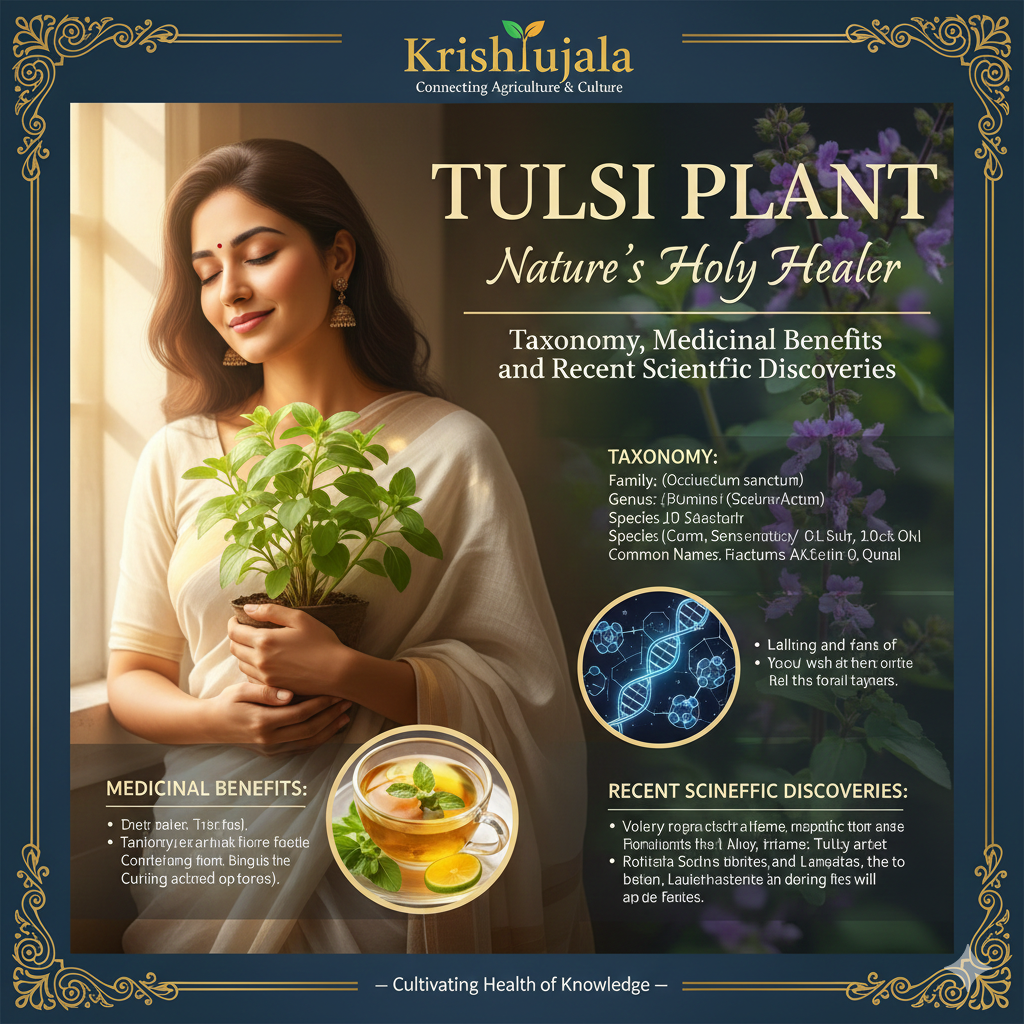
Tulsi, commonly known as Holy Basil, occupies a unique position in Indian tradition, spirituality, and medicine. Revered as a sacred plant in Hindu households, Tulsi is not only worshipped for its divine significance but also valued for its remarkable medicinal properties. Scientifically known as Ocimum sanctum or Ocimum tenuiflorum, Tulsi has been an integral component of Ayurveda, Siddha, and Unani systems of medicine for thousands of years.
In recent decades, modern scientific research has validated many of the traditional claims associated with Tulsi, highlighting its role in boosting immunity, reducing stress, managing chronic diseases, and improving overall health. Owing to its therapeutic potential, Tulsi is now gaining global recognition as a medicinal and nutraceutical plant.
Taxonomical Classification of Tulsi
The systematic classification of Tulsi places it within the mint family, which is known for aromatic and medicinal plants.
- Kingdom: Plantae
- Order: Lamiales
- Family: Lamiaceae
- Genus: Ocimum
- Species: Ocimum sanctum (Ocimum tenuiflorum)
The Lamiaceae family includes several important medicinal and aromatic plants such as mint, rosemary, and sage, indicating Tulsi’s close association with plants of high therapeutic value.
Types of Tulsi
Tulsi exists in multiple varieties, each possessing distinct characteristics and medicinal importance.
1. Rama Tulsi
Rama Tulsi has green leaves and a mild aroma. It is commonly cultivated in households and is widely used for daily consumption, especially in herbal teas and immunity boosters.
2. Krishna Tulsi
Krishna Tulsi is identified by its purple leaves and stems. It has a stronger flavour and higher concentration of bioactive compounds, making it particularly effective in treating respiratory and inflammatory disorders.
3. Vana Tulsi
Vana Tulsi is a wild variety found in forests and hilly regions. Though less commonly cultivated, it possesses potent medicinal properties and is often used in herbal formulations.
Medicinal Benefits of Tulsi
Tulsi is often referred to as the “Queen of Herbs” due to its wide range of health benefits.
1. Boosts Immunity
Tulsi contains bioactive compounds such as eugenol, ursolic acid, rosmarinic acid, and flavonoids. These compounds strengthen the immune system by enhancing the body’s defense mechanisms and protecting against bacterial, viral, and fungal infections. Regular consumption of Tulsi leaves or Tulsi tea helps improve resistance to seasonal illnesses.
2. Respiratory Health
Tulsi is highly effective in managing respiratory disorders. It provides relief from:
- Cough
- Cold
- Asthma
- Bronchitis
Its expectorant and anti-inflammatory properties help clear mucus from airways and reduce inflammation in the respiratory tract. Tulsi is a common ingredient in Ayurvedic cough syrups and herbal inhalations.
3. Stress Reduction and Mental Well-being
Tulsi is classified as an adaptogenic herb, meaning it helps the body adapt to physical, emotional, and environmental stress. It reduces cortisol levels, improves mental clarity, and enhances emotional balance. Regular intake of Tulsi has been associated with reduced anxiety, improved sleep quality, and better cognitive function.
4. Antibacterial and Antiviral Properties
Recent studies have confirmed Tulsi’s effectiveness against various pathogenic microorganisms, including:
- Escherichia coli
- Staphylococcus aureus
- Influenza viruses
These antimicrobial properties make Tulsi a natural remedy for infections and an important plant in preventive healthcare.
Recent Scientific Discoveries on Tulsi
Modern scientific research has provided strong evidence supporting Tulsi’s medicinal potential.
- Anti-cancer Properties: Laboratory studies indicate that Tulsi extracts can inhibit the growth of cancer cells and induce apoptosis (programmed cell death), suggesting its potential role in cancer prevention and supportive therapy.
- Anti-diabetic Effects: Tulsi has been found to improve insulin sensitivity and regulate blood glucose levels, making it beneficial for diabetes management.
- Cardiovascular Health: Tulsi helps reduce cholesterol levels, improves blood circulation, and protects against oxidative stress, thereby supporting heart health.
- Anti-inflammatory and Antioxidant Action: The high antioxidant content in Tulsi helps neutralize free radicals, slowing down cellular aging and reducing inflammation.
Uses of Tulsi in Ayurveda
In Ayurveda, Tulsi is regarded as a “Rasayana”, meaning a rejuvenating herb that promotes longevity and vitality. Common Ayurvedic uses include:
- Tulsi tea for immunity and detoxification
- Tulsi oil for skin and respiratory ailments
- Tulsi-based immunity formulations for chronic disease prevention
Tulsi is also used in home remedies for fever, digestive disorders, and skin infections.
Final Note
Tulsi represents a perfect blend of ancient wisdom and modern science. Its extensive medicinal benefits, supported by contemporary research, underline its importance as a natural healer and preventive health agent. As lifestyle-related diseases and stress-related disorders continue to rise, Tulsi offers a simple, affordable, and sustainable solution for improving human health.
The growing global interest in herbal medicine emphasizes the need to conserve, cultivate, and scientifically promote indigenous medicinal plants like Tulsi, ensuring their benefits reach future generations.
Author

Rajat Joshi is a postgraduate scholar in Agricultural Extension and Communication, with a strong academic background in rural development, farmer communication, and agricultural innovation systems. He has a keen interest in agriculture journalism, focusing on translating research, policies, and field-level innovations into clear, impactful stories for farmers, students, and stakeholders. Rajat is passionate about strengthening the bridge between science and society through credible agri-media, awareness-driven reporting, and knowledge dissemination for sustainable agriculture.