Introduction
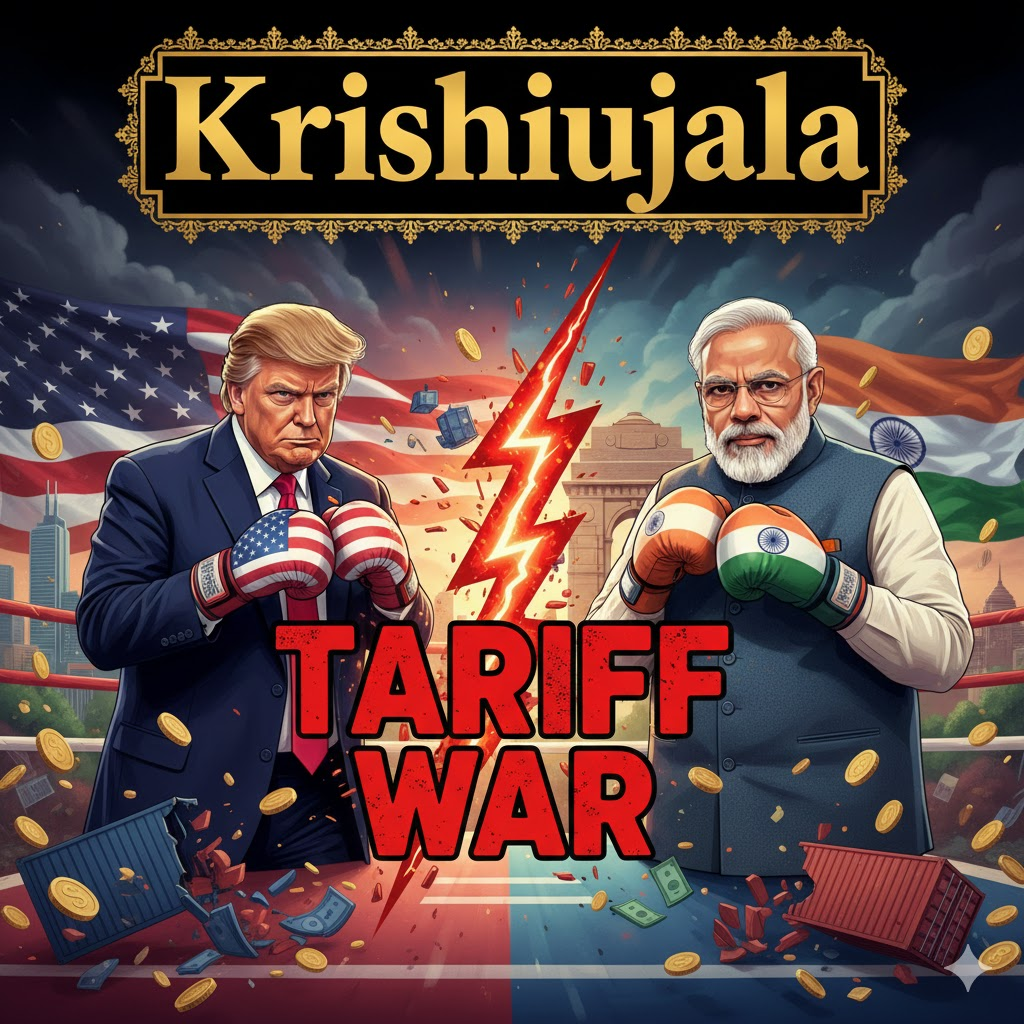
In an era of increasing globalization, agricultural trade has become deeply intertwined with geopolitics and economic diplomacy. The tariff war between the United States and India represents a significant departure from the principles of free trade and multilateral cooperation. While tariffs are often imposed to protect domestic industries or correct trade imbalances, their repercussions are far-reaching, particularly for the agricultural sector, which supports millions of livelihoods in developing economies like India.
The imposition of higher tariffs by the United States on Indian agricultural exports, coupled with India’s retaliatory measures, has affected trade flows, farmer incomes, and bilateral relations. This tariff confrontation highlights the vulnerability of agriculture to political decisions and underscores the need for strategic trade diversification and policy resilience.

Background of the Tariff War
The roots of the India–US tariff dispute lie in differing perceptions of trade fairness and market access.
Trade Imbalance Concerns
The United States argued that India’s trade policies, including higher import duties and regulatory barriers, contributed to a persistent trade imbalance. In response, the U.S. administration adopted a more protectionist stance, particularly targeting sectors where India enjoyed export advantages.
Removal from the Generalized System of Preferences (GSP)
A major turning point came with the removal of India from the U.S. Generalized System of Preferences (GSP). GSP had allowed duty-free access for several Indian agricultural and allied products. Its withdrawal significantly increased export costs for Indian producers, making their products less competitive in the American market.
India’s Retaliatory Tariffs
India responded by imposing retaliatory tariffs on select U.S. products, including agricultural commodities such as almonds, apples, and pulses. While this move aimed to assert trade sovereignty, it further escalated tensions and reduced the scope for cooperative negotiation.
Indian Agricultural Products Affected
Several Indian agricultural exports faced direct or indirect impacts due to the tariff war.
- Basmati Rice: Although premium in quality, higher tariffs eroded its price competitiveness in the U.S. market.
- Dairy Products: Indian dairy exports, already constrained by strict sanitary standards, faced additional tariff burdens.
- Spices: India, being the world’s largest exporter of spices, experienced reduced demand due to increased landed costs.
- Mango Pulp and Processed Fruits: Value-added horticultural products faced declining exports, affecting agro-processing units.
The combined effect of tariffs and non-tariff barriers created an unfavourable export environment for Indian agricultural commodities.
Impact on Indian Farmers
1. Reduced Export Earnings
Higher tariffs directly increase the final price of Indian products in the U.S. market, reducing demand. Exporters often respond by cutting procurement prices, which ultimately affects farmers. For small and marginal farmers engaged in export-oriented agriculture, this translated into lower incomes and reduced profitability.
2. Price Volatility in Domestic Markets
When exports decline, surplus production floods domestic markets, leading to falling farm-gate prices. This oversupply situation particularly affects perishable commodities such as fruits, vegetables, and dairy products. Price volatility undermines income stability and discourages farmers from investing in productivity-enhancing inputs.
3. Supply Chain Disruptions
Export-oriented value chains—comprising farmers, aggregators, processors, and exporters—experienced uncertainty. Contract farming arrangements weakened, credit flows slowed, and risk-averse behaviour increased among stakeholders. Such disruptions weaken the long-term competitiveness of Indian agriculture.
Economic and Policy Consequences
Strain on Bilateral Trade Relations
The tariff war strained India–US relations, particularly in the agricultural sector, which had earlier been a symbol of mutual cooperation. The dispute exposed structural differences in trade priorities and reduced trust in bilateral negotiations.
Need for Market Diversification
One of the key policy lessons from the tariff war is the danger of over-dependence on a few export markets. The crisis prompted India to explore alternative destinations in Asia, Africa, and the Middle East, thereby reducing vulnerability to unilateral trade actions.
Push Towards Value Addition
Tariff barriers highlighted the importance of shifting from raw agricultural exports to value-added and processed products, which are less price-sensitive and command higher margins. This aligns with India’s broader goals of agri-industrialization and rural employment generation.
Long-Term Implications for Indian Agriculture
Strengthening South-South Trade
The tariff conflict accelerated India’s engagement with developing economies through regional and bilateral trade agreements. Strengthening South-South trade helps reduce dependence on developed markets and creates stable demand for agricultural products.
Encouraging Domestic Food Processing
Reduced export opportunities have reinforced the importance of domestic food processing and consumption-led growth. Expanding cold chains, food parks, and agro-processing clusters can absorb surplus production and stabilize farmer incomes.
Policy Reforms in Agricultural Exports
The tariff war has emphasized the need for comprehensive export reforms, including:
- Improving quality and traceability standards
- Reducing logistics costs
- Enhancing trade intelligence systems
- Supporting farmers through export incentives and insurance mechanisms
Such reforms are essential to make Indian agriculture globally competitive and resilient.
Conclusion
The tariff war between the United States and India serves as a powerful reminder that agricultural trade is highly sensitive to geopolitical and economic decisions. While tariffs were imposed to address perceived trade imbalances, their consequences extended far beyond trade statistics, directly affecting farmers’ livelihoods, market stability, and long-term investment in agriculture.
For India, the episode underscores the need to pursue diversified export markets, robust trade diplomacy, value addition, and farmer-centric policies. Strengthening domestic resilience while engaging constructively in global trade negotiations will be crucial to safeguarding India’s agricultural sector in an increasingly uncertain global trade environment.
Author

Rajat Joshi is a postgraduate scholar in Agricultural Extension and Communication, with a strong academic background in rural development, farmer communication, and agricultural innovation systems. He has a keen interest in agriculture journalism, focusing on translating research, policies, and field-level innovations into clear, impactful stories for farmers, students, and stakeholders. Rajat is passionate about strengthening the bridge between science and society through credible agri-media, awareness-driven reporting, and knowledge dissemination for sustainable agriculture.

Woah! I’m really loving the template/theme of this site. It’s simple, yet effective. A lot of times it’s challenging to get that “perfect balance” between superb usability and appearance. I must say that you’ve done a great job with this. Also, the blog loads very quick for me on Chrome. Outstanding Blog!
I found your blog site on google and examine a number of of your early posts. Continue to maintain up the excellent operate. I simply additional up your RSS feed to my MSN Information Reader. Searching for ahead to reading more from you in a while!…