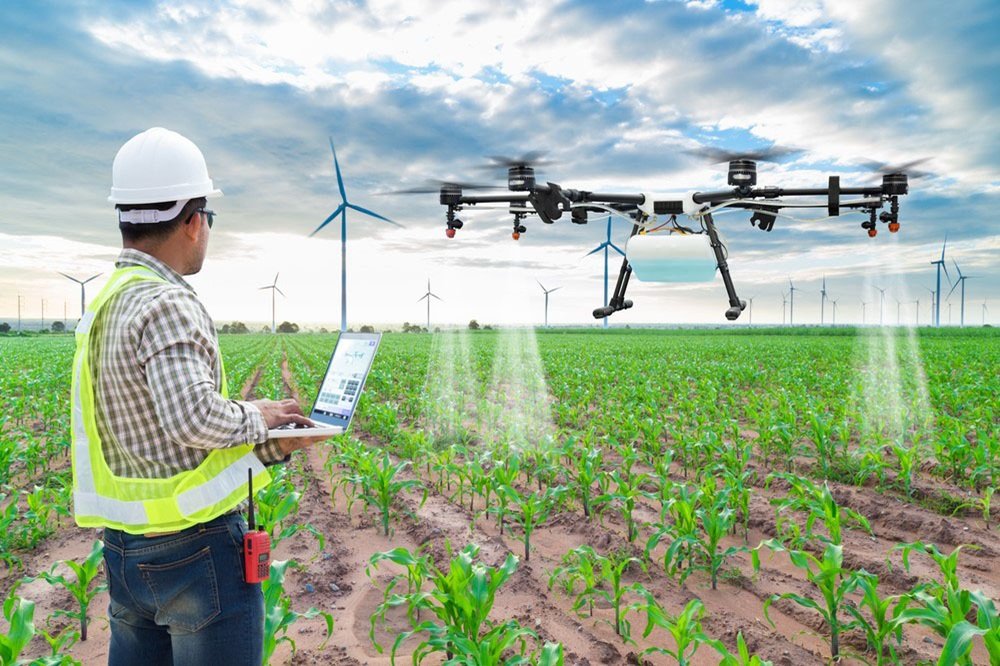
The use of drones in agriculture is rapidly transforming traditional farming into smart, data-driven, and precision-based agriculture. Agricultural drones, also known as UAVs (Unmanned Aerial Vehicles), help farmers monitor crops, manage inputs efficiently, reduce costs, and increase productivity. In a country like India, where small landholdings and climate risks are major challenges, drones offer a powerful solution for sustainable and profitable farming.
What Are Agricultural Drones?
Agricultural drones are unmanned aerial vehicles equipped with:
- High-resolution cameras
- Multispectral and thermal sensors
- GPS and mapping software
- Spraying and seeding mechanisms
They collect real-time data from fields and help farmers make accurate and timely decisions.
Major Uses of Drones in Agriculture
1. Crop Monitoring and Health Assessment
Drones capture high-quality aerial images that help farmers:
- Detect crop stress
- Identify nutrient deficiencies
- Spot pest and disease infestation early
- Monitor crop growth stages
Using NDVI and other vegetation indices, drones provide insights that are not visible to the naked eye.
2. Precision Spraying of Pesticides and Fertilizers
One of the most popular uses of drones in agriculture is drone-based spraying.
Benefits:
- Uniform and targeted spraying
- Reduction in chemical usage by 20–30%
- Lower labor requirement
- Reduced health risks to farmers
Drones are especially useful in tall crops, waterlogged fields, and hilly areas.
3. Soil and Field Analysis
Before sowing, drones help in:
- Soil moisture mapping
- Field topography analysis
- Identifying uneven land and drainage issues
This information supports better land preparation, irrigation planning, and crop selection.
4. Crop Mapping and Yield Estimation
Drones create accurate field maps and crop models, which help in:
- Estimating yield
- Planning harvest schedules
- Assessing crop damage due to pests, floods, or drought
These insights are valuable for farm planning and crop insurance assessments.
5. Irrigation Management
Thermal sensors in drones identify:
- Water-stressed areas
- Over-irrigated zones
- Leakage in irrigation systems
This helps farmers optimize irrigation and improve water-use efficiency, a critical need in Indian agriculture.
6. Sowing and Seed Broadcasting
Some advanced drones are used for:
- Seed broadcasting
- Cover crop seeding
- Reforestation and plantation
This method saves time and is useful in inaccessible or degraded lands.
7. Livestock Monitoring
Drones are also used in livestock farming to:
- Track animal movement
- Monitor grazing patterns
- Detect injured or missing animals
This is particularly useful in large farms and open grazing systems.
Benefits of Using Drones in Agriculture
🌾 For Farmers
- Early problem detection
- Reduced input costs
- Higher crop yield and quality
- Time and labor savings
🌍 For Sustainable Farming
- Reduced chemical overuse
- Efficient water management
- Lower carbon footprint
- Precision-based decision making
Role of Drones in Indian Agriculture
In India, drone technology is gaining momentum due to:
- Government support under Drone Shakti
- Use in crop spraying, mapping, and insurance
- Promotion through Custom Hiring Centers (CHCs)
- Training of rural youth as drone operators
Drones are becoming an important part of Digital and Precision Agriculture in India.
Challenges in Adoption of Agricultural Drones
Despite their benefits, some challenges remain:
- High initial cost of drones
- Need for trained operators
- Limited awareness among small farmers
- Regulatory permissions and compliance
However, these challenges are being addressed through subsidies, training programs, and shared service models.
Future of Drones in Agriculture
The future of agricultural drones is promising with:
- AI-based crop diagnostics
- Integration with farm management apps
- Drone-as-a-Service (DaaS) models
- Better battery life and affordability
In the coming years, drones will become a common farm tool, just like tractors and irrigation systems.
Conclusion
The use of drones in agriculture marks a significant shift toward precision, efficiency, and sustainability. By enabling real-time monitoring, targeted input application, and data-driven decisions, drones empower farmers to increase productivity while reducing costs and environmental impact.
With proper training, policy support, and awareness, drone technology has the potential to revolutionize Indian agriculture and improve farmers’ income.
Use of drones in agriculture, agricultural drones, drone technology in farming, precision agriculture drones, drone spraying in agriculture, smart farming technology, drones in Indian agriculture
Author

Gagan Tripathi is an agripreneur, plant scientist, and author known for his work in agritech innovation and sustainable horticulture. He is the Co-founder and CEO of Plant Orbit, a horticulture-focused startup dedicated to making healthy, scientifically managed plants accessible to urban and institutional consumers. Born in 2000, Gagan holds a master’s degree in Agriculture Extension and Communication, blending agricultural science with entrepreneurship and community outreach. He is also the author of the bestseller “Roadmap to Your Healthy Succulents”. His work focuses on sustainable plant care, green entrepreneurship, and building impact-driven agri startups in India.