

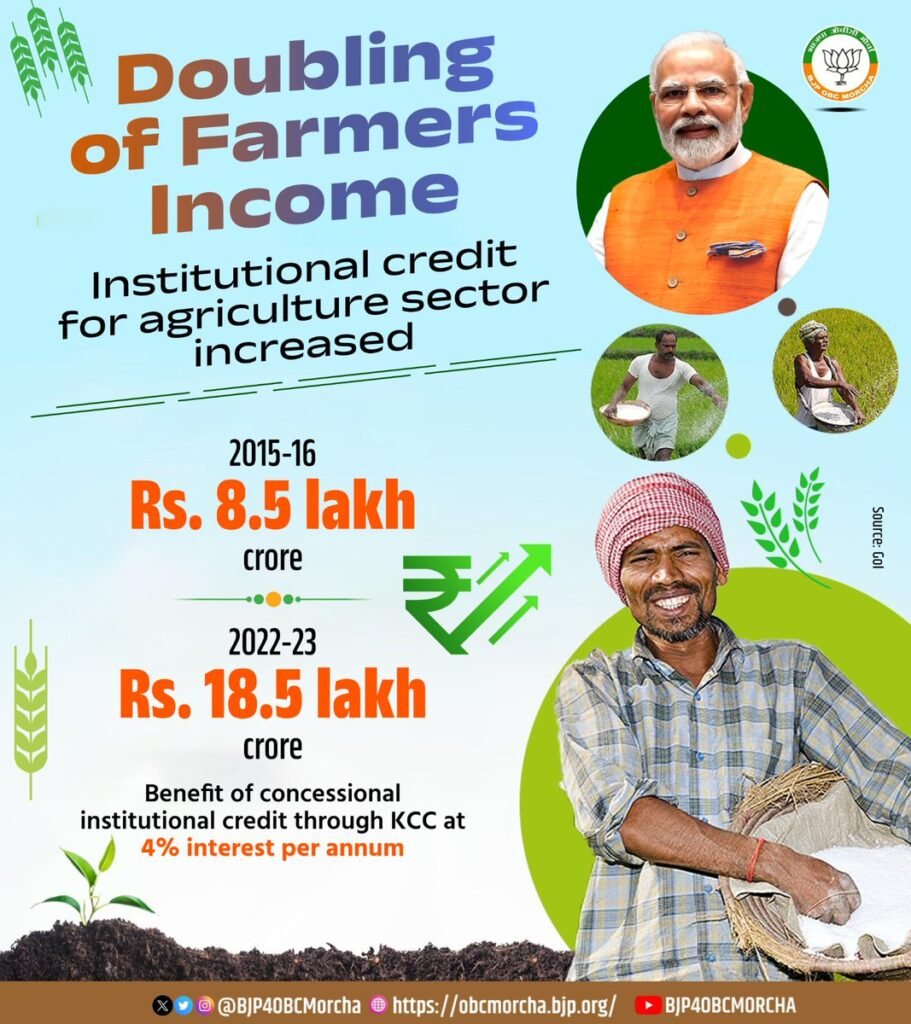
Doubling farmers’ income has been one of the most important goals of Indian agriculture. While increasing production alone is not enough, agri-innovation—the application of technology, new practices, business models, and institutional reforms—has emerged as a key driver to achieve higher and more stable farm incomes.
Agri-innovation goes beyond traditional farming and focuses on reducing costs, increasing productivity, minimizing risk, and improving market access. This article explains how agri-innovation can play a decisive role in doubling farmers’ income.
Understanding Farmers’ Income
Farmers’ income is influenced by multiple factors:
- Crop yield and productivity
- Cost of cultivation
- Market price and value realization
- Risk due to climate and pests
- Diversification into allied activities
Agri-innovation addresses all these dimensions simultaneously, making income growth sustainable rather than temporary.
1. Productivity Enhancement through Technology
One of the most direct ways agri-innovation helps farmers is by increasing productivity per unit of land and water.
Key Innovations:
- High-yielding and climate-resilient crop varieties
- Precision agriculture tools (soil testing, nutrient mapping)
- Drip irrigation and fertigation
- Improved seed and planting material
Higher productivity with optimal input use increases net income without proportionally increasing costs.
2. Cost Reduction through Precision Farming
Agri-innovation focuses not only on higher yields but also on lowering the cost of cultivation.
Examples:
- Precision nutrient management reduces fertilizer wastage
- Smart irrigation lowers water and electricity costs
- Mechanization reduces labor dependency
- Digital advisory prevents unnecessary pesticide use
Lower input costs directly translate into higher profit margins for farmers.
3. Crop Diversification and High-Value Agriculture
Shifting from low-value cereal crops to high-value crops is a major agri-innovation strategy.
High-Value Options:
- Horticultural crops (fruits, vegetables, flowers)
- Spices and plantation crops
- Medicinal and aromatic plants
- Protected cultivation crops
Crop diversification reduces income risk and ensures better returns per hectare.
4. Integrated Farming Systems (IFS)
Integrated farming systems combine crops with livestock, fisheries, poultry, or agroforestry.
Benefits:
- Multiple income sources from the same farm
- Efficient recycling of farm waste
- Year-round income flow
- Reduced vulnerability to crop failure
IFS is one of the most effective agri-innovation models for small and marginal farmers.
5. Value Addition and Processing Innovations
Selling raw produce often yields low returns. Value addition significantly increases farmers’ income.
Examples:
- Fruits into jams, juices, and pulp
- Turmeric into powder
- Milk into curd, paneer, and ghee
- Pulses into cleaned and packed dal
Agri-innovation in processing, packaging, and branding allows farmers to capture a larger share of consumer price.
6. Market-Linked and Digital Agriculture
Market access is as important as production. Agri-innovation strengthens the farm-to-market connection.
Key Innovations:
- Farm-to-fork digital platforms
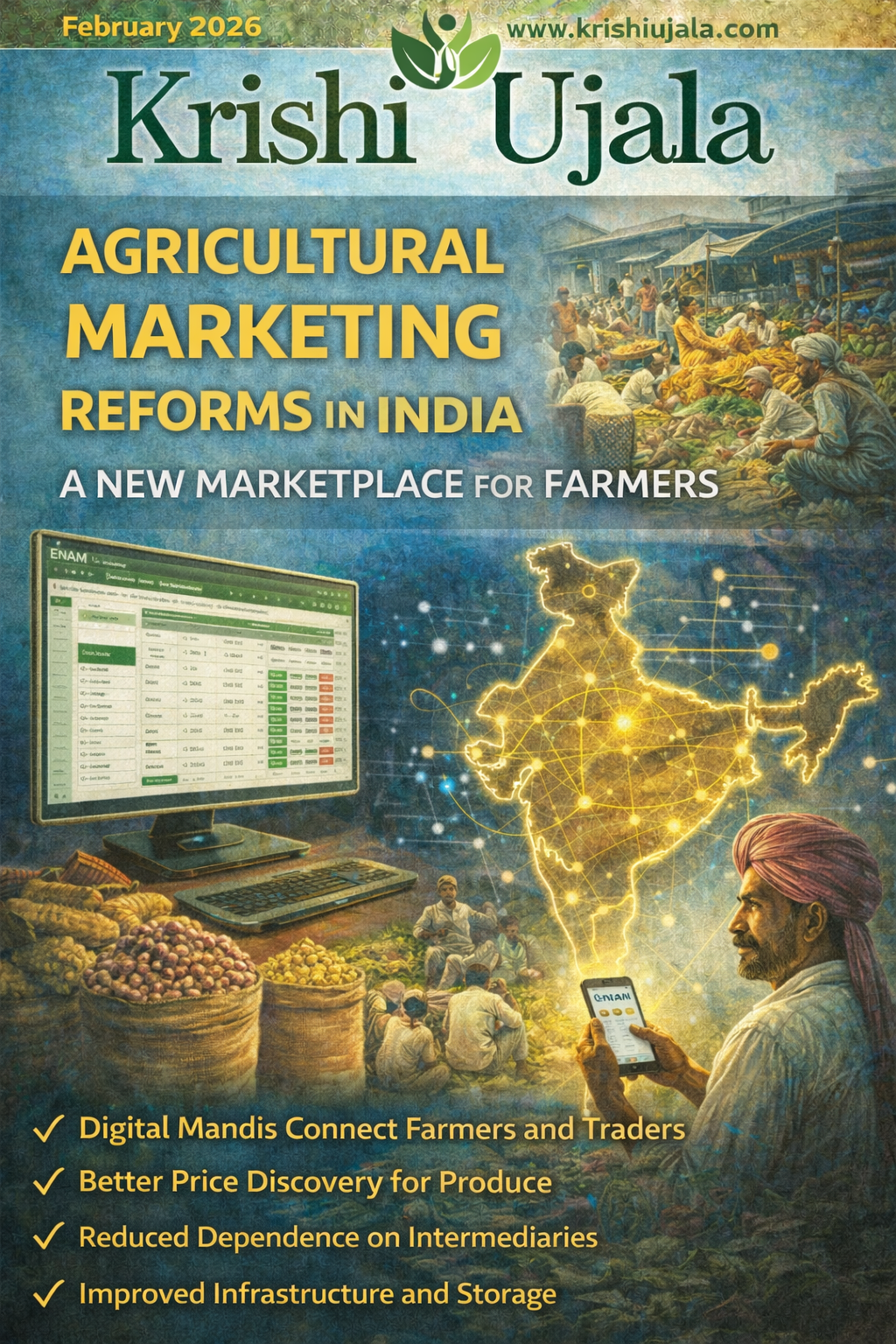
- E-NAM and online marketplaces
- Direct-to-consumer models
- Farmer Producer Organizations (FPOs)
These innovations reduce middlemen, improve price transparency, and increase farmers’ bargaining power.
7. Climate-Smart Agri-Innovations
Climate change is a major threat to farm income. Agri-innovation promotes climate-resilient agriculture.
Examples:
- Drought-tolerant and heat-resistant varieties
- Crop insurance and weather-based advisories
- Water-efficient cropping systems
- Agroforestry and conservation agriculture
Reducing risk and crop loss is critical for income stability.
8. Livestock and Allied Sector Innovations
Livestock plays a crucial role in doubling farmers’ income by providing regular and supplementary income.
Innovations Include:
- Improved animal breeds
- Balanced ration and fodder innovations
- Digital animal health monitoring
- Dairy and meat value chains
Livestock reduces farmers’ dependence on seasonal crop income.
9. Role of Agritech Startups
Agritech startups are accelerating agri-innovation by offering:
- Digital advisory services
- Smart farm management tools
- Market linkage platforms
- Input and output aggregation
These startups make advanced technologies accessible even to small farmers.
10. Institutional and Policy Innovations
Government support amplifies the impact of agri-innovation through:
- PMKSY for micro-irrigation
- PMFME for food processing
- PKVY for organic farming
- National Agriculture Market (e-NAM)
Policy-driven innovations reduce financial risk and encourage adoption of new practices.
Challenges in Adopting Agri-Innovation
Despite its potential, adoption faces challenges:
- Limited awareness and training
- High initial investment
- Small landholdings
- Digital literacy gaps
Strengthening extension services and farmer training is essential to overcome these barriers.
Way Forward
To truly double farmers’ income through agri-innovation:
- Focus on profit per hectare, not just yield
- Promote market-oriented farming
- Encourage farmer collectives and FPOs
- Integrate technology with traditional knowledge
- Strengthen research–extension–farmer linkage
Conclusion
Agri-innovation is the backbone of income growth in modern agriculture. By enhancing productivity, reducing costs, diversifying income sources, and improving market access, agri-innovation provides a holistic pathway for doubling farmers’ income. The future of Indian agriculture lies in adopting innovation-led, sustainable, and farmer-centric solutions.
Agri-innovation for doubling farmers’ income, farmers income growth, agritech innovation, profitable farming methods, sustainable agriculture, market-linked agriculture, Indian agriculture innovation
Author

Gagan Tripathi is an agripreneur, plant scientist, and author known for his work in agritech innovation and sustainable horticulture. He is the Co-founder and CEO of Plant Orbit, a horticulture-focused startup dedicated to making healthy, scientifically managed plants accessible to urban and institutional consumers. Born in 2000, Gagan holds a master’s degree in Agriculture Extension and Communication, blending agricultural science with entrepreneurship and community outreach. He is also the author of the bestseller “Roadmap to Your Healthy Succulents”. His work focuses on sustainable plant care, green entrepreneurship, and building impact-driven agri startups in India.

We stumbled over here different web address
and thought I might check things out. I like what I see so i am just following you.
Look forward to exploring your web page repeatedly.