
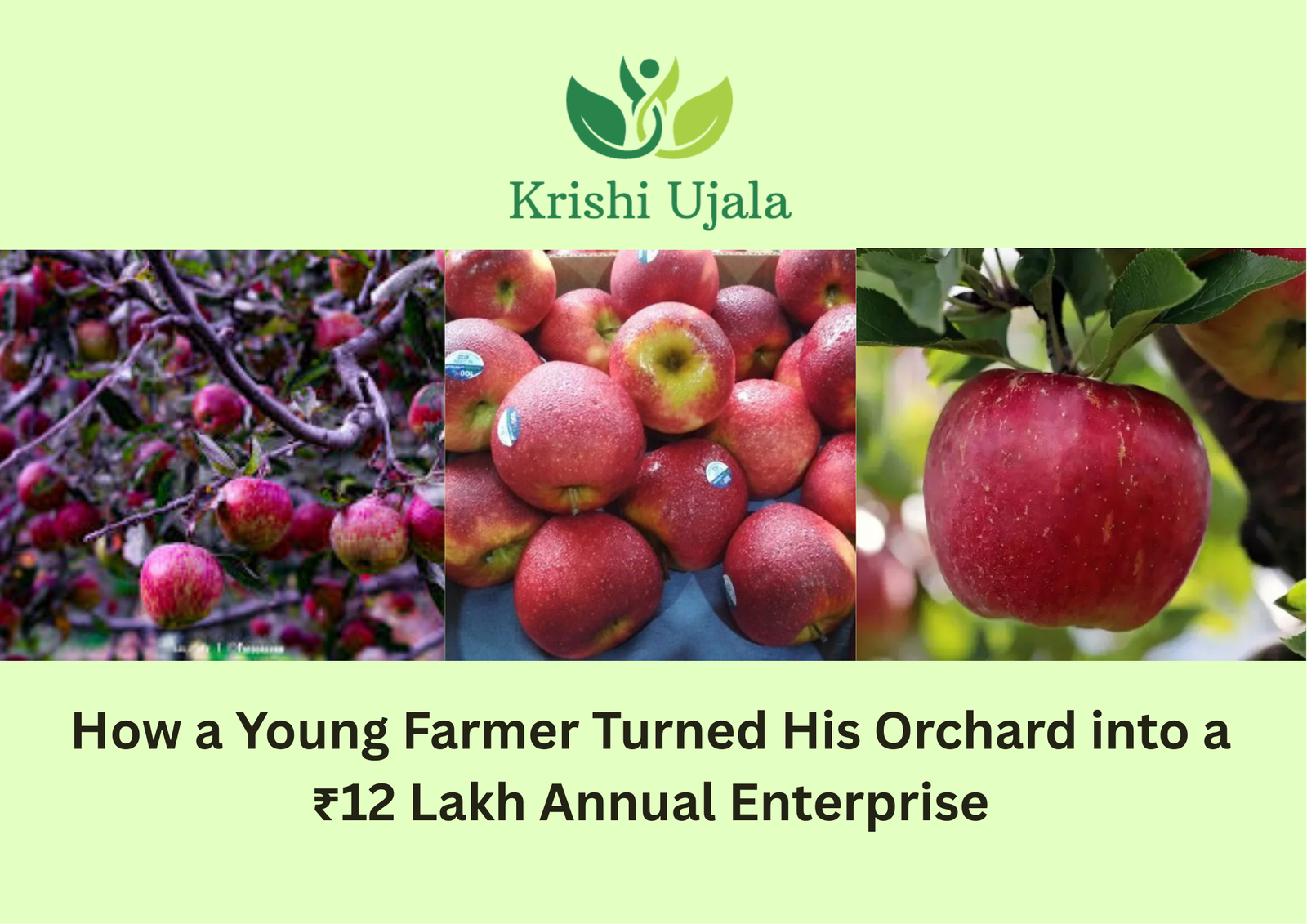
Horticulture Success Story: How a Young Farmer Turned His Orchard into a ₹12 Lakh Annual Enterprise
Location: Nainital District, Uttarakhand
Farmer: Rahul Joshi, 32 years
Enterprise: High-density apple, off-season vegetables, and value-added products
Annual Income: ₹12–14 lakh
Start Year: 2017
From Traditional Farming to Horticulture Innovation
Rahul Joshi, a young farmer from a remote village in Nainital district, grew up watching his family depend on rain-fed subsistence farming. With low productivity and high migration in the village, he realized that traditional farming alone could not sustain future generations.
In 2017, after completing his diploma in horticulture, Rahul decided to shift from conventional farming to scientific horticulture, focusing on high-value crops.
Step 1: High-Density Apple Orchard
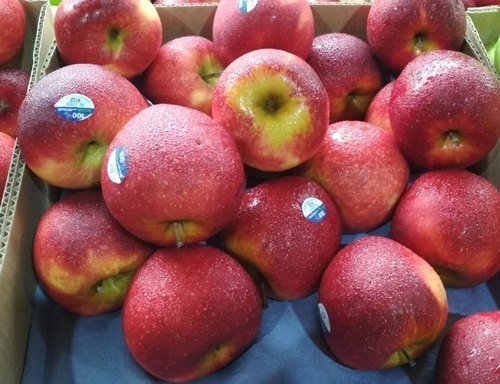
Rahul adopted the High-Density Planting (HDP) system, an advanced technique promoted by horticulture experts.
What He Did:
- Planted 480 apple plants per acre (instead of the traditional 80–100)
- Used M9 dwarf rootstock
- Installed drip irrigation + fertigation system
- Used plastic mulching for moisture conservation
Impact:
- Plants started giving yield in 2nd year
- Full production by 4th year
- Current yield: 8–10 tonnes per acre
Income from apples alone: ₹6–7 lakh per year
Step 2: Off-Season Vegetable Production
Rahul used a 200 sq. m. polyhouse, supported through government subsidy, to grow:
- Capsicum
- Cucumber
- Tomatoes
- Exotic lettuce
Income from Polyhouse Vegetables:
₹3–4 lakh annually
Step 3: Value Addition and Brand Creation
Rahul started processing surplus farm produce:
- Apple chips
- Jam & squash
- Pickles
- Dried herbs
He launched his own brand, “Himalayan Fresh Basket.”
These products are now sold through:
- Local shops
- Farmer markets
- Online platforms (Instagram, WhatsApp Business)
Revenue from Value Addition:
₹2–3 lakh per year
Key Technologies Rahul Adopted
- Drip irrigation
- Soil testing
- Mulching
- Vermicomposting
- Biological pest management
- Precision fertigation
- Polyhouse cultivation
These techniques helped him reduce chemical use by 40% and improve soil health.
Support Received
Rahul credits:
- KVK (Krishi Vigyan Kendra) training
- State Horticulture Department schemes
- Subsidy on polyhouse (70%)
- Guidance from GBPUAT Pantnagar experts
Horticulture Success Formula According to Rahul
“Start small but adopt scientific methods. Learn new skills. Add value to your produce. Horticulture is the future for hill farmers.”
Income Comparison: Before vs After
| Year | Farming Type | Annual Income |
|---|---|---|
| 2016 | Rain-fed traditional crops | ₹1.2 lakh |
| 2024 | Horticulture enterprise | ₹12–14 lakh |
Rahul’s Advice to Youth
- Try horticulture + value addition instead of only traditional farming
- Use government schemes for polyhouses & orchards
- Adopt drip irrigation and mulching
- Market your product digitally
Conclusion
Rahul’s journey shows how modern horticulture, backed by scientific practices and entrepreneurship, can transform rural livelihoods. His model is now being replicated by several young farmers in nearby villages.
Horticulture is not just farming—it is a complete business ecosystem with opportunities in production, processing, and branding.
Author

Gagan Tripathi is an agripreneur, plant scientist, and author known for his work in agritech innovation and sustainable horticulture. He is the Co-founder and CEO of Plant Orbit, a horticulture-focused startup dedicated to making healthy, scientifically managed plants accessible to urban and institutional consumers. Born in 2000, Gagan holds a master’s degree in Agriculture Extension and Communication, blending agricultural science with entrepreneurship and community outreach. He is also the author of the bestseller “Roadmap to Your Healthy Succulents”. His work focuses on sustainable plant care, green entrepreneurship, and building impact-driven agri startups in India.
