
Major Crops and Their Cultivation Areas in India
New Delhi:
India is an agrarian economy with diverse climatic zones and soil types, enabling the cultivation of a wide range of crops. Understanding the major crops in India and their cultivation areas is essential for farmers, policymakers, researchers, and agribusiness stakeholders to ensure food security and sustainable agricultural growth.
Wheat Cultivation in India
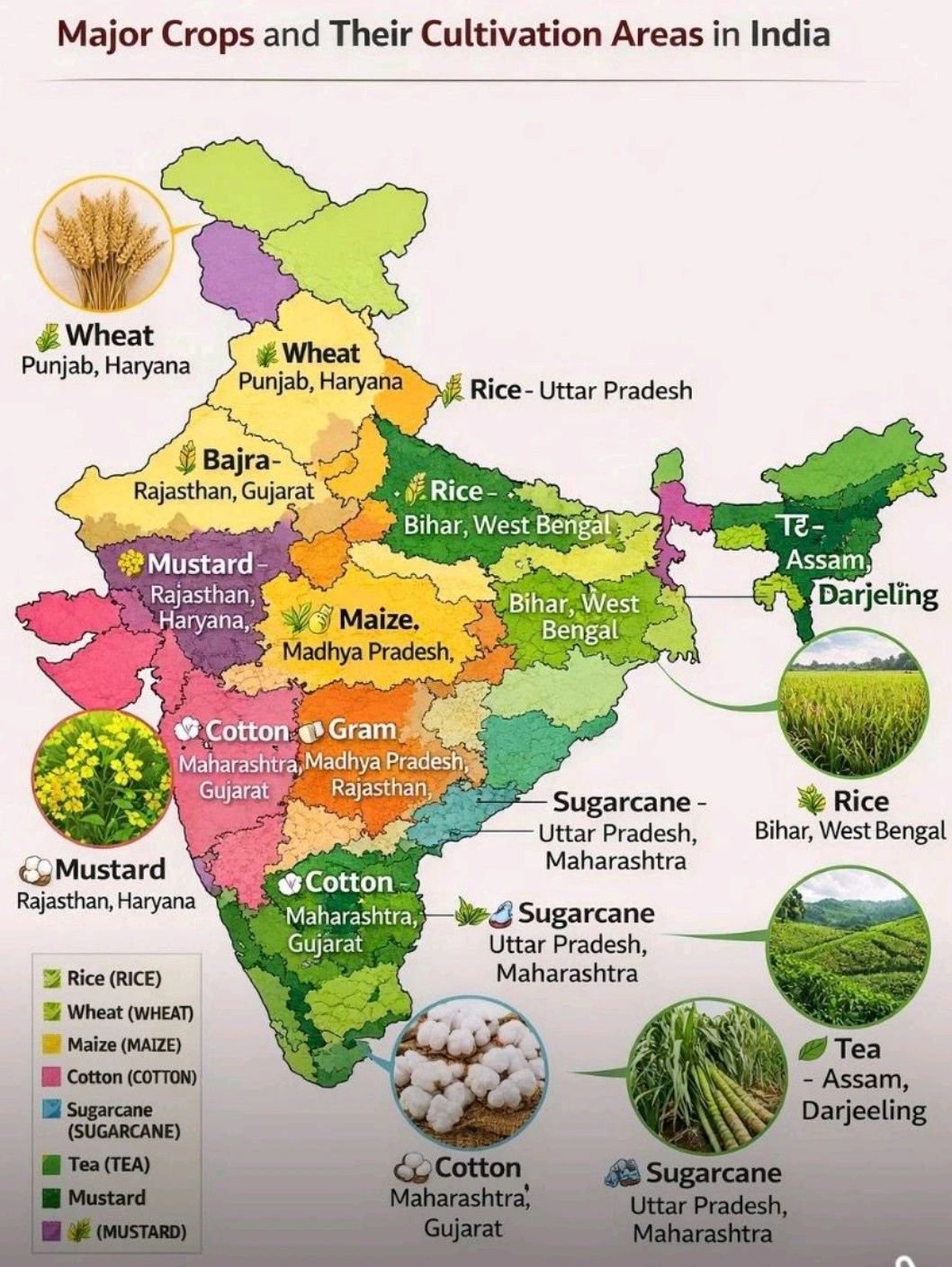
Wheat is one of the most important rabi crops in India, primarily grown in Punjab and Haryana. Fertile alluvial soils, assured irrigation, and mechanized farming make these states leaders in wheat production. Wheat plays a crucial role in India’s food grain supply.
Rice Cultivation Areas in India
Rice is the staple food crop of India and is widely cultivated in Uttar Pradesh, Bihar, and West Bengal. These regions benefit from high rainfall, river basins, and clayey soils suitable for paddy cultivation. Rice contributes significantly to national food security.
Maize Production in India
Maize is mainly grown in Madhya Pradesh, where it is used for food, fodder, and industrial purposes. Due to its adaptability, maize is emerging as an important crop in India’s diversified farming systems.
Mustard Cultivation in India
Mustard is a major oilseed crop in India, predominantly cultivated in Rajasthan and Haryana. It plays a vital role in edible oil production and supports farmer income in semi-arid regions.
Cotton Producing States in India
India is one of the largest cotton producers in the world. Maharashtra and Gujarat are the leading cotton-producing states, supported by black cotton soils and suitable climatic conditions. Cotton is critical for the Indian textile and apparel industry.
Sugarcane Cultivation Areas in India
Sugarcane is extensively grown in Uttar Pradesh and Maharashtra, making these states the backbone of India’s sugar industry. Sugarcane farming supports millions of farmers and provides raw material for sugar, ethanol, and jaggery production.
Tea Cultivation in India
Tea plantations are mainly located in Assam and Darjeeling, globally known for their premium quality tea. The humid climate, high rainfall, and hilly terrain make these regions ideal for tea cultivation.
Importance of Crop-Wise Regional Distribution
Understanding state-wise crop cultivation in India helps improve crop planning, climate resilience, and efficient use of natural resources. It also supports better policy formulation, agri-technology adoption, and sustainable farming practices.
Conclusion
India’s agricultural strength lies in its crop diversity and regional specialization. Strengthening traditional cultivation areas while integrating modern agricultural technologies will be key to enhancing productivity, farmer income, and long-term food security.
Author

Gagan Tripathi is an agripreneur, plant scientist, and author known for his work in agritech innovation and sustainable horticulture. He is the Co-founder and CEO of Plant Orbit, a horticulture-focused startup dedicated to making healthy, scientifically managed plants accessible to urban and institutional consumers. Born in 2000, Gagan holds a master’s degree in Agriculture Extension and Communication, blending agricultural science with entrepreneurship and community outreach. He is also the author of the bestseller “Roadmap to Your Healthy Succulents”. His work focuses on sustainable plant care, green entrepreneurship, and building impact-driven agri startups in India.

I was more than happy to find this web-site.I wanted to thanks on your time for this glorious learn!! I definitely having fun with every little bit of it and I’ve you bookmarked to check out new stuff you blog post.
I as well as my pals have already been studying the nice ideas located on your web page then quickly I got a terrible feeling I had not expressed respect to the web site owner for those strategies. Those women came for this reason thrilled to see them and already have unquestionably been loving those things. Appreciate your genuinely indeed considerate as well as for picking certain smart subjects most people are really desirous to be aware of. My very own sincere apologies for not expressing gratitude to sooner.