Introduction
India’s agricultural diversity is deeply rooted in its varied soil resources. The country possesses a wide range of soil types due to differences in climate, relief, vegetation, and geological history. Understanding the soils of India and the crops grown on them is essential for sustainable agriculture, food security, and efficient land use planning.
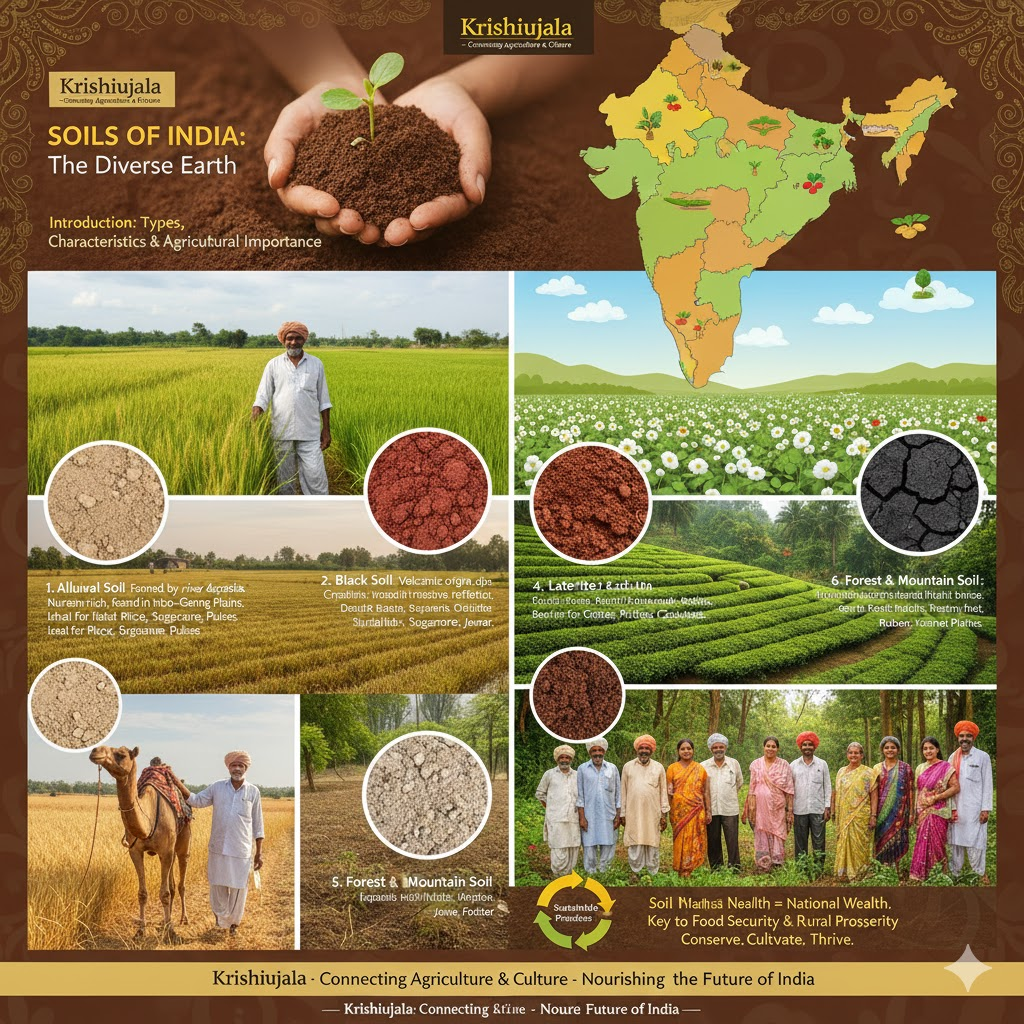
India is broadly divided into eight major soil groups, each supporting specific cropping patterns and farming systems.
1. Alluvial Soils
Distribution: Indo-Gangetic plains, Assam, coastal plains
Characteristics:
- Rich in potash and lime
- Poor in nitrogen and phosphorus
- High fertility and good water-holding capacity
Crops Grown:
- Rice
- Wheat
- Sugarcane
- Maize
- Pulses and oilseeds
Agricultural Significance:
Alluvial soils form the backbone of India’s food grain production, making them crucial for national food security.
2. Black Soils (Regur Soil)
Distribution: Deccan Plateau (Maharashtra, MP, Gujarat)
Characteristics:
- High clay content
- High moisture retention
- Rich in calcium and magnesium
- Develops cracks in summer
Crops Grown:
- Cotton (best suited)
- Soybean
- Groundnut
- Sugarcane
Agricultural Significance:
Known as “cotton soils”, black soils are ideal for rainfed farming and dryland agriculture.
3. Red Soils
Distribution: Tamil Nadu, Karnataka, Odisha, Chhattisgarh
Characteristics:
- Rich in iron (red colour)
- Poor in nitrogen, phosphorus, and humus
- Light texture and porous
Crops Grown:
- Millets (ragi, jowar)
- Pulses
- Groundnut
- Cotton
Agricultural Significance:
With proper fertilization and irrigation, red soils support diversified cropping systems.
4. Laterite Soils
Distribution: Western Ghats, Eastern Ghats, Northeast India
Characteristics:
- Formed due to intense leaching
- Acidic in nature
- Poor fertility
Crops Grown:
- Tea
- Coffee
- Cashew
- Coconut
Agricultural Significance:
Laterite soils are suitable for plantation crops under high rainfall conditions.
5. Desert (Arid) Soils
Distribution: Rajasthan, Gujarat
Characteristics:
- Sandy texture
- Low organic matter
- High salinity in places
Crops Grown:
- Bajra
- Guar
- Barley
Agricultural Significance:
Modern irrigation projects like the Indira Gandhi Canal have expanded crop production in desert soils.
6. Forest and Mountain Soils
Distribution: Himalayan region
Characteristics:
- Rich in organic matter
- Acidic
- Shallow depth
Crops Grown:
- Tea
- Apple
- Spices
Conclusion
India’s soils form the foundation of its agricultural economy. Scientific soil management, crop-soil matching, and sustainable practices are essential to enhance productivity and resilience against climate change.
Author

Rajat Joshi is a postgraduate scholar in Agricultural Extension and Communication, with a strong academic background in rural development, farmer communication, and agricultural innovation systems. He has a keen interest in agriculture journalism, focusing on translating research, policies, and field-level innovations into clear, impactful stories for farmers, students, and stakeholders. Rajat is passionate about strengthening the bridge between science and society through credible agri-media, awareness-driven reporting, and knowledge dissemination for sustainable agriculture.