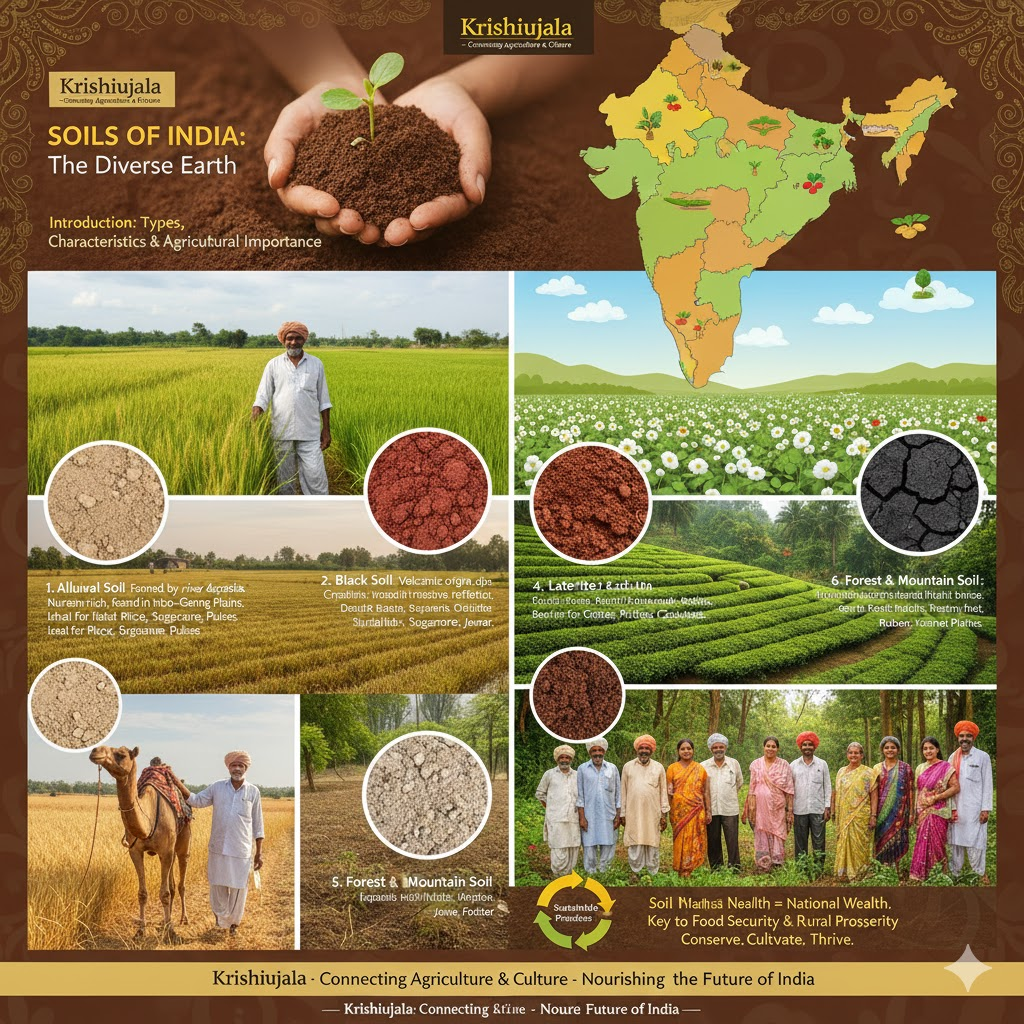
Soil is the foundation of agriculture, and its type and pH level play a decisive role in crop productivity, nutrient availability, and long-term soil health. Lets Understand Soil Types and pH Range. Experts emphasize that understanding soil characteristics is essential for farmers, gardeners, and policymakers aiming for sustainable and climate-resilient farming.
Why Soil pH Matters
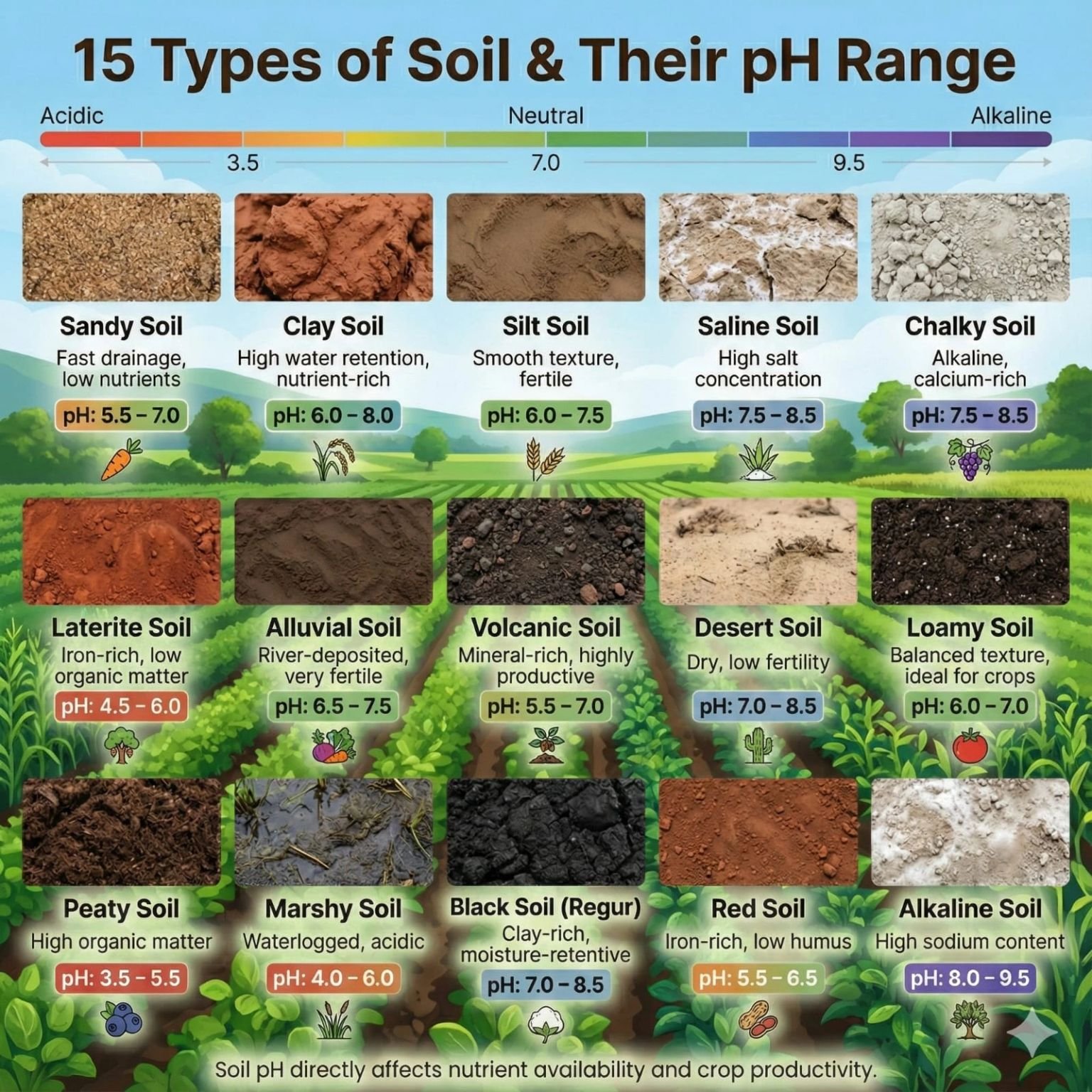
Soil pH indicates how acidic or alkaline the soil is, usually measured on a scale from 3.5 (highly acidic) to 9.5 (highly alkaline). Most crops grow best in soils that are slightly acidic to neutral (pH 6.0–7.5). Outside this range, essential nutrients become less available, directly affecting plant growth and yield.
Major Soil Types and pH Ranges
Sandy Soil (pH 5.5–7.0)
Known for fast drainage and low nutrient retention, sandy soils warm up quickly and are suitable for crops like carrots and peanuts with proper fertilization.
Clay Soil (pH 6.0–8.0)
Clay soils retain water and nutrients effectively but may suffer from poor drainage. With good management, they can be highly productive.
Silt Soil (pH 6.0–7.5)
Smooth-textured and fertile, silt soils are ideal for many crops due to balanced moisture retention and nutrient availability.
Saline Soil (pH 7.5–8.5)
High salt concentration limits crop options and requires reclamation practices such as leaching and salt-tolerant crops.
Chalky Soil (pH 7.5–8.5)
Rich in calcium and alkaline in nature, chalky soils often lack micronutrients like iron and zinc.
Laterite Soil (pH 4.5–6.0)
Iron-rich but low in organic matter, laterite soils are common in high rainfall areas and need organic inputs for productivity.
Alluvial Soil (pH 6.5–7.5)
Among the most fertile soils, deposited by rivers, alluvial soils support intensive agriculture and are crucial for food security.
Volcanic Soil (pH 5.5–7.0)
Highly mineral-rich and productive, these soils are excellent for horticulture and plantation crops.
Desert Soil (pH 7.0–8.5)
Dry and low in fertility, desert soils can be made productive with irrigation and soil amendments.
Loamy Soil (pH 6.0–7.0)
Considered ideal for farming, loamy soil offers balanced texture, good drainage, and high fertility.
Peaty Soil (pH 3.5–5.5)
Rich in organic matter but highly acidic, peaty soils require liming for most crops.
Marshy Soil (pH 4.0–6.0)
Waterlogged and acidic, these soils are suitable for crops like rice under proper management.
Black Soil (Regur) (pH 7.0–8.5)
Clay-rich and moisture-retentive, black soil is famous for cotton cultivation.
Red Soil (pH 5.5–6.5)
Iron-rich but low in humus, red soils respond well to fertilization and organic matter addition.
Alkaline Soil (pH 8.0–9.5)
High sodium content restricts plant growth; reclamation requires gypsum and improved drainage.
The Way Forward
Agricultural scientists stress that soil testing should be a routine practice. Matching crops with suitable soil types and managing pH through liming, organic matter, and balanced fertilization can significantly enhance yields and sustainability.
In conclusion, soil pH directly affects nutrient availability and crop productivity. A clear understanding of soil types and their pH ranges empowers farmers to make informed decisions, ensuring food security and sustainable agricultural development.
Author

Gagan Tripathi is an agripreneur, plant scientist, and author known for his work in agritech innovation and sustainable horticulture. He is the Co-founder and CEO of Plant Orbit, a horticulture-focused startup dedicated to making healthy, scientifically managed plants accessible to urban and institutional consumers. Born in 2000, Gagan holds a master’s degree in Agriculture Extension and Communication, blending agricultural science with entrepreneurship and community outreach. He is also the author of the bestseller “Roadmap to Your Healthy Succulents”. His work focuses on sustainable plant care, green entrepreneurship, and building impact-driven agri startups in India.