
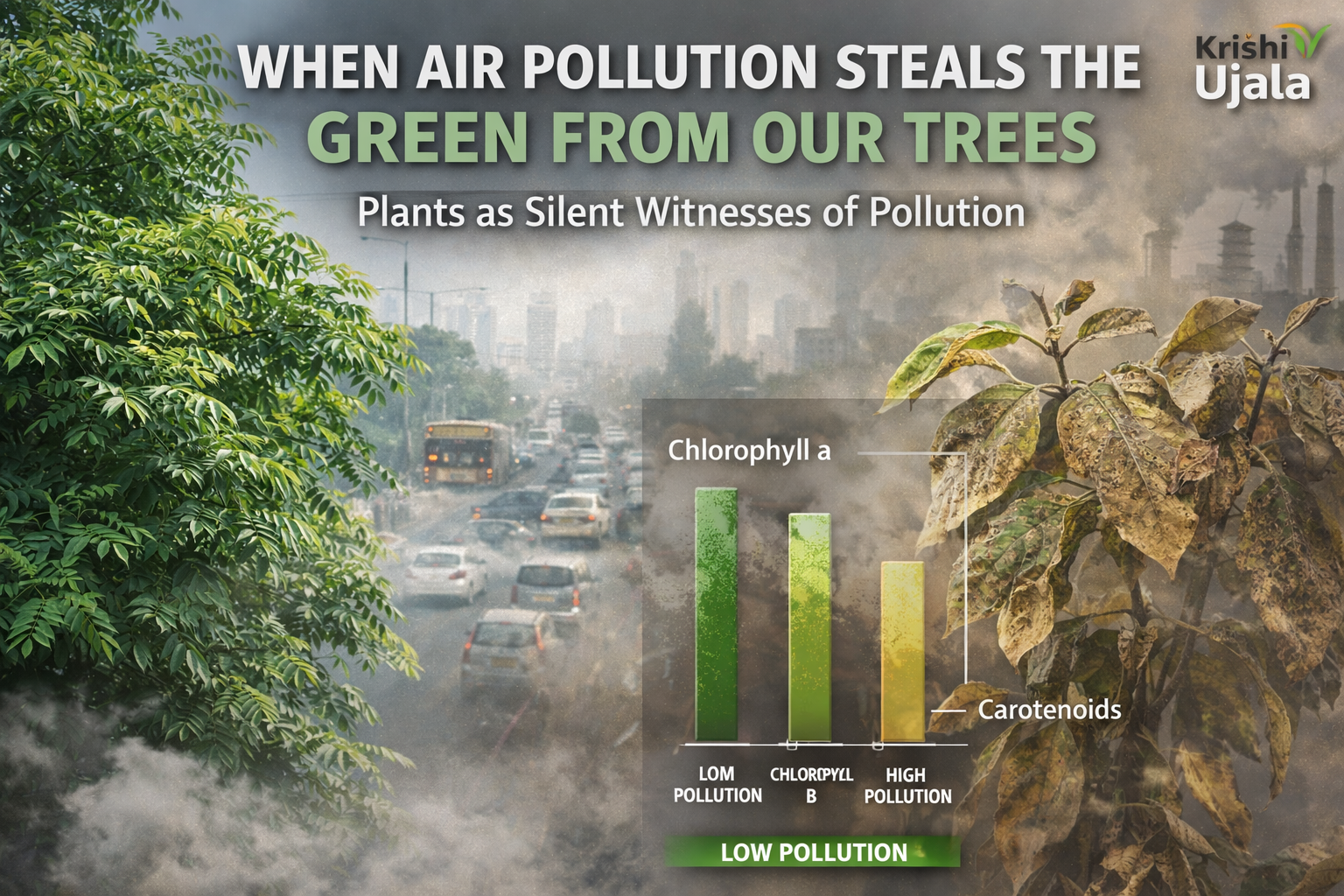
Plants as Silent Witnesses of Pollution
We often notice air pollution when it irritates our eyes or clouds the skyline—but plants feel its impact
long before we do. Trees growing along busy roads and industrial zones are constantly exposed to
harmful exhaust fumes. Over time, this exposure quietly affects their ability to perform the most
essential life process: photosynthesis.
This article explores how air pollution influences the photosynthetic pigments of common urban
trees, revealing a lesser-known but critical environmental concern.
Why Green Matters
The green colour of leaves comes from chlorophyll, the pigment responsible for capturing sunlight
and converting it into energy. Along with chlorophyll a and b, carotenoids support photosynthesis and
protect leaves from environmental stress.
When these pigments decline, plants lose efficiency, vitality, and resilience—making greenery less
green and ecosystems less stable.
The Study at a Glance
Leaf samples were collected from four commonly found plant species:
Neem (Azadirachta indica)
Kaner (Nerium oleander)
Mango (Mangifera indica)
Shisham (Dalbergia sissoo)
These were gathered from areas with high pollution levels (near roads and industries) and low
pollution levels (greener, less disturbed zones). The pigments—chlorophyll a, chlorophyll b, and
carotenoids—were then carefully measured.
What Did We Find?
The results were clear and concerning:
Leaves from polluted areas showed a significant reduction in all photosynthetic pigments.
Chlorophyll a was the most affected, indicating reduced photosynthetic efficiency.
Lower carotenoid levels meant plants were less protected against pollution-induced stress.
In contrast, plants growing in cleaner environments maintained healthier pigment levels and greener
leaves.
Why This Matters
Pollutants like sulphur dioxide, nitrogen oxides, and fine particulate matter settle on leaf surfaces,
damage chloroplasts, and disrupt pigment formation. Over time, this reduces photosynthesis by up to
40%, affecting plant growth, oxygen release, and carbon absorption.
Ironically, while trees help clean the air, polluted air weakens their ability to do so.
Did You Know?
Plants are natural bio-indicators of air quality.
Loss of chlorophyll is often the first visible sign of pollution stress.
Neem and Shisham are widely planted in cities due to their pollution tolerance.
Conclusion
Air pollution doesn’t just threaten human health—it quietly drains life from our green companions. The
reduction in photosynthetic pigments observed in polluted areas highlights the urgent need for
cleaner air and stronger urban green planning. Protecting plants means protecting the environment
we all depend on.
Author


Howdy! Do you know if they make any plugins to protect against hackers? I’m kinda paranoid about losing everything I’ve worked hard on. Any recommendations?