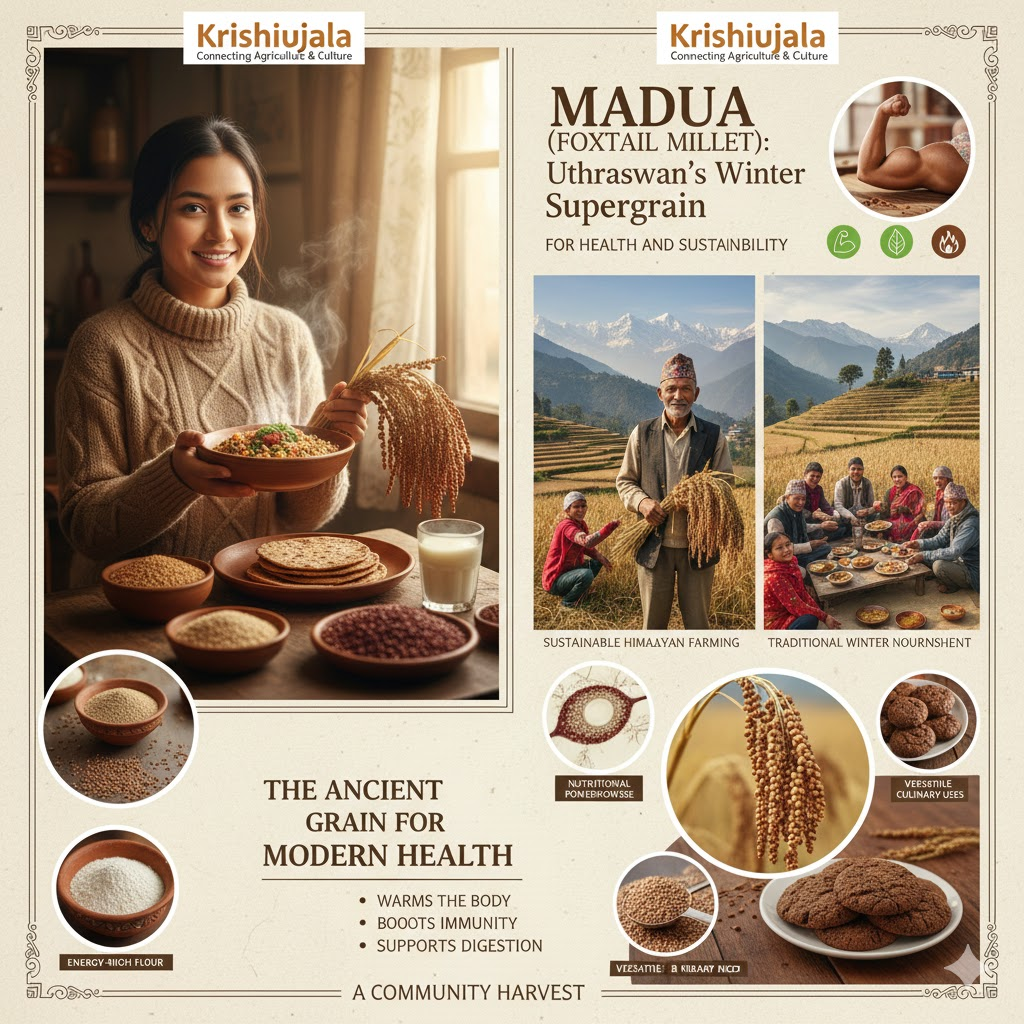
Winter in Uttarakhand brings crisp mountain air, chilly mornings, and hearty cravings for warm, nutritious meals. Enter Madua, also known as Foxtail Millet, the small but mighty grain that has been a staple in the Himalayan diet for centuries. Lightweight, easy to cook, and packed with nutrients, Madua is more than just a traditional food—it’s a winter supergrain that supports health, local agriculture, and sustainable farming in the hills of Uttarakhand.
What is Madua (Foxtail Millet)?
Madua, or Foxtail Millet (Setaria italica), is one of the oldest cultivated grains in India. Unlike rice or wheat, it grows in less fertile soils, requires minimal irrigation, and thrives in hilly terrains, making it perfect for the mountainous regions of Uttarakhand. Its tiny seeds may seem unassuming, but they are packed with carbohydrates, dietary fiber, protein, vitamins, and minerals, making it a powerhouse for winter nutrition.
Traditionally, it has been used in porridge, rotis, and even fermented beverages. Its mild, nutty flavor complements hearty winter meals, while its slow-digesting carbohydrates provide long-lasting energy—a perfect shield against cold mornings and long working hours in the fields.
Nutritional Benefits of Madua in Winter
Why is Madua considered the perfect winter food? The answer lies in its nutritional profile.
- Energy Booster:
Winters make you crave warm, filling meals. It is rich in complex carbohydrates that release energy slowly, keeping you warm and energetic throughout the day. - Supports Digestion:
High dietary fiber helps maintain digestive health, prevents constipation, and keeps your gut happy—especially during winter when digestive issues tend to flare up. - Heart-Friendly:
Madua contains unsaturated fatty acids and minerals like magnesium, which support heart health and regulate blood pressure, crucial for cold, high-altitude climates. - Bone Strength:
Rich in calcium and phosphorus, it helps maintain bone density—important in winter when joint stiffness and bone pain are common. - Gluten-Free Superfood:
For people with gluten intolerance, it is a safe, nutritious alternative to wheat and barley, making it versatile for modern diets.
Agricultural Significance in Uttarakhand
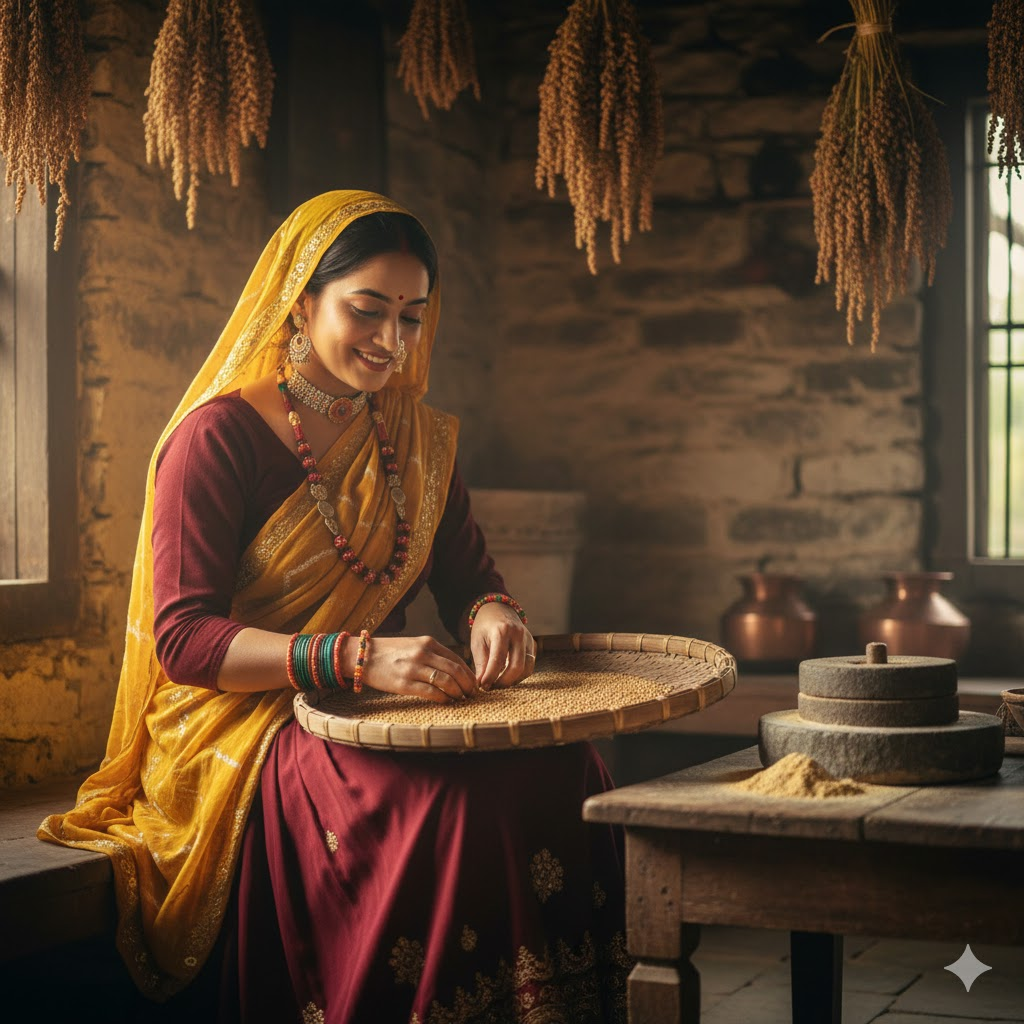
Madua isn’t just a winter food—it’s a crop perfectly suited to the Himalayan ecology. Uttarakhand’s hilly terrain, erratic rainfall, and poor irrigation facilities make conventional crops like wheat and rice harder to cultivate. Madua thrives under these conditions because:
- It grows in less fertile soil without heavy fertilizers.
- Requires minimal water, making it a drought-tolerant crop.
- Fits well into rainfed and terrace farming systems, common in Uttarakhand.
By cultivating Madua, farmers ensure food security and sustainable agriculture in the region. The crop also helps maintain biodiversity, as it is often intercropped with other millets and pulses, reducing soil erosion on sloped terraces—a major concern in mountainous areas.
Cultural and Seasonal Relevance
In Uttarakhand, Madua has been part of winter diets for generations. Traditional dishes like Madua ki Roti and Madua porridge are celebrated for their warming and energy-boosting properties. During festivals and winter rituals, it’s often combined with ghee, jaggery, and seasonal spices, making it both nutritious and comforting.
Its popularity in local cuisine is not just for taste—it’s also seasonally appropriate. Winter increases the body’s energy demands, and Madua delivers slow-release carbohydrates and warming effects that help villagers, farmers, and children stay active and healthy.
Health and Wellness Benefits
Madua is slowly gaining attention beyond Uttarakhand for its modern health benefits. Studies highlight that Foxtail Millet can:
- Reduce the risk of diabetes by regulating blood sugar levels.
- Lower cholesterol and promote heart health.
- Support weight management due to its high fiber content.
- Improve digestion and gut microbiota, enhancing overall immunity.
For people embracing gluten-free or low-calorie diets, Madua offers a nutritious and satisfying option, making it both traditional and trendy.
How to Include Madua in Your Winter Diet
Eating Madua in winter is not just about tradition—it’s about smart nutrition. Some easy and delicious ways include:
- Madua Rotis: Mix flour with warm water, a pinch of salt, and cook on a griddle. Serve with ghee or seasonal vegetables.
- Madua Porridge: Perfect for breakfast, cooked with milk or water, sweetened with jaggery, and topped with nuts.
- Madua Khichdi: Combine with lentils and spices for a hearty, warming meal.
- Madua Laddoos: Roasted seeds and jaggery make for a perfect snack for adults and children alike.
These preparations not only keep you warm but also ensure you get nutritional support to face harsh winter conditions in the hills.
Environmental and Economic Relevance
Madua cultivation aligns perfectly with sustainable agriculture. It requires less water, fewer inputs, and low chemical intervention, helping protect fragile Himalayan soils. Terrace farmers benefit from its soil-binding root system, which reduces erosion and maintains fertility.
Economically, promoting Madua in Uttarakhand can support local farmers, revive traditional grains, and tap into the growing demand for millets in urban and health-conscious markets. With increasing awareness about millets’ health benefits, Madua has the potential to become a high-value crop, supporting both livelihoods and nutrition security.
Conclusion
Madua (Foxtail Millet) is not just another grain—it’s a winter superhero for Uttarakhand. Its nutritional benefits, warming properties, and adaptability to hilly terrains make it indispensable for local diets, sustainable agriculture, and economic resilience. From traditional rotis and porridge to modern health-conscious recipes, Madua bridges tradition and modern wellness beautifully.
This winter, whether you’re in the hills of Uttarakhand or exploring nutritious grains elsewhere, including Madua in your diet is a way to stay warm, energized, and healthy while honoring a time-tested Himalayan staple. Small seeds, big impact—Madua truly deserves its place on your winter plate.
Author

Rajat Joshi is a postgraduate scholar in Agricultural Extension and Communication, with a strong academic background in rural development, farmer communication, and agricultural innovation systems. He has a keen interest in agriculture journalism, focusing on translating research, policies, and field-level innovations into clear, impactful stories for farmers, students, and stakeholders. Rajat is passionate about strengthening the bridge between science and society through credible agri-media, awareness-driven reporting, and knowledge dissemination for sustainable agriculture.

Đá Gà Thomo 88 Hướng dẫn chọn đá gà trực tiếp Thomo BJ88 phù
hợp với mục đích cá cược của bạn Chúng tôi sẽ cung cấp thông
tin chi tiết về cách xem đá gà trực
tiếp, cách đặt cược và cơ hội để giành chiến thắng lớn. Hãy cùng chúng
tôi khám phá.