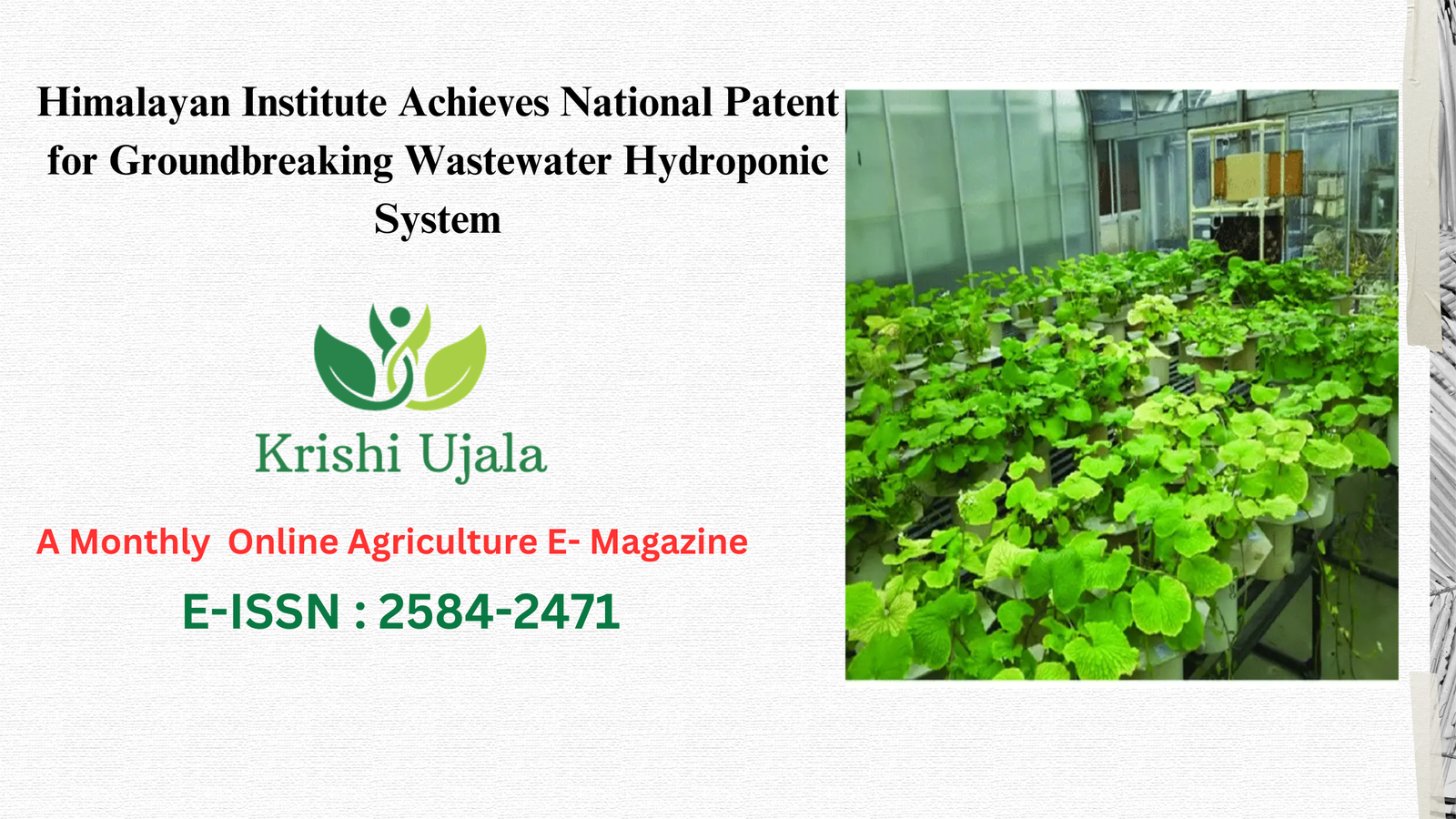
Leh, Ladakh – The Ladakh Regional Centre of Almora’s Govind Ballabh Pant National Institute of Himalayan Environment in Leh has secured a national patent for an innovative hydroponic farming system that utilises treated wastewater. This technique offers a crucial new standard for climate-smart agriculture and serves as an alternative to freshwater. It provides a sustainable and scalable pathway to strengthen food security and ensure the responsible use of water resources in fragile mountain ecosystems.
Research Impact on the Environment
The primary environmental significance of this system is its ability to conserve water, which is particularly vital for regions like Ladakh, characterised by extremely low rainfall, sub-zero winter temperatures, and limited cultivable land.
The technology reuses treated wastewater sourced from a faecal sludge treatment plant in Bombgarh, Leh. Before being transported to storage tanks for crop cultivation, the water undergoes primary, secondary, and tertiary treatment, including filtration and UV disinfection. By integrating wastewater reuse with hydroponic technology, the institute has established a new benchmark in climate-smart agriculture, opening new avenues for research, commercialisation, and large-scale regional implementation.
Key Agricultural Findings
Field trials spanning two years, focusing on tomatoes, demonstrated significant performance improvements compared to conventional soil-based farming.
The key agricultural findings show superior performance in several areas:
• Productivity and Growth: The system produced higher yields and exhibited better growth performance.
• Nutritional Enhancement: Laboratory analysis confirmed the improved nutritional quality of the tomatoes, revealing higher levels of lycopene, β-carotene, and antioxidants.
• Crop Safety: Safety tests were conducted on both the treated water and the harvested crops, confirming the crucial absence of heavy metals or toxic pollutants.
Conclusion and Future Outlook
This patented hydroponic system acts like a closed-loop recycling centre for food production. Instead of discarding spent water—a scarce resource in arid regions—the system cleans it thoroughly (like purifying greywater) and feeds those nutrients directly back to the crops, ensuring maximum efficiency and safety while safeguarding precious freshwater reserves
The project received financial assistance from the National Mission on Himalayan Studies. This integration of treated wastewater and hydroponic technology offers a practical, scalable model for sustainable development and food security in challenging terrains
Author

Pawni Uprari hails from Lucknow, Uttar Pradesh, and is currently pursuing a B.Sc. (Hons.) in Agriculture at G.B. Pant University of Agriculture and Technology. With a strong academic foundation in agricultural sciences, she has a keen interest in exploring emerging innovations, sustainable practices, and policy-driven advancements in the agricultural sector. She is enthusiastic about contributing insightful articles and research-based content that highlight contemporary developments and support the growth of the farming community.