
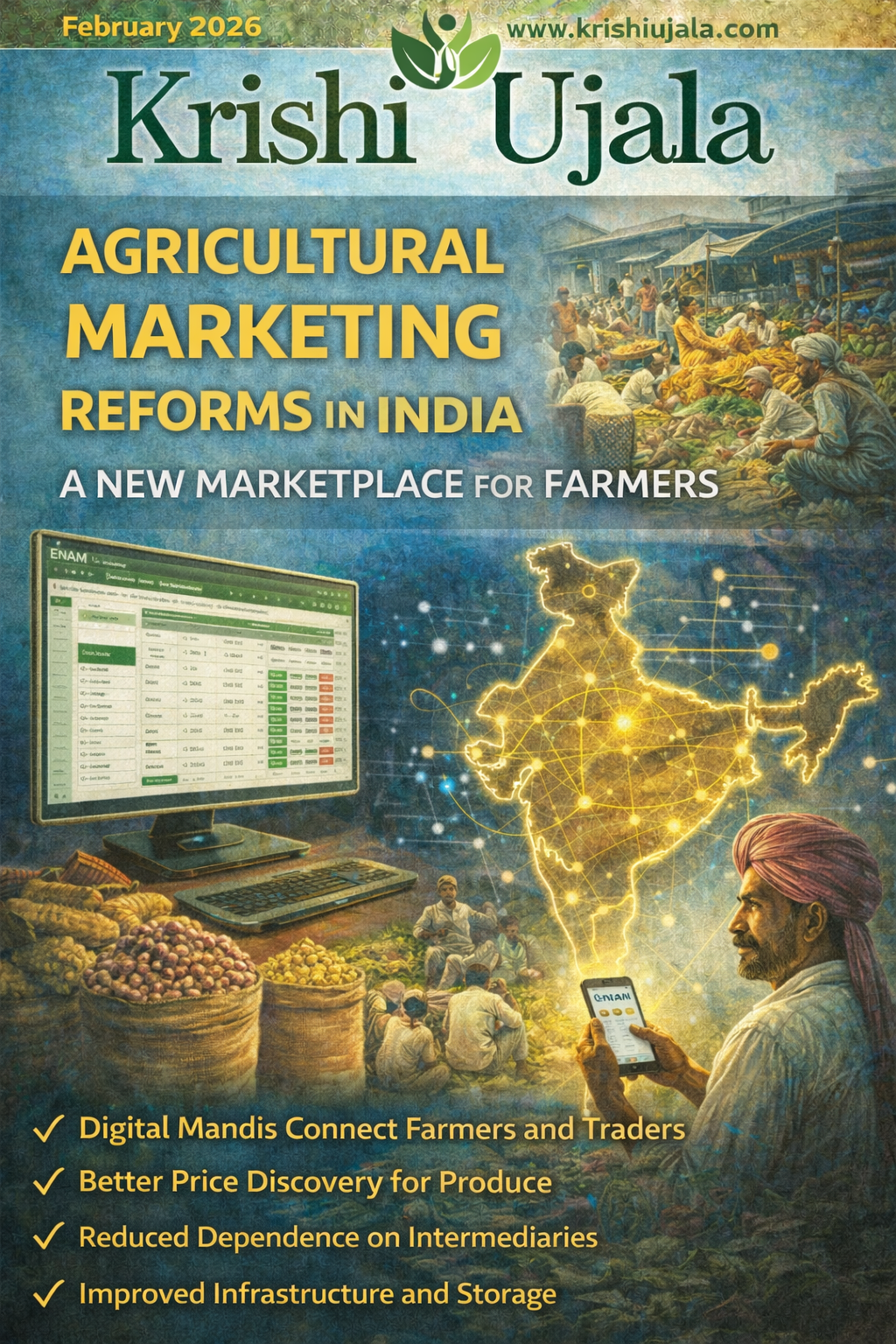
Agriculture remains the backbone of India’s rural economy, sustaining millions of farmers and ensuring food security for the nation. However, while production has steadily increased over the years, marketing of agricultural produce has long remained a structural challenge. For decades, farmers have struggled with limited market access, price volatility, and dependence on intermediaries. Today, India’s agricultural marketing reforms are reshaping this landscape, offering farmers greater transparency, choice, and opportunity.
The Traditional System and Its Limitations
Historically, agricultural trade in India has operated through regulated markets known as Agricultural Produce Market Committees (APMCs). These mandis were created to protect farmers from exploitation and ensure fair trade practices. While they played an important role in stabilizing markets, over time several limitations became evident.
Many farmers were required to sell only within designated mandis, restricting competition. Multiple intermediaries increased transaction costs, and small and marginal farmers—who form the majority of India’s farming community—often lacked bargaining power. As a result, price discovery remained limited, and farmers frequently had to accept whatever price was offered locally.
The Push for Reform
Recognizing these structural bottlenecks, policymakers initiated reforms aimed at modernizing agricultural marketing. The goal is clear: create a more competitive, transparent, and integrated national market for agricultural produce.
One of the most significant steps in this direction has been the strengthening and expansion of the Electronic National Agriculture Market (e-NAM). This digital trading platform integrates mandis across states, allowing farmers and traders to participate in transparent online bidding. By reducing geographical barriers, e-NAM promotes inter-state trade and improves price discovery.
Recently, additional commodities—including niche and high-value products such as dried herbs, specialty flours, and dragon fruit—have been brought under digital trading platforms. This move is particularly beneficial for horticulture growers and farmers cultivating diversified crops, who often struggled to find organized markets for their produce.
Technology and Transparency
Digital integration has introduced a new dimension to farm marketing. With online bidding, real-time price information, digital payments, and quality testing facilities, farmers are gradually gaining more control over their produce. Transparent pricing mechanisms reduce the scope for manipulation and enhance trust in the system.
Access to market intelligence—such as price trends, demand forecasts, and arrival data—empowers farmers to make informed decisions about when and where to sell. This reduces distress sales, especially during harvest seasons when local supply gluts traditionally pushed prices downward.
Infrastructure and Value Chains
Marketing reform is not limited to digital platforms alone. Investments in rural infrastructure, including warehouses, cold storage facilities, grading units, and logistics networks, are equally crucial. Improved storage allows farmers to hold their produce and sell when prices are favorable, rather than being forced into immediate sales.
The development of integrated value chains and contract farming arrangements further strengthens market linkages. By connecting farmers directly with processors, exporters, and organized retailers, these systems reduce middlemen layers and improve income realization.
Opportunities and Challenges
The transformation of agricultural marketing offers immense potential. Better market access can improve farmer incomes, encourage crop diversification, and boost agricultural exports. It can also attract private investment and stimulate rural entrepreneurship.
However, challenges remain. Digital literacy gaps, uneven infrastructure development, and varying state-level regulations can slow implementation. Ensuring that small and marginal farmers are not left behind is critical. Capacity-building programs, awareness campaigns, and farmer training initiatives are essential to maximize the benefits of reforms.
A Step Toward Farmer Empowerment
India’s agricultural marketing reforms signal a shift from a restrictive, localized system to a more open and competitive marketplace. By combining policy changes with digital innovation and infrastructure development, the country is building a framework where farmers are better informed, better connected, and better compensated.
As these reforms deepen, the focus must remain on inclusivity and sustainability. A modern agricultural market is not merely about trading produce—it is about empowering farmers, strengthening rural economies, and ensuring long-term food security for the nation.
The road ahead may require continued policy refinement and grassroots engagement, but the direction is clear: a transparent, technology-driven, and farmer-centric marketing ecosystem that aligns with the aspirations of a rapidly evolving agricultural India.
Author

Pawni Uprari hails from Lucknow, Uttar Pradesh, and is currently pursuing a B.Sc. (Hons.) in Agriculture at G.B. Pant University of Agriculture and Technology. With a strong academic foundation in agricultural sciences, she has a keen interest in exploring emerging innovations, sustainable practices, and policy-driven advancements in the agricultural sector. She is enthusiastic about contributing insightful articles and research-based content that highlight contemporary developments and support the growth of the farming community.


3 thoughts on “Reforming India’s Agricultural Marketing: A New Era for Farmers”