Akhils.

Akhil S is pursuing an M.Sc. in Agricultural Microbiology at Anand Agricultural University, Gujarat, after completing his graduation from Kerala Agricultural University. His academic interests include soil microbiology, plant–microbe interactions, and sustainable agriculture. He has authored popular science articles, contributed to book chapters, published research papers, and actively reviews manuscripts for scholarly journals. Passionate about research and scientific communication, he aims to contribute to sustainable agriculture through innovation, knowledge dissemination, and scientific excellence.

The Taste of a Place: Understanding Geographical Indications

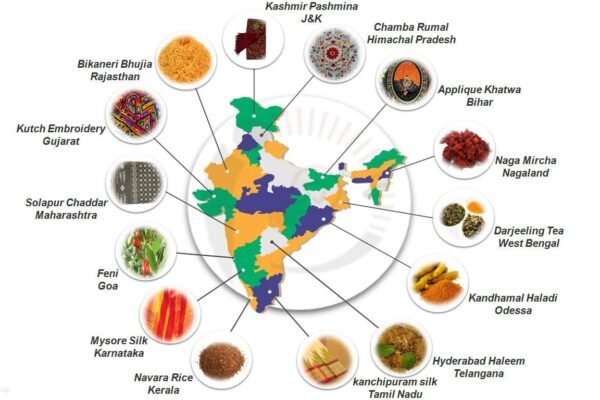
INTRODUCTION Some products carry more than flavor, texture, or craftsmanship they carry the memory of a place. Darjeeling tea, Champagne, Roquefort cheese, Basmati rice, Kanjeevaram silk: say the name and an entire landscape, climate, and tradition unfolds in the mind. This is the quiet power of a Geographical Indication (GI)-a legal tag that ties a product’s identity…

Read More

Biofertilizers: Nature’s Living Allies for Sustainable Agriculture

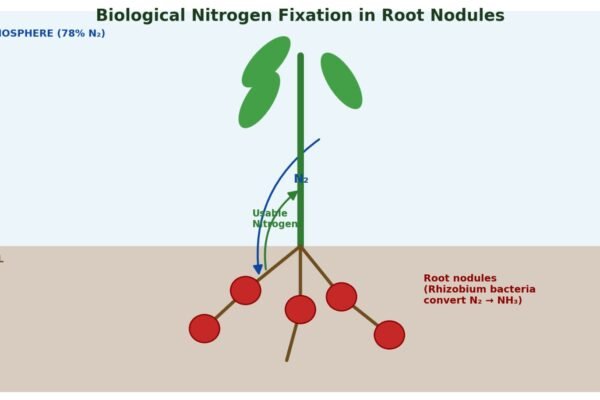
Walk into any thriving farm today and you will find a quiet revolution happening beneath the soil surface, invisible to thenaked eye but critical to every green leaf above it. Long before chemical fertilizers were ever manufactured, soilmicroorganisms were already feeding plants — fixing nitrogen from the air, unlocking phosphorus trapped in rock particles,and building intimate partnerships with roots. Modern agriculture is now rediscovering these ancient microbial allies andpackaging them as biofertilizers, offering farmers a way to grow more food while asking less of the soil, the water table, andthe atmosphere. This renewed interest is not nostalgia; it is necessity. Decades of intensive chemical fertilizer use have left many soilsdepleted of organic matter, imbalanced in microbial diversity, and increasingly unresponsive to further doses of urea andphosphate. Biofertilizers offer a complementary, biology-driven path back to soil health without asking farmers to sacrificeproductivity. What Exactly Is a Biofertilizer? A biofertilizer is a formulation containing live or dormant cells of beneficial microorganisms — bacteria, fungi, or algae — that, when applied to seed, soil, or root, colonize the rhizosphere or the interior of the plant and promote growth. Unlike chemical fertilizers, which supply nutrients directly, biofertilizers work…

Read More

Harnessing the Power of Microbes for Sustainable Crop Production

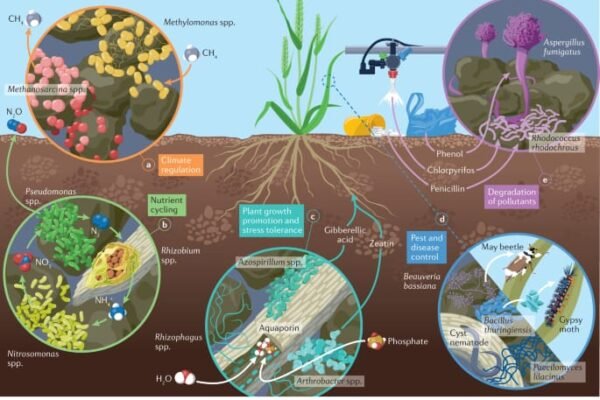
Abstract The modern agriculture faces twin challenge; feeding a growing population while conserving soil health, water and biodiversity. Excessive reliance on chemical fertilizers and pesticides has degraded soils, polluted water bodies and increased input costs for farmers. This results in residual effect, soil pollution and affect the overall soil productivity. Soil and plant-associated microbes such as diazotrophs, phosphate solubilizers, potassium mobilizers, mycorrhizal fungi,…

Read More

Speed Breeding: From Faster Generations to Better Varieties

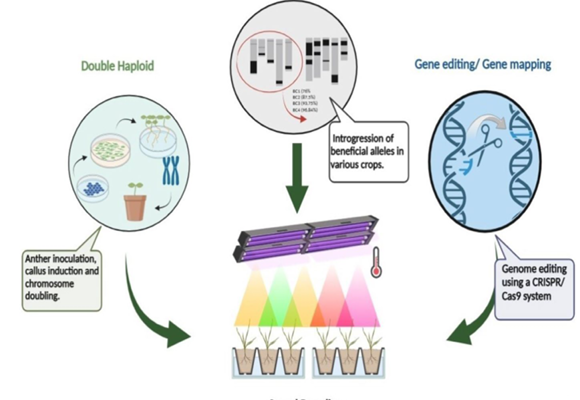
Megha M S¹, Akhil S². ¹Department of Genetics and Plant Breeding, Centre for Plant Breeding and Genetics, Tamil Nadu Agricultural University, Coimbatore 641 003, Tamil Nadu, India ²Department of Agricultural Microbiology, B. A. College of Agriculture, Anand Agricultural University, Gujarat- 388110, India Introduction Developing a new crop variety is rarely a quick job. A breeder…

Read More