
In Indian villages, festivals don’t begin in temples or calendars—they begin in the fields. The smell of ripening crops, the changing angle of sunlight, the warmth returning after long winter nights—this is how celebrations are born. Makar Sankranti and Lohri are two such festivals that rise straight from the soil, carrying the emotions of farmers, families, and communities.
Celebrated every year around mid-January, these festivals may look different across regions, but their soul is the same: gratitude to nature, respect for farmers, and hope for abundance.
A Festival Written by the Sun and the Soil
Makar Sankranti marks a rare astronomical moment when the sun begins its northward journey (Uttarayan). For traditional farmers, this shift was not just celestial—it was practical. Longer days meant better photosynthesis, healthier crops, and the promise of harvest ahead.
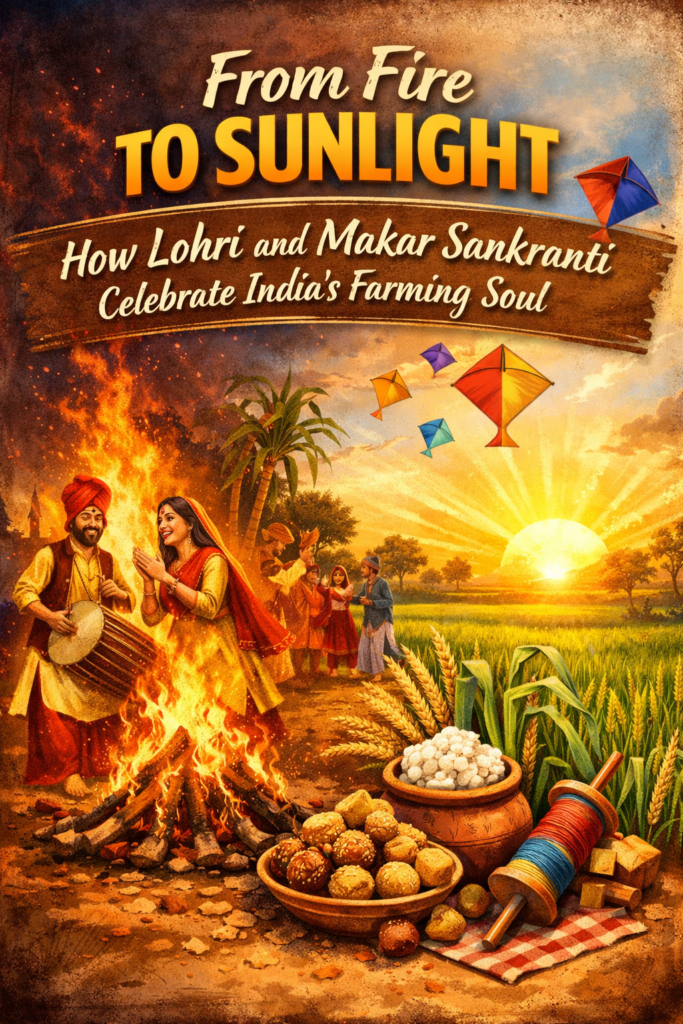
Lohri, celebrated mainly in Punjab and Haryana, is the farmer’s joyful pause in winter. Standing around a crackling bonfire, people celebrate wheat crops growing strong in the fields, sugarcane ready for crushing, and mustard blooming bright yellow. The fire symbolises warmth, protection, and the collective spirit of rural life.
These festivals were never about luxury—they were about survival, rhythm, and balance with nature.
Food That Tells a Farming Story
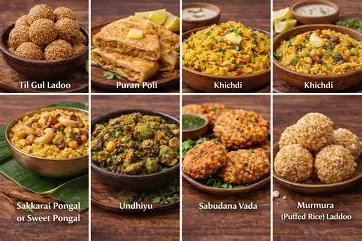
The foods of Makar Sankranti and Lohri are simple, seasonal, and deeply agricultural. Sesame seeds, jaggery, peanuts, maize, rice, milk, and ghee dominate the festive plates. These are not random delicacies—they are crops harvested or stored by farmers themselves.
In winter, sesame and jaggery provide warmth and energy. Sugarcane sweets reflect the hard labour of months. Every bite is a reminder that agriculture feeds both body and culture.
Agriculture as a Community, Not a Business
Before machines and markets took over, farming was collective. Lohri’s bonfire is a powerful symbol of this shared life—villagers gathering, singing folk songs, clapping to the beats of dhol, and celebrating together.
Makar Sankranti’s traditions of sharing food, flying kites, and offering charity reinforce the idea that prosperity is meaningful only when shared. These festivals softened social boundaries and strengthened cooperation—essential for traditional farming systems that relied on mutual help.
Impact on Society: More Than Celebration
These festivals quietly shape society in many ways:
- They honour farmers, reminding urban populations where food truly comes from
- They preserve indigenous knowledge about seasons, crops, and climate
- They strengthen family and community bonds, reducing social isolation
- They boost rural economies, increasing demand for local produce and crafts
For children, these festivals become their first lessons in agriculture—learning why crops grow, why seasons matter, and why nature must be respected.
Why These Festivals Matter Today
In an age of climate change, soil degradation, and water scarcity, Makar Sankranti and Lohri feel more relevant than ever. They echo ideas that modern science is rediscovering—seasonal eating, sustainable farming, agroecology, and harmony with nature.
They remind us that farming is not just production—it is culture, emotion, and responsibility.
A Quiet Message for the Future
As celebrations become louder and more commercial, the real message of these festivals should not fade. Eco-friendly celebrations, respect for farmers, and reconnecting with agricultural roots can keep their spirit alive.
Because when the sun changes direction and the fire warms the night, it is not just a festival—it is civilisation thanking agriculture.
Author

Rajat Joshi is a postgraduate scholar in Agricultural Extension and Communication, with a strong academic background in rural development, farmer communication, and agricultural innovation systems. He has a keen interest in agriculture journalism, focusing on translating research, policies, and field-level innovations into clear, impactful stories for farmers, students, and stakeholders. Rajat is passionate about strengthening the bridge between science and society through credible agri-media, awareness-driven reporting, and knowledge dissemination for sustainable agriculture.

I don’t ordinarily comment but I gotta tell thankyou for the post on this one : D.