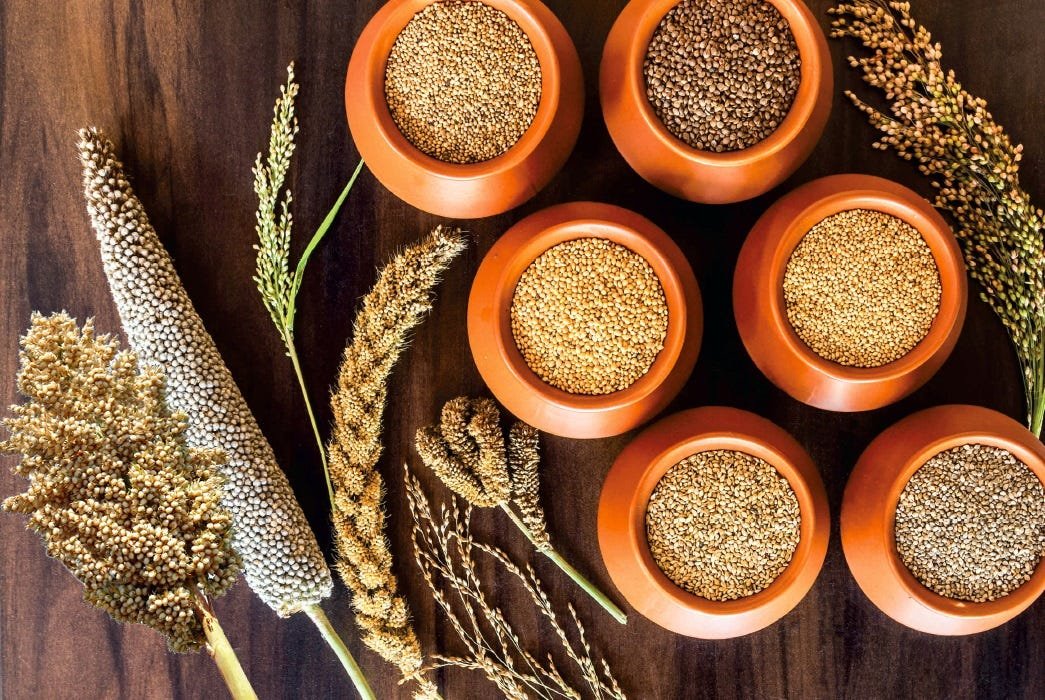
The cultivation of millets in the agricultural landscapes of India has a history of several decades. Pearl millet, finger millet, sorghum, foxtail milletand little millet have been successfully cultivated as crops that are highly adaptive to diverse climatic conditions and do not require much moisture compared to most of the major cereal crops. Recent years are characterized by the increased interest in millets in view of their nutritional value, climate resistance and possibility of application in sustainable agriculture. In connection with new approaches to food habits and increasing significance of nutritious foods, millets are increasingly used in people’s diet. The importance of millets is also determined by the Indian policies on crop diversification and improvement of the state of nutritional security.
Millets and India’s Agricultural Tradition:
Millets have been cultivated on Indian lands during many generations. These crops are traditional components of the diet of rural population because of their high adaptation to cultivation in harsh conditions. However, despite decreasing cultivation of millets connected with increasing acreage of major cereals, the attention to millets is recently growing.
Good Source of Nutrients:
The millets contain adequate amounts of the vital nutrients such as carbohydrate, dietary fibre, protein, mineral, etc. The millets have different compositions of these nutrients. For example, the finger millet has high levels of calcium, while other varieties of millets have high levels of iron and dietary fibre. Diversification through adding several types of millets in one’s diet is beneficial in this case.
Ideal for Growing in Arid Conditions:
Another important feature of many millets is the fact that they can grow in places where water is scarce. Usually, the millets use less water than the rice. Therefore, millets can be grown in the arid regions.
Help in Climate-Resistant Farming Practices:
Nowadays, the weather patterns have become unpredictable and thus caused problems to the agricultural sector. Some of the millets have high tolerance of drought and hot conditions as compared to other cereal crops. Therefore, growing these millets can be the way to practice climate-resistant farming.
Diversity in Crops:
The dependency on few crops may bring some problems to the soils and water resources. Incorporating millets into crop rotation systems provides opportunity for farmers to cultivate another crop. It is possible to incorporate millets into crop rotation and diversification according to the particular soil, climatic conditions and market consumption conditions.
Increased Demand for Healthy Foods:
Increased demand for healthy foods has led to increased interest in food products prepared from millets. Currently, millets are being incorporated into the manufacture of flour, bread, biscuits, snacks, breakfast foods and ready to eat foods.
Opportunities for Farmers:
Growing demand for millets is creating new marketing opportunities for farmers, provided they have access to quality seeds, suitable technology and reliable markets. Added value of millets increases their economic value because of their convertibility into various consumer products.
Requirement of Processing and Value Adding:
One of the major challenges associated with millets is the need for proper processing before they reach consumers, as efficient processing can improve their usability, quality and market value. Adequate processing facilities could help to connect millet producers with food companies and consumers.
Promotion of Millets in India:
There have been various initiatives taken by India to promote these crops by means of awareness campaigns, research and promotion of production and consumption. National and international recognition of millets could help in gaining more attention towards the development of millets. Such initiatives could prove helpful in developing the millets value chain.
Millets and the Future of Sustainable Food Systems:
The millets have got the capacity to contribute towards increasing the diversity and sustainability of the food systems due to their nutrition along with adaptability to different kinds of low-input farming systems. However, the success of millets is dependent on breeding, production, processing, product development and marketing.
Fertility Improvement of the Soil:
With the integration of millet farming within other crops through rotation, it is possible to ensure crop diversity and prevent continuous cultivation of major cereals crops. In association with the right management of residues and utilization of organic matter and balanced fertilizer, the cultivation of crops through millet will improve soil fertility.
Empowerment of Women and Rural Entrepreneurs:
Through processing and adding value to millet-based products, there is an avenue for gender empowerment and entrepreneurship in the rural areas. Some of the millet-based products include flour, snacks, cookies and ready-to-cook products.
Conclusion:
Millets are no longer restricted to their conventional use as traditional grains consumed primarily by rural communities. They have gained importance as a crucial element of modern-day sustainable food system. The nutritional properties, low requirement of water and adaptability to harsh climatic conditions render them extremely significant from an Indian perspective in terms of agricultural practices in changing climatic conditions. The future success of millets will be determined by the ability to improve the entire millets value chain involving such elements as better seed varieties, improved agronomy, better harvest, milling and packaging, value-added products and marketing. Through the concerted efforts of farmers, scientists, food industry, policymakers and consumers, millets can go beyond their conventional role to influence the future of Indian agriculture and nutrition.
Author

M.Sc (Agriculture) in Agronomy, Centurion University of Technology and Management, Paralakhemundi, Odisha, 761211
B.Sc Agriculture, The Neotia University, South 24 Parganas , West Bengal, 743368