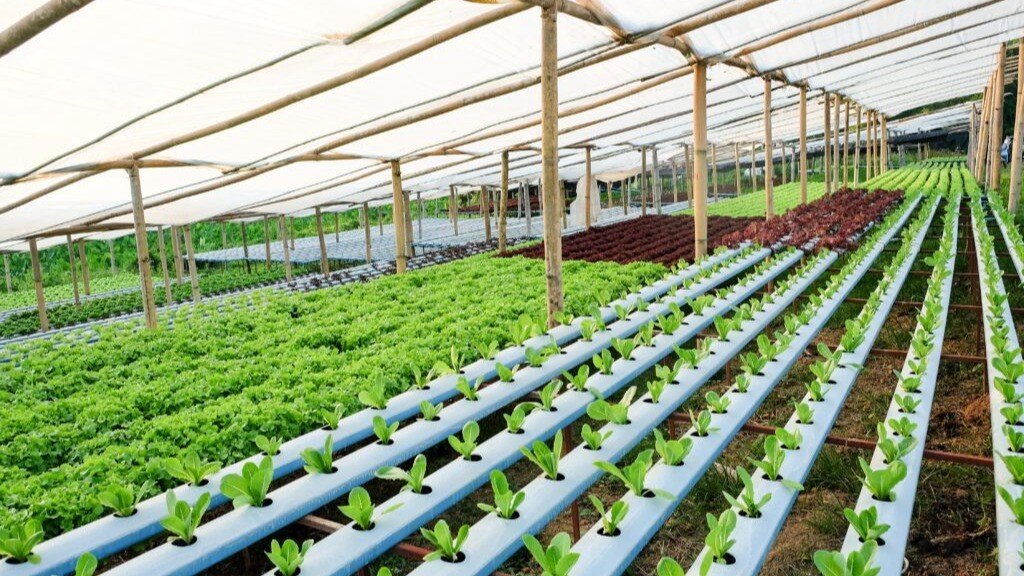
Agriculture is developing rapidly with the introduction of new technologies and innovative farming methods.There is one such method known as hydroponics which implies growing of plants without soil. Hydroponic farming implies delivering of nutrients to plants through water-soluble nutrient solution and having roots of plants fixed in proper growing medium. It is possible to use this technology in case of lack of fertile lands or water resources. It is effective to have controlled cultivation and uses less water and space. Being faced with the necessity to increase productivity of agricultural lands, unstable climate conditions and high demand for fresh products, hydroponics becomes more popular as a new farming technology.
What Is Hydroponics?
It is an alternative technology for growing plants without usage of natural soil. In the process of hydroponic farming, roots of plants get water, oxygen and nutrients through the nutrient solution. Different materials like cocopeat, perlite, vermiculite or rockwool can be used for fixing the plants.
Water Use Efficiency:
The other advantage that is associated with hydroponics technology is water use efficiency. As was stated above, the water in hydroponic systems is recycled through the growing medium; hence, instead of water being absorbed by soil, it is reused. Thus, hydroponics technology is very efficient in the areas with limited water resources.
Improved Nutrient Supply:
As was mentioned above, the nutrient content in conventional farming depends on the properties of the soil and the environmental conditions. However, hydroponic technology allows providing the plants with the required amount of nutrients through the water solution. Moreover, the amount of the nutrients can be regulated according to the needs of the specific crop.
Faster Growth of Plants:
In hydroponic systems, the plants grow in optimal conditions such as water, nutrients and oxygen supply. Due to the fact that such conditions can be effectively controlled, the growth of certain crops can be faster under the hydroponic conditions than in conventional farming. Nonetheless, there are many factors involved.
Helpful in Situations with Little Land for Agriculture:
Hydroponics may prove helpful in cases where there is little land available for agriculture or where the cost of agricultural land is high. The crops can be planted in greenhouses, on roofs, balconies, etc. With the use of a vertical hydroponic system, more outputs can be achieved through planting of plants in multiple layers.
Reduced Weed Problem:
Since hydroponic crops are mostly grown without the use of field soil, the problem of soil born weeds becomes less. There is no need for the farmer to spend as much time and effort in weed elimination as he would have had to do in the traditional approach. This reduces the competition between the crop and weeds for water and nutrients.
Decrease in Dependence on Soil:
There are soil-based factors such as fertility problems, salt content, as well as certain soil diseases that make it difficult to cultivate crops in normal agriculture. Hydroponics reduces the need for natural soil because the water and nutrition requirements of the plants are met in the growing process. Consequently, crops can be cultivated even in areas with unfavorable soil conditions.
Year Round Crop Production Opportunities:
Using hydroponics, especially with protected crop production systems, farmers can produce specific types of crops during periods which are not their usual periods of production. The temperature, humidity, light and nutrients can be adjusted based on the need of the crop. Therefore, it becomes easier to grow crops throughout the year.
Suitable for Leafy Vegetables and Herbs:
This technology is usually adopted for growing crops like lettuce, spinach, basil, coriander andother leafy vegetables and herbs. Such crops have shorter life cycles. It can also be used for fruiting crops, but it will be difficult.
Reduced Need for Field Operations:
Plowing and other activities such as soil preparation and weed control are part of the conventional agriculture processes. Because hydroponics does not require the conventional field soil, then field operations can be greatly reduced. This will help reduce labor requirements and improve crop management. However, hydroponics requires regular monitoring of factors such as water quality, nutrition level and pH.
Problems and Initial Cost:
But there are some problems related to hydroponic farming despite its numerous advantages. There might be an initial expense when setting up the required facilities like greenhouses, pumping systems, pipes, solution of nutrients, growth media and controls. Special skills are necessary to ensure the appropriate balance of nutrients, acid content, quality of water and other factors. The lack of energy supply or poor management of the system could affect the plants negatively.
Future Development:
The increase in the scarcity of available agricultural land and water resources makes it possible for hydroponics to become an important method of the future for agriculture. This technique will allow the farmers to use another technique for growing vegetables in those places where traditional farming is not practicable. The applicability of hydroponics will depend on the crop type, climatic conditions, market requirements, energy supply, technical skill and cost of production.
Conclusion:
Hydroponic cultivation is one of the most innovative technologies in modern agriculture, providing an effective way to grow crops without the use of soil. The effective utilization of water, the proper nutrition administration, the minimal weeds problems and even the growing of plants on the minimum territory are the main reasons which make the above mentioned technology so relevant in today’s agriculture. The hydroponic farming can be rather useful in the urban areas when the lack of territory makes certain difficulties in conducting agricultural activities or in growing vegetables and herbs in greenhouses and other special conditions. Also, this farming gives people a possibility to control the growing conditions and produce agricultural products all year long. It requires initial investment, specialized equipment and proper technical knowledge for successful crop production.
Author

M.Sc (Agriculture) in Agronomy, Centurion University of Technology and Management, Paralakhemundi, Odisha, 761211
B.Sc Agriculture, The Neotia University, South 24 Parganas , West Bengal, 743368