Introduction
Indian agriculture is entering a new phase in which technology is increasingly becoming a partner of the farmer. Farmers are facing multiple challenges—from uncertain rainfall and declining water availability to rising input costs, labour shortages, pest attacks and the need for timely farm operations. These challenges make it important to use resources more efficiently and adopt technologies that can improve both productivity and farm profitability.
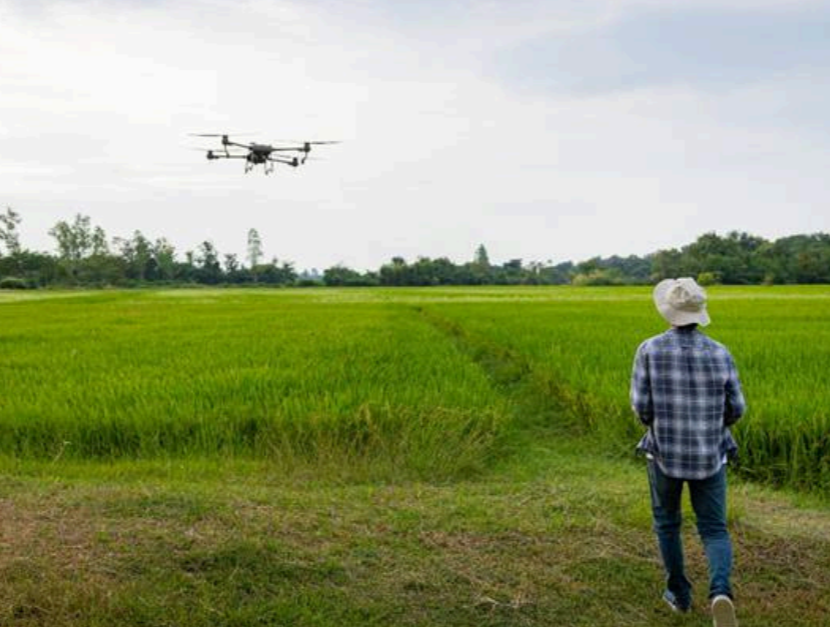
Among the emerging technologies, agricultural drones and precision agriculture are gaining importance. Drones can be used for crop monitoring, field mapping, spraying of approved agricultural inputs and assessment of crop damage. Precision agriculture, meanwhile, aims to apply water, nutrients and plant-protection inputs according to the actual requirement of different parts of a field rather than treating the entire field uniformly.
The significance of this technology goes beyond improving farm operations. When drones are placed in the hands of women Self-Help Groups (SHGs), Farmer Producer Organisations (FPOs) and rural entrepreneurs, they can create a new avenue for employment and income generation.
What is Precision Agriculture?
Traditional farming often treats an entire field in the same manner. However, a field may contain considerable variation in soil fertility, moisture, crop growth, pest incidence and nutrient requirements.
Precision agriculture attempts to identify these differences and make farm decisions accordingly. Agricultural drones equipped with cameras and sensors can provide an aerial view of crop fields. Images can help identify variations in crop growth, water stress and possible pest or disease-affected areas. When such information is combined with field observation, soil testing and expert advice, farmers can make more informed decisions.
The major agricultural applications of drones include:
• Crop growth monitoring
• Detection of pest and disease-affected areas
• Identification of water-stressed portions of fields
• Farm and crop mapping
• Spraying of approved fertilisers, pesticides and bio-inputs
• Assessment of damage after floods, storms or droughts
• Supporting crop-health and yield assessment
How Drones Can Benefit Farmers
Saving labour and time: Drones can cover large areas quickly, reducing the physical effort and labour required for spraying. For small farmers, hiring drone services through FPOs, SHGs, cooperatives or Custom Hiring Centres is more practical than owning a drone.
Improving input efficiency: Precision application can minimise unnecessary use of water and farm inputs. However, the economic benefit depends on crop, area, service cost and operating conditions.
Better crop monitoring: Aerial observation helps identify areas affected by water stress, nutrient deficiencies, pests, diseases or uneven crop growth, enabling timely intervention.
Safer application: Drone spraying can reduce direct exposure of operators to treated crops, but proper pesticide dosage, protective equipment, weather conditions and safety guidelines must still be followed.
From Beneficiaries to Entrepreneurs
Drones can transform rural women from technology beneficiaries into agricultural service providers. The Namo Drone Didi Scheme was approved with an outlay of ₹1,261 crore for 2023–24 to 2025–26, targeting 15,000 selected women SHGs. The scheme is designed to provide agricultural drone services to farmers while creating income opportunities for women.
As per a Government of India update in March 2026, women SHGs can receive 80% financial assistance towards the cost of drones and accessories, subject to a maximum of ₹8 lakh, while the remaining amount may be financed through the Agriculture Infrastructure Fund with applicable interest support.
A Success Story from the Hills: Women Drone Didis of Uttarkashi
A particularly inspiring example comes from Uttarkashi, Uttarakhand, where technology is being introduced into one of India’s geographically challenging agricultural regions.
According to a NABARD document, the Veerangana Krishak Utpadak Sangathan Swayat Sahakarita is an all-women FPO formed in 2021 in Uttarkashi district. It has 215 women farmer members and nine members on its Board of Directors. The FPO operates in remote villages of Mori block, where important crops include rajma, potato and apple.
The FPO initially focused on aggregation and marketing of agricultural produce such as potato and rajma. It also helped members obtain potato seed and farming gloves at concessional rates, thereby reducing dependence on intermediaries.
Women + FPO + Farm Machinery Bank + Institutional Support + Technology = Collective Rural Enterprise
Government Support: From Mechanisation to Women’s Empowerment
The Sub-Mission on Agricultural Mechanization (SMAM) has supported agricultural mechanisation and the creation of access to farm machinery through institutional and rental models. Such approaches are particularly relevant for small farmers who cannot afford to purchase expensive equipment individually.
Challenges That Need Attention
– Despite its potential, drone technology is not a magic solution for every agricultural problem.
– The initial investment in drones, batteries, charging systems, software, insurance, repairs and accessories can be substantial.
– Operators require more than flying skills. They need knowledge of crop stages, weather conditions, spray formulation, dosage, nozzle selection, safety procedures and equipment maintenance.
– Small and fragmented holdings, trees, electric wires, uneven terrain, strong winds and rainfall may restrict operations.
– Another important challenge is farmer acceptance. In many villages, farmers may initially hesitate to allow a new technology to be used on their crops. Demonstrations and evidence from local fields can help build confidence.
Way Forward
1. Strengthen Village-level Drone Service Centres: Drones should increasingly be made available through FPOs, SHGs, cooperatives and Custom Hiring Centres so farmers can hire services on a per-acre basis instead of purchasing expensive equipment.
2. Focus on Quality Training: Training should cover not only drone operation but also crop protection, weather assessment, chemical safety, battery management, maintenance, emergency procedures and basic enterprise management.
3. Connect Drone Operators with Agricultural Experts: Drone operators should work closely with Krishi Vigyan Kendras, agricultural universities, extension personnel and other technical institutions.
4. Promote Integrated Pest Management: Drones should not become synonymous with chemical spraying. Their use should also support the application of recommended bio-inputs, micronutrients and other appropriate agricultural inputs.
5. Ensure Transparent Income-sharing: Women SHGs and FPOs should maintain transparent records of acreage covered, farmers served, service charges, operational expenditure and income distribution.
6. Generate Local Evidence: Agricultural universities and research institutions should evaluate drone-based applications under different crops and local conditions.
7. Measure Impact, Not Just Distribution: A drone programme should be evaluated by its actual outcomes, including farmers served, acreage covered, time and cost savings, input-use efficiency, women’s income, farmer satisfaction, equipment utilisation and environmental benefits—not merely by the number of drones distributed or women trained.
Conclusion
Agricultural drones represent an important step towards more efficient, precise and technology-enabled farming. They can help reduce the physical burden of farm operations, improve crop monitoring and provide timely agricultural services. Drones alone cannot solve every agricultural challenge. But when combined with farmer knowledge, FPOs, women SHGs, scientific guidance, government support and responsible agricultural practices, they can give Indian farming a new direction—and rural women, new wings.
Author
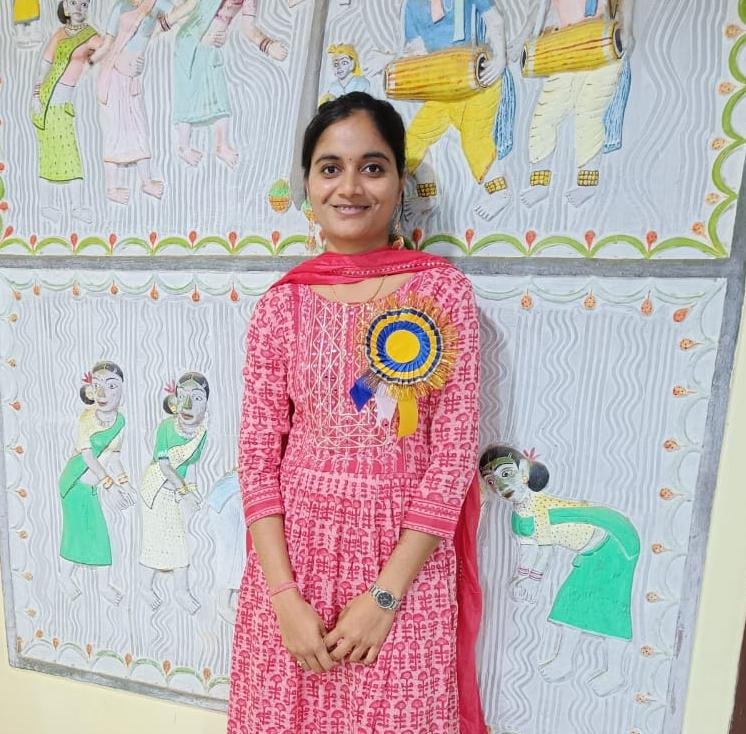
Batta Ganga Bhavani is a Ph.D. scholar in Agricultural Entomology at Govind Ballabh Pant University of Agriculture and Technology, Pantnagar. With a keen interest in article writing, agricultural content writing, scientific communication, and poster designing, she aims to combine her research expertise and communication skills to create credible, engaging, and accessible agricultural content for farmers, students, and young agricultural professionals.