When the smallest workers in our fields are protected, the harvest of tomorrow is protected too.
Introduction
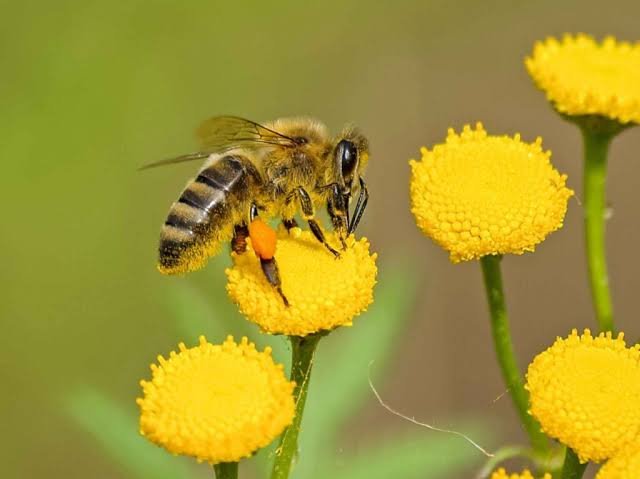
Bees are vital pollinators in agriculture, transferring pollen as they move between flowers in search of nectar and food. However, pollination is supported by a diverse community of organisms, including wild bees, butterflies, moths, flies, beetles, birds and bats. According to the FAO, nearly 75% of global food crop types depend to some extent on pollinators, particularly crops such as fruits, vegetables, nuts and seeds that contribute to a diverse and nutritious diet. In India, the importance of this natural service is reflected in its economic value: government environmental accounts estimate that pollination contributed around 8–10% of the total value of crop output during 2012–13 to 2021–22. Thus, pollinators are not only essential for biodiversity but also represent an important, often overlooked input supporting India’s agricultural productivity and food security.
The message is simple:
“Healthy pollinators mean healthy crops, healthy ecosystems and a more secure food system.’’
India’s Pollination Story: A Hidden Agricultural Economy
India’s expanding horticulture sector makes pollination increasingly important, as many fruits, vegetables and seed crops rely on insects for successful reproduction. Government data show horticultural production rising from 280.70 million tonnes in 2013–14 to 369.05 million tonnes in 2024–25, with horticulture contributing nearly 37% of the crop sector’s Gross Value Output. Alongside this growth, India’s honey production has increased from about 0.081 million tonnes to 0.152 million tonnes. The National Beekeeping and Honey Mission (NBHM) further supportscientific beekeeping, pollination, value addition and rural livelihoods. These developments highlight an important point: bees are valuable not only for honey, but also for the pollination services that support agricultural productivity and food security.
Beyond Honey: Why Bees Matter to Farmers
As bees move between flowers collecting nectar and pollen, they transfer pollen and facilitate fertilisation. Effective pollination can improve fruit set, seed production, fruit quality, uniformity and overall crop yield. Research from the Central Himalaya reported that Apis cerana pollination increased yields of mustard by 27%, buckwheat by 73% and plum by 64%. Similarly, a recent study in the Indian Himalayan region recorded 46 insect pollinator species on coriander, with open pollination increasing seed yield by 163% compared with restricted pollination. These findings highlight pollination as an essential but often overlooked input in agricultural production.
🐝 Pollination is an invisible farm input: insect pollination can substantially improve crop yield and seed production.
🌱 Pollinators support nutrition too: vitamins including B7, B9, C and K, as well as carotenoids, are substantially linked to pollinator-dependent crops.
Pollinators in Peril: What Is Putting Bees at Risk?
The decline and disturbance of pollinators is not caused by one factor. It is the result of several interacting pressures.
Major Threats to Pollinators
1. Pesticide exposure: Pesticides are essential for crop protection, but their excessive or improper use can harm pollinators. Frequent spraying, indiscriminate use of broad-spectrum insecticides, spraying during bee activity and pesticide drift into flowering areas can reduce pollinator populations. An Indian study on aubergine farms reported a 27.4% reduction in fruit set under high-frequency pesticide application, highlighting that excessive spraying can sometimes compromise pollination and crop productivity.
2. Habitat loss: Removal of field margins, flowering plants, hedgerows, trees and natural vegetation reduces food and nesting resources. Maintaining diverse flowering plants throughout the year can provide continuous resources for pollinators.
3. Climate change: Heatwaves, droughts, irregular rainfall and altered flowering periods can disrupt the synchrony between crops and pollinators. Extreme temperatures may also affect bee activity and foraging behaviour, making pollinator resilience an important part of climate-resilient agriculture.
4. Monocropping and reduced floral diversity: Large areas under a single crop may provide food only during a short flowering period, leaving pollinators with limited resources afterward. Crop diversification and flowering plants around fields can help maintain continuous food sources.
5. Diseases and colony stress: Managed bee colonies face threats from pests, diseases, inadequate nutrition and environmental stress. Healthy colonies, regular monitoring, proper hive management and suitable nutrition are essential for sustainable beekeeping.
Pollinators and Food Security: Why the Future Depends on Them
Food security is not only about producing more grain; it also depends on access to a diverse and nutritious diet. Fruits, vegetables, nuts and seeds provide essential vitamins, minerals, fibre and antioxidants, many of which are linked to pollinator-dependent crops. Research published in Entomological Research highlights the contribution of such crops to India’s supply of nutrients, including vitamins B7, B9, C and K and carotenoids. Therefore, declining pollinator populations could affect both agricultural productivity and dietary diversity.
“Protecting pollinators is consequently an important step towards strengthening India’s nutrition security”
India’s Response: From Beekeeping to Pollination Management: India has recognised the importance of beekeeping through several policy and institutional initiatives.
National Beekeeping and Honey Mission
The National Beekeeping and Honey Mission (NBHM) promote scientific beekeeping and seeks to increase honey production, improve crop productivity through pollination, generate rural employment and strengthen the honey value chain.
The mission is implemented through three broad areas:
Mini Mission I – Production and Productivity
Focuses on scientific beekeeping and improving crop production and productivity through pollination.
Mini Mission II – Post-Harvest Management
Supports collection, processing, storage, branding, marketing and value addition of honey and other bee products.
Mini Mission III – Research and Technology
Supports research, technological development and region-specific solutions for beekeeping.
The mission also encourages participation by FPOs, SHGs, entrepreneurs and rural communities, creating opportunities beyond conventional crop production.
The Farmer’s Role: Building Pollinator-Friendly Farms
Farmers can support pollinators through simple practices that can be integrated into existing farming systems:
• Plant flowering strips: Grow suitable flowering plants along field boundaries to provide nectar and pollen throughout the season.
• Protect field margins: Retain useful flowering vegetation and natural habitats that provide food and shelter.
• Adopt IPM: Monitor pests, use biological and cultural methods, and apply pesticides only when necessary.
• Use pesticides responsibly: Avoid spraying when bees are actively foraging and always follow recommended label directions.
• Conserve nesting sites: Protect undisturbed soil, dead wood, hollow stems and other habitats used by wild bees.
• Provide safe water: Shallow, safe water sources can help pollinators during hot and dry periods.
• Diversify crops: Crop diversification and agroforestry can provide more continuous food and shelter.
• Promote scientific beekeeping: Well-managed bee colonies can enhance crop pollination while providing farmers with additional income through honey and other hive products.
“Small changes at farm level can collectively create a safer and more productive environment for pollinators”
Beekeeping: An Opportunity for Rural Livelihoods
Pollinator conservation can also create valuable livelihood opportunities. Scientific beekeeping provides income not only through honey, but also through beeswax, propolis, pollen, royal jelly, queen rearing and pollination services. The National Beekeeping and Honey Mission (NBHM) support entrepreneurship, FPOs, SHGs, startups and greater participation of women in the beekeeping sector.
For rural youth, beekeeping can provide a pathway from traditional farming to agri-entrepreneurship. A well-managed apiary can develop into a complete rural enterprise through:
Production → Processing → Value addition → Branding → Marketing → Income generation
Thus, supporting bees can simultaneously strengthen pollination, farm productivity and rural livelihoods.
A Vision for Pollinator-Smart Agriculture
The future of Indian agriculture will depend not only on advanced machinery, improved varieties and digital technologies, but also on maintaining healthy ecological systems. A truly resilient farm should be productive, profitable, climate-resilient, biodiverse and pollinator-friendly. Modern technology can complement ecological approaches through digital pest monitoring, precision input management and weather-based advisories, while biological control, flowering habitats and scientific beekeeping can strengthen natural pollination and reduce ecological stress. The goal is not to choose between technology and nature, but to use technology wisely while working with nature to build a sustainable and resilient agricultural system.
Conclusion
Bees may be small, but their contribution to Indian agriculture is immense. By supporting pollination, they help link crop productivity, biodiversity and nutritional security. With India’s horticulture and beekeeping sectors expanding, protecting pollinators is becoming increasingly important. Pesticide misuse, habitat loss and climate change can threaten these essential organisms and, ultimately, agricultural productivity. Therefore, pollinator conservation must begin before serious declines occur through flower-rich habitats, responsible pesticide use, protected nesting sites and scientific beekeeping.
Protecting pollinators today means securing India’s food, farmers, biodiversity and nutrition for tomorrow.
Author

Batta Ganga Bhavani is a Ph.D. scholar in Agricultural Entomology at Govind Ballabh Pant University of Agriculture and Technology, Pantnagar. With a keen interest in article writing, agricultural content writing, scientific communication, and poster designing, she aims to combine her research expertise and communication skills to create credible, engaging, and accessible agricultural content for farmers, students, and young agricultural professionals.