Introduction
Agriculture is not only a source of food but also an important part of rural livelihoods, employment, nutrition and economic development. For generations, farmers have depended on their experience, traditional knowledge and understanding of nature to make decisions about crops and farming activities. However, agriculture is becoming increasingly complex because of changing weather conditions, rising input costs, water scarcity, pest problems, market fluctuations and the growing demand for safe and nutritious food.
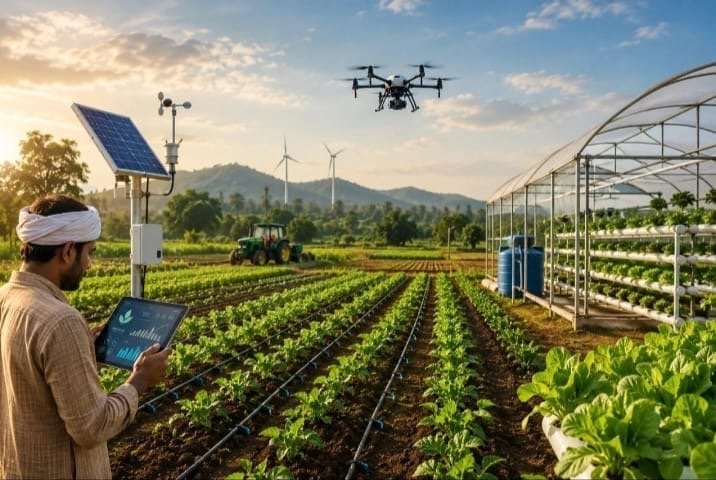
In this changing situation, digital agriculture is emerging as an important tool for making farming more informed, efficient and sustainable. Digital agriculture refers to the use of technologies such as smartphones, mobile applications, artificial intelligence, sensors, drones, satellite imagery, weather forecasting and digital marketplaces in agricultural activities. These technologies can help farmers obtain timely information and make better decisions.
For a country like India, where agriculture is closely connected with rural families and communities, digital transformation can become more than a technological change. It can become a means of improving livelihoods, strengthening decision-making and connecting farmers with knowledge, markets and opportunities.
From Traditional Decisions to Data-Based Farming
Traditionally, farmers have often depended on personal experience and observations of weather, soil and crops. This knowledge remains extremely valuable, but modern technology can complement it by providing scientific and timely information.
Mobile phones can provide farmers with information about weather conditions, crop management, pest outbreaks, market prices and government schemes. Instead of depending only on guesswork, farmers can combine their experience with reliable information before deciding when to sow, irrigate, spray or harvest.
This combination of traditional knowledge and modern technology can make farming more responsive to changing conditions.
Smart Weather Information for Better Farm Planning
Weather plays an important role in almost every agricultural activity. Unexpected rainfall, heat waves, storms or dry periods can affect crop growth and farm operations.
Weather forecasting through mobile applications and digital advisory services can help farmers plan their activities more carefully. Information about expected rainfall can assist in irrigation planning, while temperature and humidity information can support decisions related to crop protection.
Timely weather information can therefore reduce unnecessary input use and help farmers avoid losses caused by poorly timed agricultural operations.
Connecting Farmers with Markets
Producing a crop is only one part of agriculture. Getting a fair price for that produce is equally important. Farmers often face difficulties related to market information, transportation, middlemen and fluctuating prices.
Digital marketplaces and mobile-based platforms can improve access to information about prices, buyers and agricultural products. Digital payments can also make financial transactions easier and more transparent.
Better access to market information can help farmers make informed decisions about where and when to sell their produce. This can strengthen their economic position and reduce dependence on limited sources of market information.
Digital Tools for Pest and Disease Management
Pests and diseases can cause significant losses in agricultural production. Traditionally, farmers may identify a problem only after visible damage appears in the crop.
Digital technologies can support early identification and monitoring. Farmers can use mobile applications, photographs, field sensors and expert advisory services to seek information about crop problems.
When combined with Integrated Pest Management (IPM), digital tools can encourage more responsible pest control. Instead of depending only on chemical pesticides, farmers can consider biological control, resistant varieties, field monitoring and other suitable approaches.
Technology for Sustainable Water Management
Water is one of the most valuable resources in agriculture. Increasing demand for water and irregular availability make efficient water management essential.
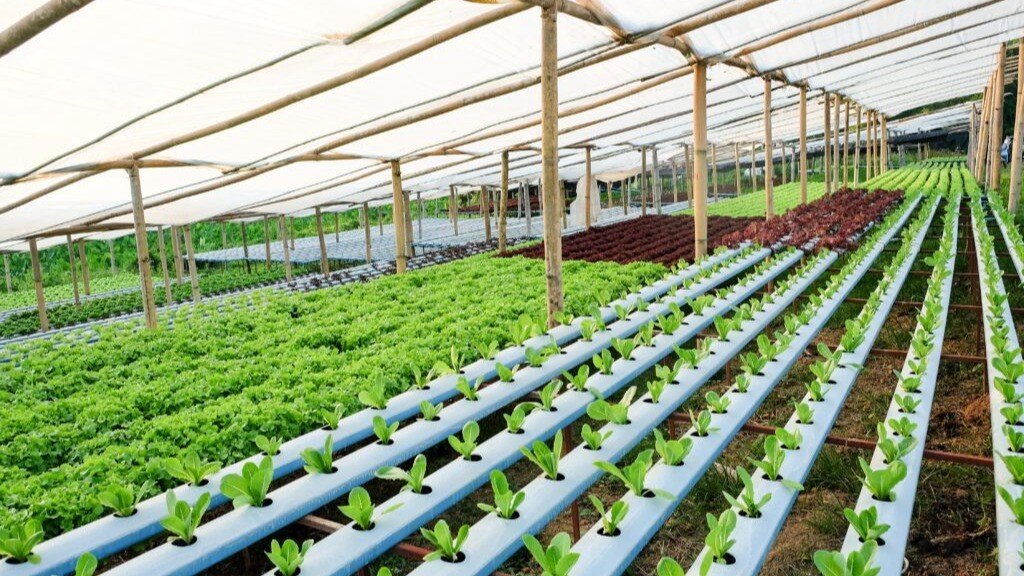
Digital irrigation systems and soil-moisture sensors can help farmers understand the actual water requirement of crops. Drip and sprinkler irrigation can further improve water-use efficiency.
Technology can also support rainwater harvesting, groundwater monitoring and better irrigation scheduling. Such measures are particularly important for ensuring that agricultural productivity does not come at the cost of long-term water security.
Challenges in Digital Agriculture
Although digital agriculture has great potential, its benefits cannot reach every farmer automatically. Many small and marginal farmers may face difficulties because of limited digital literacy, poor internet connectivity, high technology costs and lack of technical knowledge.
There is also a need to provide agricultural information in local languages and in simple formats. Merely providing an application is not enough; farmers need proper training and continuous support to use it effectively.
Therefore, digital agriculture should be inclusive, affordable, accessible and farmer-friendly. Technology must be designed according to the real needs and capacities of farming communities.
Role of Agricultural Institutions and Government
The successful adoption of digital agriculture requires cooperation among farmers, agricultural universities, scientists, government departments, extension workers and technology developers.
Agricultural institutions can play an important role in providing demonstrations, training programmes and scientific advisories. Government support can help farmers access modern technologies, digital services, irrigation facilities, crop insurance and agricultural information.
Agricultural universities can also contribute by connecting scientific research with field-level requirements and helping farmers understand new technologies in a practical manner.
A Human-Centred Future of Agriculture
The future of agriculture should not be based on technology alone. The farmer must remain at the centre of agricultural development.
A successful digital agricultural system should combine technology, traditional knowledge, scientific research and community participation. It should improve productivity while also protecting soil, water, biodiversity and rural livelihoods.
For students of Community Science, this transformation offers an important perspective. Agriculture is connected not only to crops and production but also to food security, nutrition, family welfare, women’s empowerment, entrepreneurship and rural development.
Conclusion
Digital agriculture has the potential to transform the way farming decisions are made. Smartphones, artificial intelligence, weather forecasting, sensors, drones, digital marketplaces and precision farming can provide farmers with timely information and help them use resources more efficiently.
However, the real success of digital agriculture will depend on how effectively these technologies reach farming communities. Technology should not create another gap between those who have access to information and those who do not. Instead, it should become a bridge connecting farmers with knowledge, markets, institutions and opportunities.
The future of Indian agriculture lies in creating a system where technology works with farmers, not instead of farmers. By combining scientific innovation with traditional wisdom, community participation and sustainable practices, digital agriculture can contribute to productive farms, empowered families, stronger rural communities and a more secure food future.
Thus, the journey from soil to smartphone is not simply a technological revolution—it is an opportunity to make Indian agriculture more informed, inclusive, sustainable and human-centred.
Author

Ankita Mishra is a second-year B.Sc. (Hons.) Community Science student at Gobind Ballabh Pant University of Agriculture and Technology, Pantnagar. She has a keen interest in video editing, poster designing, Shayari writing, and digital content creation. With experience as a Video Editor at Sasyam Foundation and as a Social Media Manager and Video Editor at Krishi Ujala, she enjoys blending creativity and communication to create engaging digital content.