Introduction
Imagine walking through a field full of mustard flowers. We usually notice the farmer, the crop and the beautiful yellow field. But there is another group silently working among the flowers—bees, butterflies and other pollinators.
These tiny organisms perform a task that is fundamental to the production of many fruits, vegetables, oilseeds and other crops. When pollinators move from one flower to another, they help transfer pollen and support fertilization, seed formation and fruit development.
Pollination is therefore not simply a natural phenomenon. It is closely connected with agricultural productivity, biodiversity, nutrition and rural livelihoods. In India, recent government analysis has estimated the value of pollination services at about 8–10% of total crop output value over the period 2012–13 to 2021–22.
This makes pollinators much more than tiny insects visiting flowers. They are an important part of the agricultural system.
What Exactly Is Pollination?
Pollination is the transfer of pollen from the male part of a flower to the female part. This process enables fertilization and eventually contributes to the formation of seeds and fruits.
Bees are particularly effective pollinators because pollen can stick to their hairy bodies as they move between flowers. During their search for nectar and pollen, they unintentionally carry pollen from one flower to another.
Different crops have different levels of dependence on pollinators. Fruits, vegetables, oilseeds and several other crops can benefit greatly from effective pollination. Indian research has documented important contributions of pollinators to crops such as mustard, cotton, apple, citrus, guava, tomato, brinjal, chilli, okra and coriander.
Bees: Small Insects, Big Agricultural Impact
Among the many pollinators, honey bees have an especially important relationship with agriculture.
While collecting nectar and pollen for their colonies, honey bees visit numerous flowers. This movement facilitates pollination and can improve crop production and quality. Research published by ICAR has highlighted the importance of honey bees for crop pollination and vegetable seed production.
Mustard is a particularly interesting example. It is an important oilseed crop in India and benefits from insect pollination. Beekeeping in mustard-growing areas can therefore create a relationship where both the crop and the beekeeper can benefit.
This shows that agriculture is not always about producing crops separately from other enterprises. Different agricultural activities can work together.
Pollinators and Food Security
Food security is not only about producing enough cereals. A balanced diet also requires fruits, vegetables, pulses, nuts and other nutrient-rich foods.
Many of these crops depend partly or strongly on pollination. Therefore, protecting pollinators indirectly supports the availability and diversity of foods.
From a Community Science perspective, this connection is especially important. Agriculture affects what is available in our food system, while food availability influences household nutrition and well-being.
Thus, protecting a small bee in a field can have a connection with something much bigger—the food on our plates.
Pollination and Crop Quality
The role of pollinators is not limited to increasing the quantity of agricultural produce. Effective pollination can also influence fruit development, seed formation and quality.
In horticultural crops, proper pollination can contribute to better fruit set and more uniform produce. In vegetable seed production, honey bee activity can significantly influence seed production in several crops.
This becomes important because farmers are not simply trying to produce more crops. They also need to produce crops that meet consumer expectations in terms of quality, appearance and market value.
When Agriculture Becomes Unfriendly to Pollinators
Modern agriculture has brought many benefits, including improved productivity and food availability. However, some agricultural practices can unintentionally create difficulties for pollinators.
Excessive or inappropriate pesticide use, destruction of flowering habitats, reduction in plant diversity and loss of nesting spaces can affect beneficial insects.
Pollinators need more than a single flowering crop. They require food, shelter and suitable habitats throughout different periods of the year.
Therefore, agricultural development should not focus only on the crop growing in the field. It should also consider the wider ecosystem surrounding that crop.
Creating Pollinator-Friendly Farms
A pollinator-friendly farm does not necessarily require complicated technology. Several practical approaches can help create better conditions for beneficial insects.
Maintaining flowering plants around agricultural fields, conserving natural vegetation, avoiding unnecessary pesticide applications and providing suitable habitats can support pollinator populations.
Farmers can also adopt Integrated Pest Management (IPM), which focuses on monitoring pests and using appropriate control measures rather than depending unnecessarily on chemical pesticides.
Recent research has highlighted the importance of integrating pollinator protection with pest management so that agricultural production and biodiversity conservation can work together.
Beekeeping: Where Agriculture Meets Entrepreneurship
One of the most fascinating aspects of pollinators is that they can contribute not only to crop production but also to rural entrepreneurship.
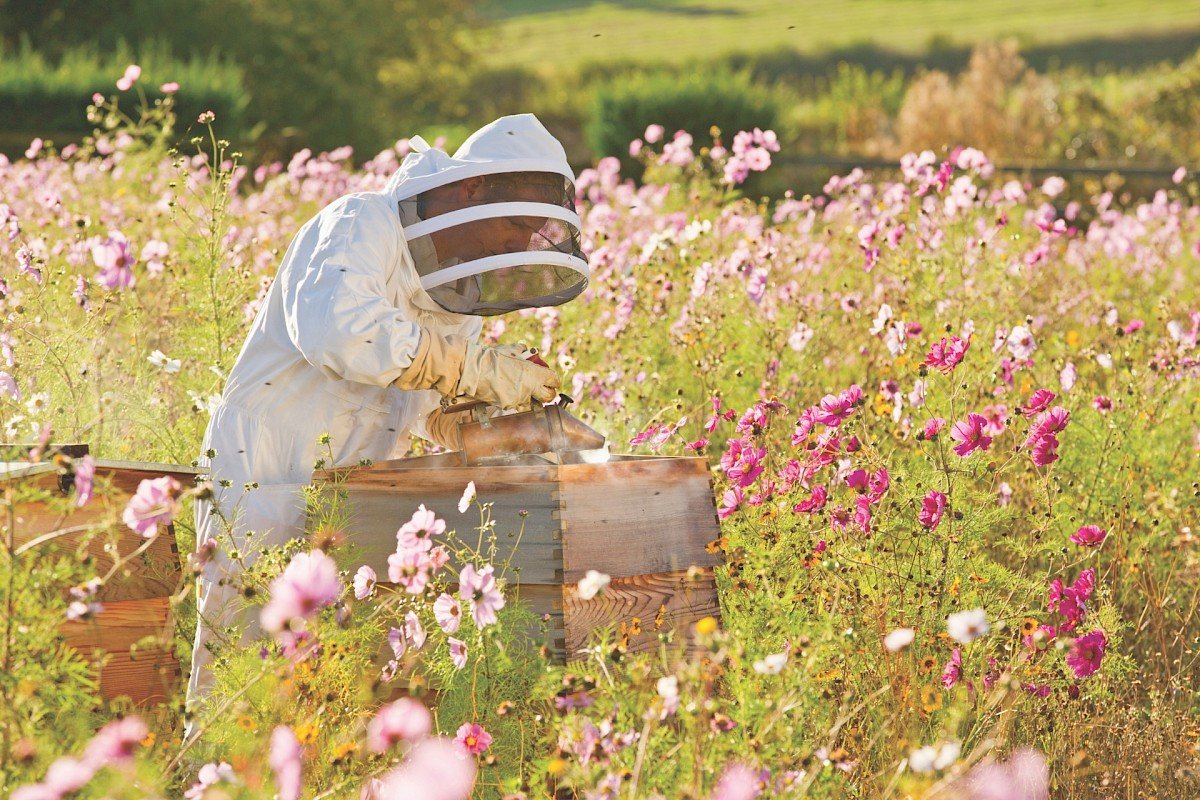
Beekeeping, or apiculture, can provide farmers and rural families with an additional source of income. Honey, beeswax and other hive products can be marketed, while bees simultaneously provide pollination services to crops.
The Government of India has also recognized beekeeping as an agro-based activity that can support income, employment and rural development.
This makes beekeeping an interesting example of integrated agricultural enterprise—where environmental benefits and economic opportunities can exist together.
Women and Rural Livelihoods
Agriculture and rural development cannot be discussed without considering the role of women.
Women contribute significantly to agricultural and allied activities, including livestock management, food processing, kitchen gardening, seed-related activities and small-scale enterprises.
Beekeeping and other allied agricultural activities can provide opportunities for skill development and entrepreneurship when suitable training, equipment, finance and market linkages are available.
For Community Science students, this aspect is particularly relevant because rural development is not limited to crop production. It also includes family income, nutrition, skill development, women’s participation and community empowerment.
Pollinators and Biodiversity
Agricultural fields are part of a much larger ecosystem.
Pollinators support not only cultivated crops but also wild flowering plants. When plants reproduce successfully, they provide food and habitat for other organisms. This creates interconnected relationships within the ecosystem.
Therefore, conserving pollinators can contribute to maintaining biodiversity.
A healthy agricultural landscape should ideally contain a mixture of crops, flowering plants, trees, natural vegetation and suitable habitats. Such diversity can make farming landscapes more ecologically balanced.
The Role of Farmers
Farmers are among the most important partners in pollinator conservation because they manage the landscapes where pollinators search for food.
Simple decisions at the farm level can make a difference. Farmers can avoid unnecessary pesticide applications, protect flowering plants, maintain field boundaries and use safer pest-management practices.
At the same time, farmers should have access to scientific information and practical training so that pollinator conservation does not become an additional burden but becomes part of good agricultural management.
Role of Scientists, Universities and Government
Pollinator conservation requires cooperation among farmers, scientists, agricultural universities, government agencies and local communities.
Agricultural universities can conduct research on crop-pollinator relationships and develop practical recommendations. Extension agencies can help communicate this information to farmers.
Government programmes can support beekeeping, training, research and market development. Recent Indian government work on pollination accounting also demonstrates the growing recognition that pollination has measurable economic importance for agriculture.
Such collaboration can help transform pollinator conservation from an environmental idea into a practical agricultural strategy.
What Can We Do as Students and Citizens?
Pollinator conservation is not only the responsibility of farmers.
Students and communities can contribute by planting flowering species, maintaining small gardens, avoiding unnecessary use of harmful chemicals and spreading awareness about the importance of pollinators.
Educational institutions can develop small pollinator gardens where students can observe bees, butterflies and other insects. Such activities can turn environmental education into practical learning.
Even a small garden can become a tiny habitat for life.
A Future Where Farms and Nature Work Together
The future of agriculture should not be based on separating farming from nature. Instead, the goal should be to develop agricultural systems where productivity and ecological balance support each other.
Pollinator-friendly agriculture can be one part of this approach. By protecting beneficial insects, conserving biodiversity, encouraging responsible pest management and promoting beekeeping, farmers can create agricultural systems that are productive as well as environmentally responsible.
The tiny bee therefore represents a much larger idea: agriculture succeeds when the ecosystem around it is healthy.
Conclusion
Pollinators may be small, but their contribution to agriculture is enormous. Bees, butterflies and other pollinating organisms support crop reproduction, biodiversity, food diversity and rural livelihoods.
Their importance reminds us that agriculture is not simply about seeds, soil and farmers. It is a complex relationship between crops, insects, soil, water, people and the environment.
Protecting pollinators requires practical farm management, scientific research, responsible pesticide use, habitat conservation, farmer awareness and community participation. Beekeeping can further connect pollination with rural entrepreneurship and income generation.
As future professionals connected with Community Science and rural development, understanding these relationships is important because food production ultimately connects with nutrition, family well-being and community livelihoods.
The next time we see a bee moving from one flower to another, we should remember that it is not merely visiting a flower.
It may be doing one of the most important jobs in the field—helping grow the food that reaches our table.
“Save the pollinators, protect the harvest, and secure the future.”
Author

Ankita Mishra is a second-year B.Sc. (Hons.) Community Science student at Gobind Ballabh Pant University of Agriculture and Technology, Pantnagar. She has a keen interest in video editing, poster designing, Shayari writing, and digital content creation. With experience as a Video Editor at Sasyam Foundation and as a Social Media Manager and Video Editor at Krishi Ujala, she enjoys blending creativity and communication to create engaging digital content.