Goat farming is attracting a new generation of entrepreneurs in india
From traditional livelihood, to a kind of promising agribusiness
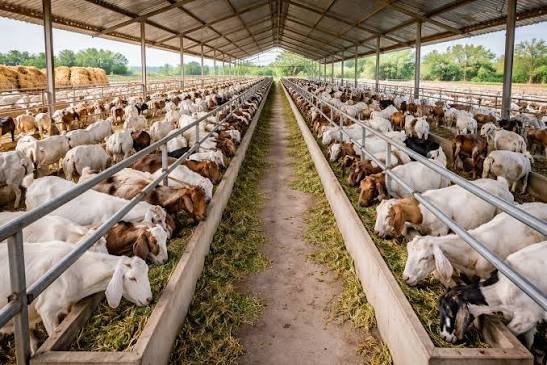
For years, goat rearing has been tied closely to rural life in india. But now, the simple goat is showing up in a different, kind of business narrative — like entrepreneurship. Somehow it feels, like people are moving it from backyards to plans.
As the demand for goat meat, milk and value-added products keeps growing, young people and rural operators are starting to see goat farming not only as a familiar routine, but as a real commercial agribusiness possibility.
Goat farming has a few points that make it easy on the mind, and appealing for new entrepreneurs: the initial setup can be relatively modest, goats adapt well to different climatic conditions, and there is steady demand for goat meat, plus a chance to blend livestock with crop production, in the same farm.
Why are entrepreneurs moving toward goat farming ?
One of the biggest attractions is the option to begin on a relatively small scale and then grow step by step. In comparison with some large livestock ventures that need heavy infrastructure and major investment, goat farming can be shaped around the entrepreneur’s own land, capital, and available resources.
Goats also are known for using a range of grasses, shrubs, leaves, and agricultural by-products. If it is managed properly, it can lower feeding expenses, almost quietly over time.
Still, for an entrepreneur, low entry barriers by themselves are not the whole story. The better opportunity is in handling goat farming like a business. That means serious work on breed selection , feeding plans, housing, health care, breeding routines, and marketing.
“Successful goat farming is not only about keeping more goats. It is about treating every goat as a productive business asset,”
Rising Demand Creates Market Opportunities
Goat meat, people often call it chevon, has already a solid audience in India. When demand comes in from city markets, restaurants, and regular households, it opens doors for well-organized growers who can keep supplying good quality animals on a steady basis.
But the business doesn’t have to rely on only one revenue stream. It can also bring in income through several other channels, more or less like this:
- Selling meat animals
- Selling breeding goats
- Selling kids
- Selling milk, where suitable markets exist
- Selling manure
- Selling breeding stock that shows desirable characteristics
- Value-added livestock products
With that kind of diversification, goat farming can be far more stable, instead of depending on a single income source all the time.
Breed Selection: The First Big Business Decision
Choosing the right breed matters, a lot, in how a goat venture will perform. Across India, there are many indigenous goat breeds, each one suited to different agro- climatic conditions.
Entrepreneurs should weigh local suitability, growth speed, reproductive strength, resistance to disease, how easily feed is available, and what buyers actually want. In other words, not just picking a breed because someone advertises it as “highly profitable”.
A breed that does well in one place, may not give the same outcomes somewhere else. So this is why expert support, plus animal sourcing from dependable breeders, becomes really important when you start a commercial unit.
Technology Is Changing Goat Farming
The idea that goat farming is only a traditional activity is gradually fading.
Today’s modern business owners are increasingly using various tools and management approaches such as, for example:
- Digital identification and record keeping
- Scientific breeding programmes
- Livestock management via mobile platforms
- Better housing systems
- Vaccination and preventive healthcare
- Balanced feeding together with mineral supplementation
- Weight monitoring
Women and Rural Youth Can Benefit
Goat farming can also make spaces for rural youth and women entrepreneurs, because it can be stitched into what households already do day after day with farm work, and it’s not only about goats alone, but about combining routines and resources. In that way small farms can feel less disruptive, and even more “ doable ”.
Small scale goat enterprises can bring in extra cash on the side, while bigger commercial operations may hire people for animal care, feed management, transport, processing and marketing. For younger entrepreneurs, goat farming can be a doorway into the wider livestock space, like a first step that leads to something larger, not just another short term hustle.
The Business Does Not End at the Farm Gate
One of the strongest opportunities is in value addition and more organised marketing, so basically, beyond raising animals there’s also the whole “what happens next” part.
Instead of only selling live goats to middlemen, entrepreneurs can look at better market linkages, collective marketing, breeding-stock sales and, where it is legal and commercially sensible, processed products. In many cases Farmer Producer Organisations and livestock cooperatives can help smaller producers gain more bargaining power, and also improve access to markets.
“The future of goat farming will depend not only on producing more goats, but on producing better animals and connecting them to better markets.”
Challenges Entrepreneurs Must Understand
Even with all that promise, goat farming is not a guaranteed profit road, it can go either way. Some common hurdles are disease outbreaks, poor-quality breeding stock, inadequate nutrition, mortality among young kids, shifting market prices, and weak access to veterinary services.
Another common stumble is starting a farm just after seeing attractive profit claims online , without preparing a proper business plan. Entrepreneurs should total up the cost of animals, housing, feed, labour, healthcare, insurance, transportation and marketing before committing money.
Good management, rather than simply a big herd size, really ends up determining profit, not just numbers on paper.
The Road Ahead
India’s growing interest in livestock entrepreneurship is opening up room for modern goat farming models that mix traditional wisdom with scientific management, kinda like a careful blend instead of a total switch.
For young entrepreneurs who are willing to learn animal husbandry, keep accurate records, and build solid market linkages, goat farming can become more than some extra rural work. It can grow into a structured enterprise, with chances across breeding, production, marketing and even value addition.
The goat may be a small animal, but the surrounding business opportunity can be quite substantial.
Conclusion
As Indian agriculture keeps shifting towards diversified and entrepreneurial farming, goat farming is turning into an enterprise that deserves real attention. It has adaptability, stable market demand, and the potential for steady expansion which makes it appealing to new aspiring operators.
However , the future tends to belong to those who go past routine goat rearing and embrace scientific breeding, better nutrition, preventive healthcare, technology and organised marketing too.
Goat farming is no longer just about keeping animals. For a new round of rural entrepreneurs, it can be about constructing a business, not only tending goats.
References
- ICAR. Scientific Goat Management Fosters Entrepreneurship, 2025.
- ICAR. Scientific Practices Enhance Income from Goatery.
- ICAR-CIRG. Improvement in Goat Production for Sustainable Rural Livelihood.
- ICAR-CIRG. Entrepreneurship Development Day.
- ICAR. Commercial Goat Farming.
- Department of Animal Husbandry & Dairying, Government of India. Basic Animal Husbandry Statistics 2022.
- ICAR. Hygienic Goat Slaughter and Value-Added Goat Meat Product Processing.
- ICAR-CSWRI. National Goat Day: Farmers-Scientists Interaction for Livelihood Enhancement.
Author