Climate change is creating serious challenges for the agricultural sector in many parts of the world. The agricultural sector requires conducive climatic conditions, such as temperature, rainfall, humidity and availability of water resources. Any changes in these conditions will make it difficult for the farmers to plan their farming activities. Climate change can affect the cultivation of crops, quality of soil, water resources, pests and diseases and finally the livelihood of the farmers.
Changes in Rainfall Patterns:
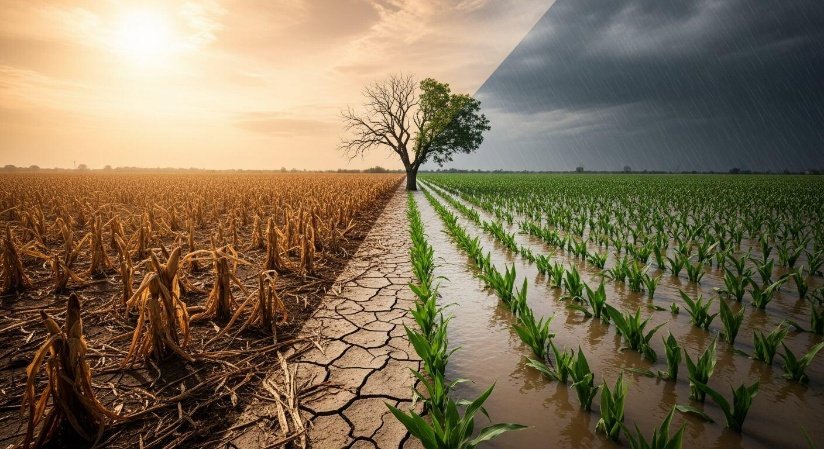
Rainfall is one of the factors that determine the productivity of the crops. Changes in rainfall patterns pose different challenges to the farmers. Late monsoons, irregular rainfall and rains pose challenges in the planting, transplanting and harvesting activities of the farmers. While some places experience drought, others receive excessive rainfall that leads to water logging and damages the crops. Hence, the uncertainty in rainfall has posed challenges to the agriculture sector.
Temperature Increase:
Increased temperature levels are one more effect of global warming. The growth and development of crops demand proper temperatures. If there is an increase in temperature, then heat stress can take place, which will adversely affect flower formation, pollination, grain formation and finally yields. Wheat and maize are some of the crops which could suffer because of high temperatures at certain stages of the growth of crops. Besides, with the increase in temperature, there would be more water loss from the soil and crops.
Drought and Shortage of Water:
Another effect of global warming is the shortage of water and drought conditions. Global warming results in decreased precipitation and increase in temperature, which further reduces the moisture of the soil and increases the water requirements of the crops. Farmers depending entirely upon rainfall for the irrigation of crops are more susceptible to droughts. Various irrigation methods like drip and sprinkler irrigation, rainwater harvesting and proper management of water can help a lot.
Floods and Extreme Weather Conditions:
Weather conditions such as floods, cyclones, droughts and rainfall may cause failure of crop production due to rapid changes in climate. Floods may harm the crops growing in the farms since they may wash away the crops and erode the soil thus making it infertile. Floods may also cause waterlogged conditions in the soil thus inhibiting root growth. This will have an impact on the farm and storage crops hence increasing cost for the farmer.
Effect on Soil Properties:
Climate change may also affect the physical, chemical and biological characteristics of the soil. While rainfall may cause erosion of soil and loss of soil nutrients, the dry conditions may decrease soil moisture levels and biological processes. To maintain soil organic matter through the use of crop residues, mulching, composting and minimal cultivation will help improve soil properties.
Increase in Pests and Diseases:
Differences in temperature and humidity may influence the number and distribution of pests and diseases of agricultural crops. Some pests may flourish more in climatically favourable conditions, while some diseases could spread to other areas. This could cause greater loss and high cost of production. IPM, field survey, biological control and resistant variety planting may help farmers in tackling these problems.
Implementation of Climate Smart Agriculture:
The agriculturalists are increasingly adopting different climate smart strategies to reduce risk in relation to unfavourable impact of changing weather conditions. Planting of drought and heat tolerant varieties, diversification, proper irrigation, mulching, conservation agriculture and integrated nutrient management are useful in maintaining productivity in stressful conditions. Diversification is particularly useful because the farmers will not be dependent on one crop.
Role of Technology:
The technology in use currently can prove very beneficial to the farmers facing different kinds of problems arising from climate changes. Forecasting the weather would be important in determining the right time for planting, irrigating, spraying and harvesting. The advisories, remote sensing, precision farming and digital agriculture would help to receive proper information about the weather and crops. Such information will be very useful to the farmers since it will help in avoiding the adverse effects caused by climate change.
Role of the Government and the Farmers:
To address climate change, it will be important for the farmers, scientists, government and other agricultural agencies to collaborate. The farmers require access to high quality seeds, irrigation, weather data, insurance of the crops and technical support from the government and agricultural organizations. At the same time, farmers also have an important role to play in conserving soil, water and other natural resources.
Sustainable Agriculture in the Future:
Climate change has made sustainable agriculture essential for ensuring long-term food production and protecting natural resources. Some of the methods involved in sustainable agriculture include crop rotation, integration of agriculture, good water management, soil conservation, management of organic matter and proper fertilization. Sustainable agriculture not only helps farmers manage current challenges but also protects natural resources for future generations.
Conclusion:
Modern agriculture is facing major challenges that affect crop growth, productivity, soil health, water availability and farmers’ livelihoods. However, the situation can be managed through timely action and proper planning. The use of climate-resilient crop varieties, efficient irrigation, improved weather forecasting, soil and water conservation and sustainable farming practices can help farmers adapt to changing climatic conditions. Farmers, scientists, governments and agricultural organizations all have an important role to play in this process. By combining modern technology with sustainable agricultural practices, we can protect natural resources, maintain food production and support farmers’ livelihoods. Therefore, building a climate-resilient and sustainable agricultural system is essential for ensuring food security and a better future for the coming generations.
Author

M.Sc (Agriculture) in Agronomy, Centurion University of Technology and Management, Paralakhemundi, Odisha, 761211
B.Sc Agriculture, The Neotia University, South 24 Parganas , West Bengal, 743368