“Strengthening farmer incomes, promoting crop diversification and advancing India’s food security”
For Indian farmers, producing a good harvest does not necessarily translate into a stable or profitable income, as fluctuating market prices, increasing input costs and limited bargaining power can reduce returns and sometimes lead to distress sales. The Minimum Support Price (MSP) provides an important safety mechanism by offering price assurance and protecting farmers against sharp market downturns. At the same time, India’s MSP framework is expanding beyond its traditional role of income protection. The MSP decisions for Rabi Marketing Season (RMS) 2026–27 and Kharif Marketing Season (KMS) 2026–27 increasingly reflect national priorities such as strengthening pulse and oilseed production, encouraging nutri-cereals and crop diversification, improving food and nutritional security, and advancing agricultural self-reliance, while continuing to safeguard farmers against price volatility.
MSP: Ensuring Price Security for Farmers
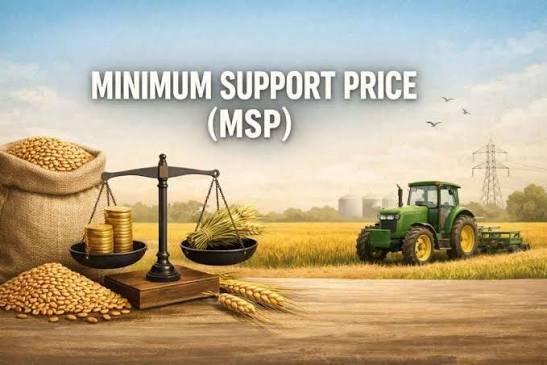
The Minimum Support Price (MSP) is the price announced by the Government of India for selected crops to provide farmers with a remunerative return and protect them from distress sales when market prices fall. The Commission for Agricultural Costs and Prices (CACP)recommend MSP after considering factors such as production costs, demand and supply, market trends, inter-crop price parity and the terms of trade between agriculture and non-agriculture. The final approval is given by the Cabinet Committee on Economic Affairs (CCEA). Since 2018–19, MSPs have been fixed at a minimum of 1.5 times the all-India weighted average cost of production, representing at least a 50% margin over the cost benchmark. MSP is currently announced for 22 mandated crops, while sugarcane has a separate Fair and Remunerative Price (FRP) system.
How is the MSP return calculated?
The margin over production cost can be calculated as:
Return (%) = [(MSP − Cost of Production) ÷ Cost of Production] × 100
For example, if the cost of producing wheat is ₹1,239/quintal and its MSP is ₹2,585/quintal, the return over cost is approximately 109%. This shows that the 50% margin is a minimum policy benchmark, while the actual margin differs from crop to crop. The cost considered includes expenses such as labour, seed, fertilisers, irrigation, machinery, land rent and working capital, along with the value assigned to family labour.
Rabi MSP 2026–27: At a Glance
For Rabi Marketing Season (RMS) 2026–27, the Government increased MSP for all six mandated Rabi crops. The revised prices are:
| Rabi Crop | MSP 2026–27 (₹/quintal) | Increase (₹/quintal) |
| Wheat | ₹2,585 | ₹160 |
| Barley | ₹2,150 | ₹170 |
| Gram | ₹5,875 | ₹225 |
| Lentil (Masur) | ₹7,000 | ₹300 |
| Rapeseed & Mustard | ₹6,200 | ₹250 |
| Safflower | ₹6,540 | ₹600 |
The largest increase was given to safflower at ₹600 per quintal, highlighting the growing policy focus on oilseeds. Higher MSPs for pulses and oilseeds can encourage farmers to diversify beyond wheat and rice and contribute to nutritional security, edible-oil self-sufficiency and more sustainable cropping systems.
MSP and the Shift Towards Crop Diversification
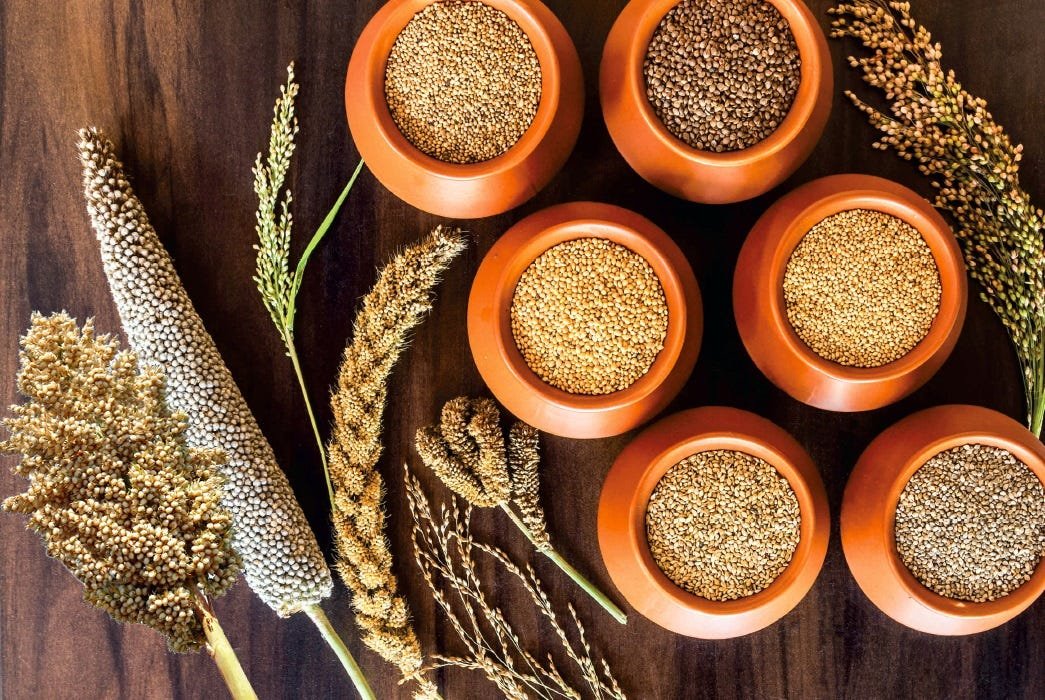
India’s MSP policy, which traditionally supported food-grain security through wheat and rice procurement, is increasingly being aligned with crop diversification and self-reliance. Excessive dependence on these crops in some regions has contributed to concerns such as groundwater depletion, soil degradation and monocropping. The higher MSP support for pulses, oilseeds and nutri-cereals aims to encourage more diverse and sustainable cropping patterns. Pulses strengthen nutritional security and soil health, while oilseeds can help reduce edible-oil import dependence and millets support dietary diversity and climate resilience. The Government’s commitment to procure tur, urad and masur at MSP under the applicable procurement framework, along with initiatives such as the National Mission on Edible Oils–Oilseeds (NMEO-OS), further strengthens this approach. Thus, MSP is evolving from a price-protection mechanism into a broader tool for farmer income security, crop diversification and agricultural self-reliance.
MSP: From Announcement to Actual Benefit
An MSP announcement does not guarantee that every farmer will sell produce at the announced price. Its actual impact depends on the availability of procurement centres, registration facilities, quality assessment and timely payments. Cereals and coarse cereals are mainly procured through agencies such as FCI and State agencies, while pulses, oilseeds and copra may be procured under PM-AASHA’s Price Support Scheme (PSS) through agencies such as NAFED and NCCF. Cotton and jute are procured through CCI and JCI, respectively. Thus, the effectiveness of MSP depends on a complete delivery chain—from farmer awareness and registration to procurement, quality compliance and timely payment. In simple terms, “MSP announced” does not always mean “MSP received.”
Challenges in the MSP Regime:
– Costly Procurement
Large-scale procurement involves substantial expenditure on procurement, storage, transportation and food subsidies. Expanding physical procurement indiscriminately across all crops could increase the fiscal burden.
– Over-reliance on Wheat and Rice
Strong procurement incentives for wheat and rice in certain regions can encourage monocropping, contributing to groundwater stress and declining soil health.
– Skewed Benefits
The benefits of MSP procurement are uneven across crops and regions. Farmers cultivating crops with limited procurement infrastructure may not receive the announced price.
– Transparency and Accessibility
Lack of awareness, inadequate procurement centres, quality-assessment difficulties and weak local infrastructure can prevent farmers from effectively accessing MSP.
– Inefficient Implementation
The gap between an announced support price and actual farm-gate price realisation remains a major concern. Strengthening procurement and market infrastructure is therefore as important as announcing MSP.
Way Forward:
– Greater Coverage
Strengthen effective procurement for pulses, oilseeds, millets and other strategically important crops, particularly in regions where their cultivation is agronomically suitable.
– Regional Procurement Infrastructure
Develop decentralised procurement centres, storage facilities, drying and grading units and accessible collection points closer to farmers.
– Outreach and Awareness
Farmers should receive timely information regarding MSP rates, procurement dates, quality standards, registration procedures and payment mechanisms through extension services and digital platforms.
– Wider Crop Diversification
MSP should encourage farmers to move towards pulses, oilseeds, millets and other suitable crops while considering local agro-climatic conditions and market demand.
– Technology and Transparency
Digital platforms such as e-Samriddhi, e-Samyukti and other procurement systems can improve registration, traceability, quality assessment and payment transparency. However, digital systems should be supported by assistance for farmers who have limited digital access.
– Holistic Agricultural Markets
MSP should work alongside e-NAM, Farmer Producer Organisations (FPOs), warehouses, food processing, crop insurance, irrigation and market reforms. Farmers should have multiple avenues to obtain remunerative prices rather than depending exclusively on government procurement.
The Future of MSP
MSP has become an important pillar of India’s agricultural economy, with procurement rising from about 1,118 LMT in 2022–23 to 1,223 LMT in 2024–25, while procurement for RMS 2026–27 was estimated at around 297 LMT, valued at nearly ₹84,263 crore. However, the future of MSP should be assessed not merely by procurement volumes or government expenditure, but by whether it improves farmers’ actual price realisation, reaches small and marginal farmers, encourages sustainable crop diversification and strengthens domestic production of pulses and oilseeds. Achieving these goals requires MSP to work alongside stronger procurement infrastructure, efficient markets, storage, FPOs, digital systems and other agricultural reforms.
Conclusion
“MSP is evolving—from a shield against price crashes to a strategic tool for farmer prosperity, crop diversification and India’s agricultural self-reliance.”
The MSP decisions for 2026–27 highlight India’s transition towards a more farmer-centric, diversified and self-reliant agricultural system. Along with protecting farmers from price fluctuations, MSP is increasingly supporting pulses, oilseeds and climate-resilient crops that address wider national priorities. However, the success of MSP depends not only on the price announced but also on farmers’ ability to access procurement facilities, markets and timely payments. Strengthening procurement infrastructure, storage, digital systems, FPOs and farmer awareness is therefore essential. The future of MSP lies not simply in increasing procurement, but in ensuring better price realisation, wider access and sustainable crop choices. An integrated MSP and market system can ultimately contribute to higher farm incomes and resilient Indian agriculture.
Author

Batta Ganga Bhavani is a Ph.D. scholar in Agricultural Entomology at Govind Ballabh Pant University of Agriculture and Technology, Pantnagar. With a keen interest in article writing, agricultural content writing, scientific communication, and poster designing, she aims to combine her research expertise and communication skills to create credible, engaging, and accessible agricultural content for farmers, students, and young agricultural professionals.