Agriculture in India is the largest livelihood provider with approximately 50% of the population dependent on it and 70% of the rural population still dependent upon it for survival. With such a huge population dependent upon agriculture, it roughly generates 17%-18% to India’s total gross domestic product. However, India’s climate is fluctuating heavily mainly due to global warming making the atmosphere hold more moisture and trapping more heat leading to changing traditional monsoon patterns, weakening winter weather patterns and causing extreme heat. Additionally, ocean cycles like El Nino and land changes also gets affected, thus warming the ocean surface differently, altering normal wind, rainfall timing, disrupting natural local cooling and rain cycles. All these changes have resulted in rising frequency of heatwaves, erratic rainfall, prolonged droughts and floods. The climate change impact assessment was carried out using the crop simulation models by incorporating the projected climates of 2050 & 2080. In absence of adoption of adaptation measures, rainfed rice yields in India are projected to reduce by 20% in 2050 and 47% in 2080 scenarios while, irrigated rice yields are projected to reduce by 3.5% in 2050 and 5% in 2080 scenarios. Climate change is projected to reduce wheat yield by 19.3% in 2050 and 40% in 2080 scenarios towards the end of the century with significant spatial and temporal variations. Climate change is projected to reduce the kharif maize yields by 18 and 23% in 2050 and 2080 scenarios, respectively. Climate change reduces crop yields and lower nutrition quality of produce. Extreme events like droughts affect the food and nutrient consumption, and its impact on farmers.
These changes not only affect farmers, but resonate across India’s food systems, affecting everything from cost of food to nutrition. Farmers are hit hard often bearing the brunt without access to resources or infrastructure needed to adapt for huge losses. Small scale farmers who operate under some of the harshest conditions, rely on rainfed agriculture, have poor access to irrigation and lack adequate credit such conditions expose them to debt and food insecurity. Climate driven migration is also an emerging trend, for instance, in coastal areas of Odisha and west Bengal farmers are leaving agriculture due to high salinity and loss of arable land. The far-reaching impact of climate change effects India 2025 on Indian agriculture is not limited to the natural environment. It deeply influences the socioeconomic fabric of farming communities — affecting livelihoods, health, migration trends, and even the mental wellbeing of farmers. Unpredictable yields and crop failures lead to substantial income loss and higher indebtedness among farmers. Given that most Indian farms are small or marginal (< 2 hectares), even a single poor season can devastate a rural household. Increased input costs such as, extra expenditure on irrigation, fertilizers, and pest control due to changing climate eats into already thin profit margins. Poor access to timely credit and insurance increases the risk profile of vulnerable farmers, especially women and landless workers. There is mounting evidence that weather-driven crop losses are a significant factor in mental distress and suicide rates in rural India. Anxiety about future shocks, combined with mounting debts, is eroding the social fabric of farming communities.
When India’s food-producing regions have been affected by extreme weather, the country has acted to protect its own food supply by placing restrictions on agricultural exports, which will impact other countries — potentially in a severe manner. Taking rice as an example, India is the largest rice exporter, providing 40% of the world’s exports. More than half of the rice imports around 42 countries originate from India, and in many African nations, India’s market share of rice imports surpasses 80%. In July 2023, worried about threats to rice production and increasing food inflation, a ban on the export of Indian non-basmati white rice was introduced. (Other types of rice already had export restrictions, such as export duties and minimum export prices imposed on them). This led to a 34% reduction in total rice exports, causing a significant increase in the price in many countries and was particularly detrimental to people in developing countries that get a large proportion of their calories from rice. In 2023, wheat, onions and sugar were also subject to various restrictions, ranging from export taxes and minimum export prices to restrictions on the amount of produce exported. According to the East Asia Forum, this contributed to sugar prices reaching their highest level ever.The cascading impact of climate change has direct and indirect consequences for food security, particularly for marginalised communities. Lower crop yields lead to reduced supply and skyrocketing prices, pushing more people towards hunger and malnutrition. Undernutrition worsens as staples lose nutrients and food prices spike. As a report on the hunger gap points out, women are more likely to eat less or last during food shortages, a practice that becomes deadlier in the face of climate shocks. Climate change also influences the food chain by damaging the ecology that sustains it. For instance, the Himalayas are warming faster than the global average, which affects agriculture by altering crop cycles and soil moisture. It has also led to an increase in pest attacks and diseases. These factors make food systems more fragile and vulnerable to future shocks.
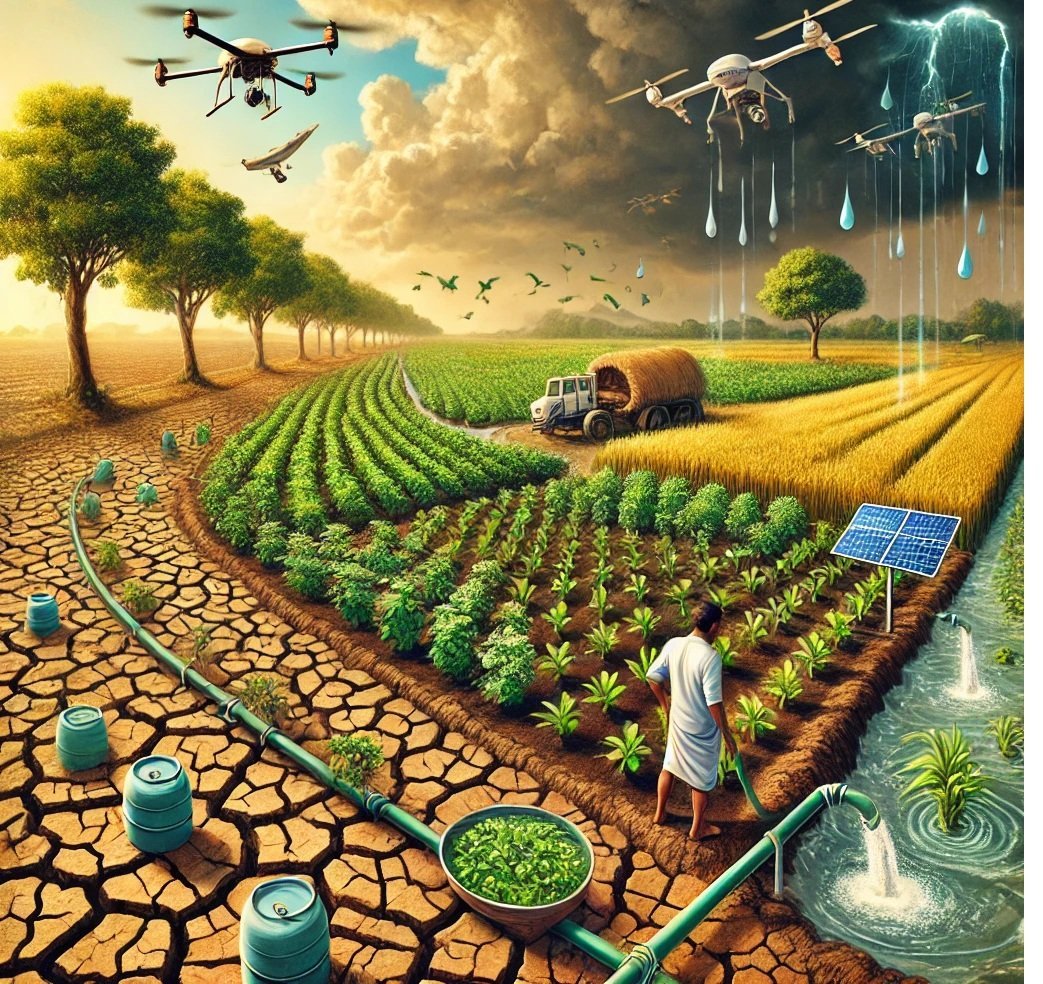
Given these stark findings in a context of already low farm income levels, it is crucial to develop policies to make agriculture more resilient to changes in climate. First, there is an urgent to need to spread irrigation. While significant progress has been made over the past few decades, the proportion of cultivated land under irrigation is less than 50% today – a lot remains to be done. The central challenge here is that this spread of irrigation needs to take place against the backdrop of diminishing ground water reserves, particularly in parts of north India. Second, research in agriculture technology needs to be stepped up in order to develop crop varieties and cropping techniques which are more resilient to the vagaries of weather. Finally, subsidies (power and fertiliser) that favour the indiscriminate use of water need to be rationalised and reduced and support should be extended through non-distortionary forms such as direct transfers (as Telangana is attempting today). Government of India has formulated schemes/plans to make agriculture more resilient to climate change. The National Mission for Sustainable Agriculture (NMSA) is one of the Missions within the National Action Plan on Climate Change (NAPCC). The mission aims at evolving and implementing strategies to make Indian agriculture more resilient to the changing climate. It is critical that changes to agricultural practices continue not just to allow large volumes of crops to continue to grow — as important as that is — but also that the new practices continue to help India lower its greenhouse gas emissions. There are already strategies for reducing agricultural-related emissions, such as the installation of two million standalone solar-powered agricultural pumps. These types of initiatives will increase agricultural productivity and help India achieve both a net-zero economy and increase the resilience to climate change, thereby helping India to grow sufficient food for its own population as well as many other countries.
Author

Nishant Sidnal is a postgraduate student pursuing a Master’s degree in Genetics and Plant Breeding at Anand Agricultural University, Gujarat. Driven by curiosity and a passion for research, he enjoys exploring new concepts and translating theoretical knowledge into practical applications.