
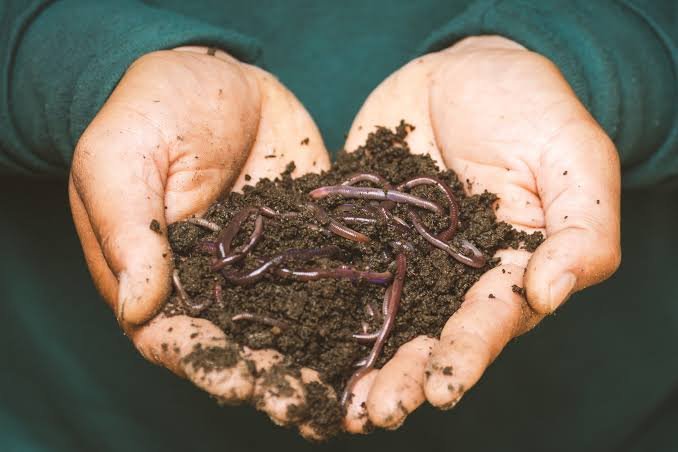
Beneath every handful of soil there are numerous numbers of microorganisms which wage a war with the plant roots. Plants have to not only defend themselves from insects and pathogens but also from invisible assassin called Nematodes. These parasitic nematodes are elongated roundworms barely visible to naked eye, has perfected the art of silent sabotage over millions of years. These worms are microscopic, unsegmented that live in soil and feed on living plant roots and tissues. They mostly measure around 1 millimeter in length and hence invisible to naked eye. Most of them are harmful to plants and crops causing billions of dollars of loss in global agriculture.
MORPHOLOGY
Nematodes that attack plants are worms, mostly microscopic in size, ranging from 0.2 mm to 11.0 mm in length. They are generally cylindrical in shape, tapering towards both head and tail ends. Females of a few species lose their worm shape as they mature, becoming greatly enlarged in diameter and assuming varying forms, such as pear, lemon, or kidney shaped. In spite of their small size, nematodes are complex in organization. Plant parasitic nematodes possess all systems as in higher animals except respiratory and circulatory systems.
LIFE CYCLE
Plant parasitic nematodes have a simple life cycle of six stages: egg, four juvenile stages and adult. The embryo develops inside the egg to become the first stage juvenile. The first stage juvenile molts inside the eggshell to become a second stage juvenile, which hatches from the egg. The nematode molts three more times to become a fully developed adult. Male and female nematodes occur in most species, and both may be required for reproduction. However, reproduction without males is common, and some species are hermaphroditic. Egg production by the individual completes the life cycle of the nematode and it is varying between species. For example – the root knot nematode completes its life cycle in 30 days.
HOST-PARASITE INTERACTIONS
Nematodes have some form of oral stylet or spear, which is used somewhat like a hypodermic needle to puncture the host cell wall. Many (probably all) plant nematodes inject enzymes into the host cell before feeding. These enzymes partially digest the cell contents before they are sucked into the gut. Most of the injury that nematodes cause to plants is related in some way to the feeding process.
Nematodes may feed on plant tissues from outside the plant (ectoparasitic) or inside the tissues (endoparasitic). If the adult female moves freely through the soil or plant tissues, the species is said to be “migratory.” Species in which the adult females become swollen and permanently immobile in one place in or on a root are termed “sedentary”.
The feeding/living relationships that nematodes have with their hosts affect sampling methods and the success of management practices. Ectoparasitic nematodes which never enter roots may be recovered only from soil samples. Endoparasitic nematodes often are detected most easily in samples of the tissues in which they feed and live (burrowing and lesion nematodes), but some occur more commonly as migratory stages in the soil (root-knot and reniform nematodes).
Those stages of endoparasites which are inside root tissues may be protected from nematicides which do not penetrate into roots, such as some soil fumigants. Root tissues may also shield them from many micro-organisms which attack nematodes in the soil. Ectoparasites are fully exposed to pesticides and natural control agents in the soil.
SYMPTOMS
Plant parasitic nematodes cause a wide range of symptoms in plants, mainly due to their feeding on various root tissues with specialized structures like stylets.
Above-Ground Symptoms:
• Leaf discoloration, including yellowing, whitening, or patchy mottling, is common in infested crops such as rice, coffee, and chrysanthemums
• Stunted growth and reduced leaf size occur as nematodes restrict nutrient uptake
• Wilting can be observed even if soil moisture is adequate, as root damage impairs water transport
• Dead or devitalized buds can result, as seen in strawberry plants
• Twisting or distortion of leaves and stems and crinkling or necrosis, happens when nematodes attack the growing points or aerial tissues
• Reduced fruit set and abnormal development may occur in heavily infested crops
Below-Ground Symptoms:
• Root galls or knots are characteristic of root-knot nematode (Meloidogyne spp.), visible as swellings on roots
• Lesions, necrosis and abnormal root branching occur, with roots appearing brown, black, or discoloured
• Stunted root systems and poor development of fibrous roots are seen, sometimes accompanied by prune-like root tips
• Wilting and overall plant decline can be traced back to damaged or impaired root systems, which reduce water and nutrient uptake
DIAGNOSIS & MANAGEMENT
Most state soil testing services can analyze for nematodes. Soil samples taken during warm weather and when plants are growing are more useful in revealing nematode problems than samples taken in winter or from fallow land. Once a nematode problem is confirmed, affected areas and plants should be isolated because transplants, machinery, and irrigation water can all spread nematode infections. Some of the management practices for preventing infestation of nematodes include:
Increasing Soil Organic Matter
Higher soil organic matter content protects plants against nematodes by increasing soil water-holding capacity and enhancing the activity of naturally-occurring biological organisms that compete with nematodes in the soil. See Soil Management for ways to increase soil organic matter. Low soil moisture puts even more stress on plants with nematode-damaged root systems.
Fallow Period
A fallow period of two years with no susceptible plants in the field decreases nematode populations. This host-free period can be achieved in one season rather than two years by disking every 10 days all summer. Such disking is expensive in terms of fuel costs and possible erosion, but has the added advantage of reducing perennial weeds such as nutsedge.
Crab Meal
Crab meal compost is potentially nematode-suppressive. Blue crab compost applied at a 10 to 20 percent ratio (weight compost: weight soil being treated) suppressed root galling and egg mass production by Meloidogyne javanica on tomato. Raw crab scrap at 0.05 percent was even more effective in suppressing root galling than the 20-percent compost. Crab meal, like other nematode control practices, must be applied before planting because these materials need to penetrate as much of the rooting zone as possible to be effective. This is only possible if they can be incorporated before planting.
Biological control
Marigolds. In northern Mexico, nematode levels, held constant on fallow plots, decreased by 90 percent in plots where marigolds were grown, and increased five-fold in plots with tomatoes. French marigold, Tagetes patula, is the only type at all effective in lowering root knot nematode populations. Marigolds as a rotation crop must be grown in a solid planting for a full season to suppress nematodes. Caution: marigolds are a host crop for the northern root knot nematode (Meloidogyne hapla), which can also occur in the south. Bacterial nematicides. A strain of Bacillus thuringiensis (Bt) reduces damage by root knot nematodes of the species Rotylenchulus reniformis. Nematode populations 12 weeks after transplanting were 50 percent lower in pepper plants given a Bt drench at transplanting than in untreated controls. Commercial release of this Bt strain is in process. Although it is also not yet commercially available, B. penetrans has been shown to attack root knot nematodes and is another potential biological control.
Fungal nematicides. The fungus Paecilomyceslilacinus parasitizes the eggs of some nematodes, including Meloidogyne incognita in potatoes and is relatively effective as a control. The fungus reduced reniform nematode population development (Rotylenchus reniformis) on tomato in small field plots in North Carolina. The suppression was sufficient to increase shoot and fruit weight.
Emerging techniques such as RNAi, Nanotechnology enabled delivery and host induced gene silencing are also being used to control these worms.
LAST BUT NOT THE LEAST…
Plant parasitic nematodes are microscopic posing a highlysignificant threat to agricultural productivity damaging roots, disrupting water supply, nutrient uptake and weakening the plant. Their concealed nature and nonspecific symptoms often make early detection difficult, allowing populations to increase unnoticed and cause substantial yield losses. Effective management therefore requires accurate diagnosis and an integrated approach combining resistant cultivars, crop rotation, soil sanitation, organic amendments, biological control, and judicious use of nematicides. Advances in molecular diagnostics, genomics, RNA-based technologies, and precision agriculture offer promising opportunities for early detection and more targeted management. Sustainable nematode management should ultimately focus on preventing population build-up, improving soil health, and developing durable host resistance to protect crop productivity and ensure long-term agricultural sustainability.
Author

Nishant Sidnal is a postgraduate student pursuing a Master’s degree in Genetics and Plant Breeding at Anand Agricultural University, Gujarat. Driven by curiosity and a passion for research, he enjoys exploring new concepts and translating theoretical knowledge into practical applications.