Water is among the most crucial sources of farming operations. Without water, no seed can grow into a plant; without water, the life cycle of crops would fail. Water is directly associated with income and crop production for millions of farmers. But due to the unpredictable pattern of rainfall, decrease in the levels of groundwater, drought and changes in climatic conditions, water resources have become scarce. Hence, a new strategy is needed for farming where water is not used but utilized in an efficient manner.
Intelligent Irrigation – More Crop with Less Water:
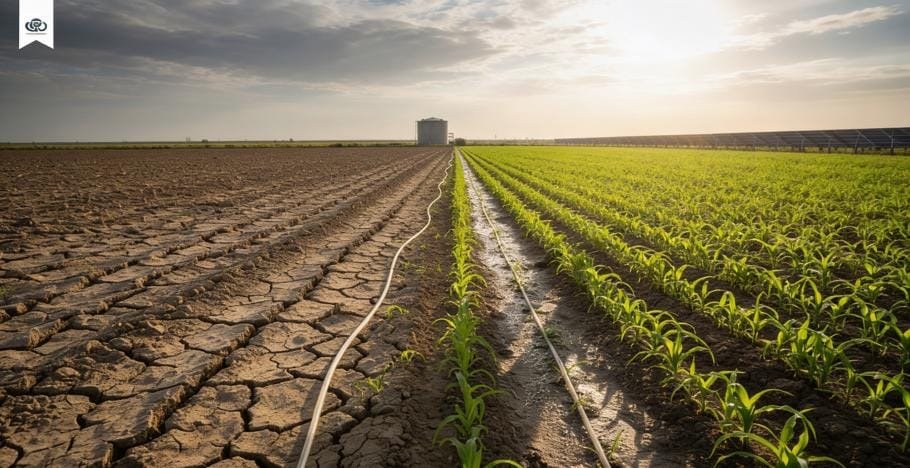
During low rainfall, irrigation becomes necessary, but sometimes the process can lead to huge wastage of water. Conventional flooding provides excess water than required, which goes waste due to runoff or evaporation. Intelligent irrigation means supply of right amount of water based on crops’ requirements and climatic conditions. Drip irrigation can help provide water near the roots, while sprinkler irrigation can distribute water effectively.
Rain Water Harvesting – Collecting Water for Future use:
Even though rain water is a natural resource, there are possibilities that all of it may get wasted in form of surface run off in case it is not properly collected. Water may be ponded in ponds, reservoirs, roofs and any other way in order to collect it during the rainy seasons. Collected water becomes very useful in dry season or during certain stages of crop development. This will reduce the workload of underground water and give an extra source of water for irrigation. Collection of water in situations where there is uncertainty of rains will save farming.
Mulching – A Very Simple Technique for Conservation of Soil Moisture:
There will be moisture loss through evaporation in case of bare soil, especially when there is heat in the environment. This will serve to cover the soil surface and provide protection to it from heat as well as wind. Any available material such as straws, crops residues, dried leaves among many others may be used in mulching. Other than moisture conservation, mulching will also reduce weed growth, regulate soil temperatures and even improve the organic content of the soil through decomposition.
Healthy Soil – A Natural Water Reservoir:
Apart from serving as a medium for plant growth, the soil is also a water reservoir in its own right. The soil which has appropriate structure and enough organic content can be able to store water for longer periods. The addition of organic matter to the soil not only improves the structure but also aids in retaining moisture. Techniques that avoid soil degradation and erosion are useful in ensuring the protection of this natural reservoir. The improved soil can aid the farmer in effective utilization of rainfall and irrigation.
Selection of the Suitable Crop Variety to the Suitable Location:
Application of water conservation in agriculture starts even before the planting process. Different crops require different amounts of water and also differ in adaptability to the dry environments. When selecting crops and the crop variety, the climatic condition, soil type, pattern of rainfalland availability of irrigation systems should be considered. Using the varieties of crops adapted to the dry environment and drought resistant ensures that there will be no crop failure because of lack of water.
Methods of Water Conservation to Combat Water Runoff and Soil Erosion:
Intense rains on poorly managed lands result in the quick runoff of water from the lands. Not only does it result in the loss of water, but also leads to the loss of the upper layer of the soil. Appropriate levelling of the lands, contour ploughing, bunding and other proper methods of soil conservation will help slow down the movement of water and will give it time to seep into the soil. Retaining crop residue on the surface of the soil will reduce the impacts of rains and erosion. Thus, control of the movement of water on the field is one of the key methods of water conservation.
Irrigation of Plants during the Important Growth Phases:
Plants require different quantities of water during their growth. Flowering, pollination and formation of fruits or grains are among those important phases when a lack of water may be harmful to plants. In case the quantity of water for irrigation is limited, farmers may find it beneficial to know the crucial stages of plant growth. Timely irrigation of plants will prove to be more effective than the excessive watering of the plants.
Second Life for Crop Residues:
During harvesting, crop residues are considered waste material. Nevertheless, with proper processing, crop residues may contribute to water savings. Crop residues can be used either as mulch or mixed in the soil based on local conditions and crop requirements. They will protect the field from sunlight and evaporation and will enrich soil with organic materials. Farm owners can make good use of their biomass through applying it to the field rather than burning it.
How Technology Could Help Make Better Irrigation Decisions:
Technological advancement is bringing new opportunities when it comes to water usage in agriculture. Soil moisture sensing devices could help us know whether there is need for irrigation or not, while weather forecasts would help farmers avoid unnecessary irrigation before rains. Advanced irrigation technology could also help to ensure accurate delivery of water. Weather conditions, irrigation and crops’ advice could be delivered through mobile applications and farm advisories. Technology does not always have to be advanced; all that matters is the information to be delivered at the right time.
Water-Smart Agriculture – Sustaining the Future of Food Production:
The future sustainability of water requires cooperation between farmers, researchers, politicians, agricultural organizations and the consumers. The farmer needs to have access to appropriate technologies and knowledge, the researcher needs to develop water-smart crops and procedures and the politician needs to support sustainable water management. Furthermore, society needs to understand that the production of food depends on sustainable utilization of the natural resources. Not only surviving from the current lack of water is needed, but also preparation of agriculture for the future.
Conclusion:
Water is very crucial for agriculture and its conservation is essential for future agriculture. The changing patterns of rainfall, increased demand of water and scarcity of groundwater resources demands careful management and conservation of water. Drip irrigation, rainwater harvesting, mulching, proper soil conservation and choice of crops are just few of the ways by which we can conserve water without affecting crop production. Sometimes, the water conservation does not require any difficult approach at all; rather, it requires simple steps related to storage, availability and use of water which can make a lot of difference. Through joint efforts of farmers, scientists and communities, these simple steps can lead to great change. The future of agriculture lies in the judicious use of natural resources. Saving each and every drop of water is an agricultural output which will ensure survival of both crop and the farmer. Water may be small, but every drop of water counts.
Author

M.Sc (Agriculture) in Agronomy, Centurion University of Technology and Management, Paralakhemundi, Odisha, 761211
B.Sc Agriculture, The Neotia University, South 24 Parganas , West Bengal, 743368